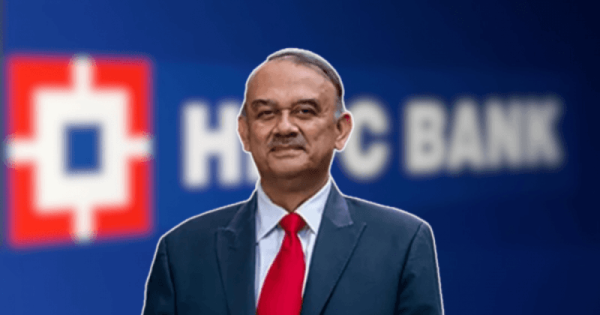
On 18 March 2026, HDFC Bank informed the market that its Chairman, Atanu Chakraborty, had resigned with immediate effect. The explanation was brief, carefully worded, and unusually revealing: certain happenings and practices within the bank were not in alignment with his values and ethics. In the formal grammar of financial disclosures, such phrasing is rarely incidental. It is language shaped by constraint, carrying more meaning than it is permitted to state openly.
There was no allegation of wrongdoing, no indication of regulatory breach, and no visible deterioration in the bank’s financial position. Yet the significance of the moment lies precisely in this absence. In modern financial systems, institutions seldom signal stress through numbers at the outset. They signal it through behaviour, through departures, and through the subtle distancing of those positioned to see risks before they become measurable. The swift appointment of Keki Mistry, with the approval of the Reserve Bank of India, underscores that this was not a sudden rupture but the visible conclusion of an internal process that had likely unfolded over time.
To understand why this matters, one must situate the episode within the longer arc of HDFC Bank’s institutional evolution. For much of its history, particularly under Aditya Puri, the bank represented something rare in emerging market finance: a combination of scale, discipline, and predictability that inspired confidence well beyond India’s borders. Its success was not merely financial. It was cultural. Risk was understood, controlled, and embedded within a system that appeared internally self-correcting.
That equilibrium was fundamentally altered by the 2023 merger with HDFC Ltd. The merger did not simply expand the bank’s balance sheet; it transformed its structure. What had been a high-performing bank became a complex financial organism, integrating long-duration mortgage exposures with shorter-term liabilities, extending its reach across multiple layers of financial intermediation, and multiplying the number of internal interfaces through which risk could travel. Scale, in this sense, was not merely additive. It was transformative.
It is at precisely this juncture that large financial institutions encounter what may be described as governance lag risk. This is not a failure of governance in the conventional sense. It is a structural condition in which the growth of institutional complexity outpaces the ability of governance systems to adapt in real time. The consequence is not immediate breakdown, but a gradual erosion of clarity. Risks do not disappear; they become harder to see in their entirety. Accountability does not weaken overtly; it diffuses subtly across expanding organisational layers.
The experience of global banking suggests that this condition rarely announces itself through financial distress at the outset. As the Bank for International Settlements has observed in its work on large banking groups, the challenge of modern finance lies less in capital adequacy and more in the management of complexity. When institutions become sufficiently large and interconnected, the question is no longer whether they have the resources to absorb shocks, but whether they can still fully comprehend the risks they are taking.
In the case of HDFC Bank, the underlying financial indicators remain strong. Asset quality is stable, capital buffers are robust, and the institution continues to command market confidence. Yet beneath this stability, certain structural pressures have become more pronounced. The integration of the merged balance sheet has tightened the relationship between credit expansion and deposit mobilisation, reducing the margin for liquidity flexibility. The expansion of organisational scope has increased the difficulty of maintaining uniform control standards across all segments. And internal reporting mechanisms, including whistleblower channels, appear to have generated a persistent stream of signals that cannot be dismissed as episodic.
It is important to recognise that none of these factors, in isolation, constitutes a crisis. What gives them significance is their convergence. When liquidity discipline becomes more demanding, when organisational visibility becomes more complex, and when internal signals continue to surface, the burden on governance systems increases exponentially. At that point, differences in interpretation begin to matter. The same set of facts can be viewed as manageable operational complexity by executive leadership and as emerging structural vulnerability by those tasked with oversight.
Such divergence is not unusual. Indeed, it is inherent in the governance of large financial institutions. What is unusual is when that divergence reaches a point where it can no longer be reconciled within the institutional framework. The language of “values and ethics” suggests precisely such a threshold. It indicates that the issue is no longer one of strategy or performance, but of alignment at a more fundamental level. In boardroom practice, this is the point at which continued association becomes untenable.
The role of the Reserve Bank of India in this context is both critical and characteristically understated. Unlike some regulatory regimes that rely on public signalling, the RBI has historically operated through continuous engagement and quiet intervention. The orderly transition in leadership suggests that the situation is being managed within a framework of regulatory awareness and control. This is not a moment of crisis intervention, but of pre-emptive stabilisation.
Yet to view the episode solely through the lens of one institution would be to miss its broader significance. HDFC Bank is not merely a private sector bank; it is a central component of India’s financial architecture and a key interface with global capital. As India’s role in the international economic system expands, the expectations placed on its leading financial institutions evolve accordingly. They are no longer judged only on their financial performance, but on the credibility and resilience of their governance frameworks.
Global experience offers a consistent lesson in this regard. Institutions such as Wells Fargo and Credit Suisse did not initially falter because of visible financial weakness. Their difficulties began with internal signals, cultural shifts, and governance lapses that were either underestimated or insufficiently addressed. The eventual consequences differed in scale and form, but the underlying pattern was similar: the early indicators were not in the numbers, but in the system’s ability to interpret and respond to them.
The situation at HDFC Bank is at a much earlier stage, and there is no inevitability in its trajectory. The institution retains substantial strengths, and the regulatory environment in India has demonstrated resilience in managing systemic risks. The more important question, however, lies beyond the immediate circumstances of this case. It concerns the capacity of India’s financial system to adapt its governance structures to the scale it is now achieving.
This is, in essence, a question of financial statecraft. Building large, efficient, and competitive financial institutions is one phase of economic development. Ensuring that these institutions remain governable at scale is a more complex and demanding phase. It requires not only robust regulation, but also the continuous evolution of internal cultures, oversight mechanisms, and risk frameworks.
The coming period will provide important signals. The choice of permanent leadership, the evolution of board oversight, the behaviour of internal control systems, and the subtle shifts in regulatory engagement will collectively indicate whether governance lag is being reduced or allowed to persist. These are not developments that will necessarily be visible in headline metrics, but they will shape the institution’s trajectory over time.
What makes the Chairman’s formulation particularly significant is not merely its tone, but its scope. The reference to “happenings and practices” suggests not an isolated incident, but a pattern — one that, in his judgment, crossed from operational deviation into ethical discomfort.
In large financial institutions, such discomfort rarely arises from singular events. It typically emerges from the accumulation of smaller departures from established discipline. These may include pressures within the system to accelerate credit deployment beyond historically conservative thresholds, variations in adherence to internal approval processes across expanding business lines, or the gradual normalisation of practices that, while not unlawful, begin to test the boundaries of institutional standards.
There is also the possibility of divergence in how risks are represented and understood within the organisation. As structures become more complex, the distance between those originating risk and those overseeing it inevitably widens. In such environments, even technically compliant decisions can, in aggregate, produce outcomes that appear misaligned with the spirit of governance that once defined the institution.
The ethical threshold, therefore, is not crossed in a moment. It is reached when the cumulative effect of such patterns creates a perception that the institution is no longer operating within the same framework of discipline that previously governed it. It is at this point that individuals in positions of oversight are compelled to make a judgment not about legality, but about alignment.
In the final analysis, the significance of the Chairman’s resignation lies not in what it reveals explicitly, but in what it implies. It suggests that within one of India’s most important financial institutions, the alignment between growth, complexity, and governance has come under strain. Whether that strain is temporary or indicative of a deeper structural adjustment will depend on how the system responds.
Modern financial institutions rarely fail because they lack capital or capability. They encounter difficulty when the systems designed to understand and control risk, cease to evolve at the same pace as the risks themselves. The earliest indications of this condition are rarely dramatic. They emerge quietly, in the form of decisions taken by individuals who are positioned to see the full picture and who choose, at a certain point, to step away. When the distance between what is done and what is considered acceptable becomes too wide to ignore and those who recognise it first choose not to remain.
That moment, once reached, is never without meaning.
Contact to : xlf550402@gmail.com
Copyright © boyuanhulian 2020 - 2023. All Right Reserved.