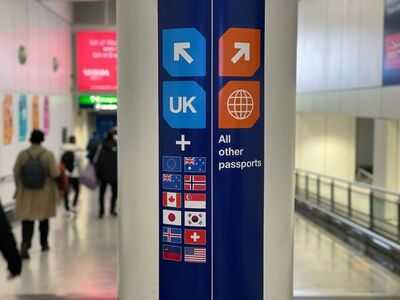
Strict new EU entry rules mean Brits must be more vigilant over the "widely misunderstood" travel limits this Easter, as tighter border controls alert authorities instantly to overstays.
Since Brexit, British travellers have been restricted to visiting the Schengen Area for 90 days within any 180-day period. But under the new border control Entry/Exit System (EES), which replaces manual passport stamping with automated tracking, even unintentional overstays now trigger instant alerts and could lead to a full ban from the region. Travel expert George Cremer said a "surge" of users discovered they had accidentally planned trips exceeding the limit while using his app, Schengen Simple, which calculates travel allowances for holidayers.

He warned that the 90/180 system is "counterintuitive", with many travellers wrongly believing they were within the rules. Since EES launched, around 4,000 third-country nationals have already been caught overstaying, according to Biometric Update - a number George expects to rise as we head into summer.
"Easter is the first major holiday where British travellers will feel the full impact of EES," he warned.
"The biggest trap is the rolling window, which is counterintuitive and widely misunderstood. If you spent two weeks skiing in January, those days are still counting against your allowance right now. And it's not just about looking back."
Mr Cremer explained that for unintentional overstayers, a common mistake is only taking into account your previous holidays, and discounting upcoming visits. Another is believing that the 90 days reset every six months, but the 180-day period is rolling, and shifts forward every day.
"A traveller might arrive at Easter with 30 days of history and think they have 60 days to play with, but if they've already booked a trip this summer, they could have far less. They could stay too long at Easter and jeopardise the trip they've already paid for," he explained.
"This is what most people get wrong: they only look back 180 days from their entry date and ignore their upcoming plans. That can mean overestimating your allowance or, more critically, risking overstaying."
Mr Cremer explained that while some travellers rely on using different passports to illegally bypass the manual checks - which one anonymous app user had been doing - this would now be flagged up by border control immediately, with EES now using fingerprint and facial recognition.
Another user was convinced that France had a separate arrangement with the UK, despite being part of the Schengen Area, and he said misconceptions like this came up repeatedly.
He urged travellers to check before they book, especially because any breaches of the allowance can lead to on-the-spot entry refusals, fines and complete travel bans in the Schengen Area's 29 countries.
Jameson Rader, Founder of SavvyNomad, said that British travellers were entering a "new phase" of digital border enforcement across Europe.
While travel before Brexit was "largely frictionless", he said that European trips were becoming more like international travel elsewhere in the world, relying on pre-clearance systems.
"Airlines and ferry operators effectively act as the first checkpoint. If your authorisation, passport validity, or entry rules aren't satisfied before check-in, you may not be allowed to travel at all," he warned.
The Entry/Exit System began launching in October 2025 and is expected to be fully operational by 2026.
Another border control check will also be launched soon, the European Travel Information and Authorisation System (ETIAS), which will require Brits to apply for pre-authorisation to travel to the Schengen Area, similar to the United States' ESTA system.
Contact to : xlf550402@gmail.com
Copyright © boyuanhulian 2020 - 2023. All Right Reserved.