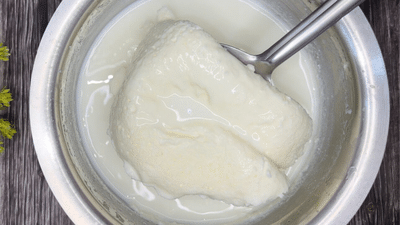
Malai for tan removal: Can this natural remedy really brighten your skin?
Indian summers are absolutely ruthless. You step out for a quick errand, and by the time you're back, you’re rocking a completely different, uneven shade. And the moment that inevitable sun tan hits, somebody in the family is bound to suggest heading to the kitchen to slather your face with malai (fresh milk cream). It’s the ultimate, undisputed desi skincare fix.
But let's be real for a second. In an era where our bathroom cabinets are overflowing with complex serums and expensive chemical treatments, does this old-school kitchen hack actually stand up to modern science? Well, dermatologists have weighed in on the chemical composition of milk cream. The short answer? Yes, it works. But there's a major catch you need to know about.

Here is a breakdown of why malai is a scientifically sound remedy, and why you need to be careful with it.
The 'AHA' Moment: How It Dissolves a Tan
Turns out, grandma was totally onto something. Malai isn't just a soothing paste; it's packed with lactic acid. If you've ever paid attention to the back of an expensive exfoliating peel, you’ve probably seen Alpha Hydroxy Acids (AHAs) listed at the top. Lactic acid is a naturally occurring, incredibly mild AHA. Instead of physically scrubbing off a tan with harsh granules—which honestly just makes sun-damaged skin angry—malai works on a microscopic level.
The lactic acid chemically dissolves the invisible "glue" holding your dead, pigmented skin cells together. This safely speeds up your cellular turnover. Slowly but surely, that darkened top layer of skin simply sheds away.
Calming the Burn and Acting as a Delivery Truck
But wait, there's more to it than just exfoliation. UV rays absolutely trash your skin's protective lipid barrier, leaving your face severely dehydrated and dull. Malai fixes this fast. It’s loaded with natural saturated fats, proteins, and ceramides that act as rich emollients. Think of it as a heavy-duty shield that traps hydration inside, repairing the barrier and bringing back that hydrated glow.
Plus, sun exposure causes micro-inflammation. If you attack a fresh tan with harsh treatments, your skin panics and produces even more melanin to protect itself—a tricky condition called Post-Inflammatory Hyperpigmentation. Malai’s cooling nature stops this defensive darkening right in its tracks. Oh, and ever wonder why malai is almost always mixed with a pinch of turmeric?
There is actual chemistry behind this. Curcumin, the magic melanin-blocking compound in turmeric, is fat-soluble. It can't easily penetrate your skin on its own. The heavy fats in malai basically act as a delivery truck, pulling those active turmeric compounds straight down into your cells.
The Reality Check: Who Should Stay Away?
Before you run to the fridge to whip up a face pack, hit pause. Skin experts have a huge, glaring warning about this remedy: it is strictly for dry to normal skin types. Malai is highly comedogenic, which is a fancy dermatological way of saying it severely clogs pores.
If your skin is oily, acne-prone, or if you struggle with fungal acne, smearing thick cream on your face is a terrible idea. The rich fats will trap your natural sebum, feed bacteria, and leave you with a massive breakout. If you have oily skin, experts strongly recommend swapping the malai for plain yogurt or aloe vera.
The Final Verdict
Despite the oily skin warning, dermatologists still champion malai over other popular DIYs. We’ve all seen those viral internet hacks pushing raw lemon or tomato juice for tan removal. Experts strongly warn against those. The high acidity in lemons can cause literal chemical burns on sun-sensitized skin. Malai, on the other hand, is beautifully pH-balanced and safe.
Just manage your expectations. It reverses surface-level pigment over time. It’s not going to magically undo deep UV damage or stop photo-aging. Treat it like a gentle, gradual fading treatment, rather than an overnight magic eraser.
But let's be real for a second. In an era where our bathroom cabinets are overflowing with complex serums and expensive chemical treatments, does this old-school kitchen hack actually stand up to modern science? Well, dermatologists have weighed in on the chemical composition of milk cream. The short answer? Yes, it works. But there's a major catch you need to know about.
Here is a breakdown of why malai is a scientifically sound remedy, and why you need to be careful with it.
The 'AHA' Moment: How It Dissolves a Tan
Turns out, grandma was totally onto something. Malai isn't just a soothing paste; it's packed with lactic acid. If you've ever paid attention to the back of an expensive exfoliating peel, you’ve probably seen Alpha Hydroxy Acids (AHAs) listed at the top. Lactic acid is a naturally occurring, incredibly mild AHA. Instead of physically scrubbing off a tan with harsh granules—which honestly just makes sun-damaged skin angry—malai works on a microscopic level.
The lactic acid chemically dissolves the invisible "glue" holding your dead, pigmented skin cells together. This safely speeds up your cellular turnover. Slowly but surely, that darkened top layer of skin simply sheds away.
Calming the Burn and Acting as a Delivery Truck
But wait, there's more to it than just exfoliation. UV rays absolutely trash your skin's protective lipid barrier, leaving your face severely dehydrated and dull. Malai fixes this fast. It’s loaded with natural saturated fats, proteins, and ceramides that act as rich emollients. Think of it as a heavy-duty shield that traps hydration inside, repairing the barrier and bringing back that hydrated glow.
Plus, sun exposure causes micro-inflammation. If you attack a fresh tan with harsh treatments, your skin panics and produces even more melanin to protect itself—a tricky condition called Post-Inflammatory Hyperpigmentation. Malai’s cooling nature stops this defensive darkening right in its tracks. Oh, and ever wonder why malai is almost always mixed with a pinch of turmeric?
There is actual chemistry behind this. Curcumin, the magic melanin-blocking compound in turmeric, is fat-soluble. It can't easily penetrate your skin on its own. The heavy fats in malai basically act as a delivery truck, pulling those active turmeric compounds straight down into your cells.
The Reality Check: Who Should Stay Away?
Before you run to the fridge to whip up a face pack, hit pause. Skin experts have a huge, glaring warning about this remedy: it is strictly for dry to normal skin types. Malai is highly comedogenic, which is a fancy dermatological way of saying it severely clogs pores.
If your skin is oily, acne-prone, or if you struggle with fungal acne, smearing thick cream on your face is a terrible idea. The rich fats will trap your natural sebum, feed bacteria, and leave you with a massive breakout. If you have oily skin, experts strongly recommend swapping the malai for plain yogurt or aloe vera.
The Final Verdict
Despite the oily skin warning, dermatologists still champion malai over other popular DIYs. We’ve all seen those viral internet hacks pushing raw lemon or tomato juice for tan removal. Experts strongly warn against those. The high acidity in lemons can cause literal chemical burns on sun-sensitized skin. Malai, on the other hand, is beautifully pH-balanced and safe.
Just manage your expectations. It reverses surface-level pigment over time. It’s not going to magically undo deep UV damage or stop photo-aging. Treat it like a gentle, gradual fading treatment, rather than an overnight magic eraser.
Contact to : xlf550402@gmail.com
Copyright © boyuanhulian 2020 - 2023. All Right Reserved.