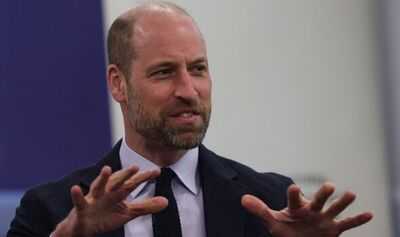
Prince William has a sense of duty that "runs deep" and he "wants to draw a line in the sand" when it comes to addressing speculation over his future role of head of the Church of England. This week, the Prince of Wales will represent his father, the King, at the enthronement of the new Archbishop of Canterbury, Dame Sarah Mullally, at Canterbury Cathedral.
Unlike the King or his late grandmother Elizabeth II, William, 43, is not known to be a regular churchgoer or a devout Christian. It had led to questions about his personal faith, especially as he will be Supreme Governor of the Church of England and known as 'Defender of the Faith' when he becomes King.
There had also been speculation that William may consider not taking on the formal role held by the country's monarchs since Henry VIII. However, sources close to the future King have now spoken about his "quiet faith" and "commitment to the Church of England" ahead of Wednesday's service, which he will attend with the Princess of Wales.
One told The Sunday Times: "This week is an opportunity to be very clear in people's minds, when he walks into Canterbury Cathedral, of where he stands. For him, it is a drawing of a line in the sand of where he's at, and it's really important that it [the question over his commitment to the Church] is cleared up.
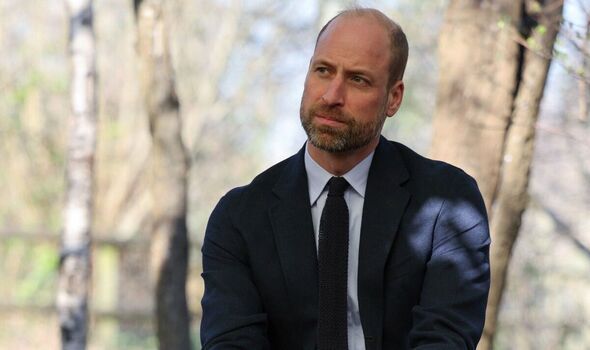
They added: "His feeling is, 'I might not be at church every day, but I believe in it, I want to support it and this is an important aspect of my role and the next role, and I will take it very seriously, in my own way'."
Royal author Robert Hardman wrote in 2024 that, according to a senior Palace figure, William "very much respects the institutions", but he is "not instinctively comfortable in a faith environment".
But British monarchs serve as Defender of the Faith and Supreme Governor of the Church of England.
Perhaps in an effort to address questions over his faith, an aide to William has said: "The Prince of Wales's commitment to the Church of England is sometimes quieter than people expect, and for that reason it is not always fully understood.
"Those who know him well recognise that his connection to the Church, and to the sense of duty that comes with it, runs deep and is grounded in something personal and sincere.
"Faith, service and responsibility are themes that have long-shaped the role he will one day inherit and they are things he approaches in his own thoughtful way."
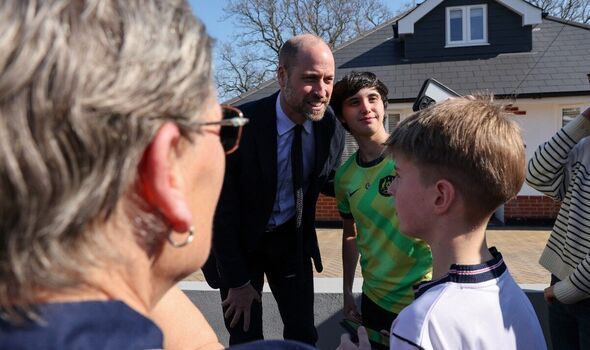
The aide told of a recent meeting between William and the Archbishop of Canterbury, Dame Sarah Mullally, whose official installation the prince will attend this coming week.
"The prince recently had a warm and substantive conversation with the new archbishop, reflecting his genuine interest not only in the Church's work, but in its role as a guardian of a distinctive and ancient English spiritual tradition that remains relevant in contemporary life," they said.
"At a time when institutions can be seen simply through a social or cultural lens, he understands that the Church's role goes beyond this. It is not only part of the nation's heritage, but a living expression of faith, rooted in prayer, compassion and a belief in grace and redemption."
A source close to Dame Sarah said: "We would love the (future) supreme governor to be at church every Sunday, but one has to be practical around the fact that they are a couple with young children."
William's aide added that the prince is "keen to build a strong and meaningful bond" with the Church.
"True to his character, he approaches these relationships as his authentic self," they said.
"As he looks ahead to the responsibilities he will one day assume as Supreme Governor, he is keen to build a strong and meaningful bond with the Church and its leadership, one that respects tradition while speaking to a modern Britain, and reflects his broader belief that institutions must continue to remain relevant and connected to the people they serve.
"He understands the importance of the role he will inherit and is committed to carrying it forward with sincerity, authenticity and a clear sense of purpose."
Historian Tom Holland, who co-hosts The Rest Is History podcast, told The Times that William needs to be a "believer" to become King.
"Being a believer or at least convincingly seeming to be a believer is a job requirement, a necessary qualification - William can't really be King if he cannot manage that," he said.
"The King is an anointed king. That anointing is just mumbo jumbo if you are not yourself a Christian. And the Protestant settlement is what underpins the whole constitutional structure of the relationship between the Crown and parliament, so it's not some peripheral, minor detail - it is one of the foundation stones of the constitution."
Contact to : xlf550402@gmail.com
Copyright © boyuanhulian 2020 - 2023. All Right Reserved.