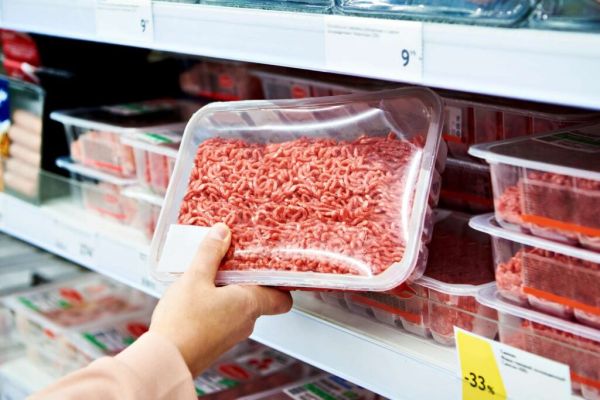
You’re standing in the meat department of your local grocery store, trying to find the right package of ground beef for your meatball recipe. The choices seem endless, with labels like 80/20, 90/10, and ground chuck. What exactly do they mean, and what’s the best choice for dinner?
We reached out to a handful of chefs and culinary professionals to help us decode the choices in the aisle.
What do the numbers on the package mean?
The obvious place to start is the numbers on packages of ground beef. You may see beef labeled as 80/20, 85/15, 90/10, or even 93/7.
“Those numbers simply describe the lean-to-fat ratio by weight,” explains Ming Pu, chef-owner of the soon-to-open TANA in Louisville, Kentucky. “For example, 80/20 means the grind is made up of 80% lean meat and 20% fat. The higher the fat percentage, the juicier and more forgiving the meat is during cooking, but it also produces more rendered fat.”
According to the U.S. Department of Agriculture’s Food Standards and Labeling Policy Book ground beef may contain a maximum of 30% fat. (Packages labeled “hamburger” can also contain a maximum of 30% fat, but it can come from added beef fat, while the fat in ground beef must be a component of the beef trimmings.)
If you see a ground beef label that says 70/30, that means it contains 70% meat and 30% fat. This is generally the most affordable ratio because the cooked volume of meat will be lower since the fat turns to liquid as it cooks.
“The higher the fat content, the more flavor and juiciness you’ll get,” says Chris Valdes Miami-born chef and celebrity caterer. “Fat carries flavor and creates tenderness, but it also renders during cooking, which affects texture and shrinkage.”
Victor Protasio / Food Styling by Torie Cox / Prop Styling by Lydia Pursell
Which ground beef to choose
More fat isn’t necessarily better. For example, you might prefer a leaner ratio when you’re making a sauce-heavy dish and don’t want to deal with excess grease. Here are the ratios you’re most likely to find in the meat aisle, and what you should choose depending on what you’re making, according to chefs.
- 70/30: The highest allowable fat content makes this ratio of ground beef very rich and flavorful. It works particularly well for long-cooking dishes like meatloaf and meatballs, where the fat can keep the meat moist and juicy.
- 80/20: This ratio may be labeled as “ground chuck.” Valdes recommends it for burgers, as the fat keeps the patties juicy and flavorful and keeps them from drying out. Pu also prefers this ratio for burgers, especially for grilled or smashed burgers. “If I’m doing a hard sear on a flattop or cast-iron, I’ll sometimes go slightly higher in fat, but I generally don’t like going beyond 23% to 25% fat for burgers,” Pu says. “At that point, you start losing structure and end up cooking more fat than meat.” 80/20 is also a good choice for meatballs or meatloaf if you can’t find 70/30, or if you prefer less fat.
- 85/15: This slightly leaner grind may be called “ground round.” Pu recommends it for tacos, chili, and sauces, as it offers a great balance: You get the richness of some fat but don’t have to drain off excess grease.
- 90/10: Ground beef with 10% or less fat may be labeled as “ground sirloin.” Since it will leave little excess fat in the bottom of the pan when cooked, it’s great for sauce-heavy dishes. Valdes says he typically likes leaner ground beef for meat sauces like bolognese or picadillo.
Chuck vs. sirloin vs. round
Just about any cut of beef can be used for ground beef; however, the meat typically comes from chuck, round, or sirloin.
If the label says “ground beef chuck” or “ground beef round,” then it must be ground from all or part of the chuck or round primal, though it may contain up to 6% shank meat. Ground beef from the sirloin tends to be leaner, typically 10% or less fat, though the USDA labeling book doesn’t specify rules pertaining to ground sirloin.
The actual cut of beef in the grind will have an impact on your dish. “The cut affects both flavor and texture, not just fat levels,” Pu says. “Chuck is a classic burger grind. It has good intramuscular fat and a strong beef flavor.”
Sirloin is leaner than chuck, typically about 10% fat or less, with a rich beef flavor. Round has a similar fat content to sirloin and tends to crumble when cooked, making it ideal for tacos and chili.
Greg Dupree / Food Styling by Margaret Monroe Dickey / Prop Styling by Thom Driver
Grind size
To make truly uniform, consistent ground beef, you can’t use a tool like a food processor or blender. Instead, butchers pass chunks of meat and fat through a grinder, which chops and extrudes the mixture. Grind plates will determine the size of the ground beef. Most grocery store ground beef is fine, with fairly thin strands of the beef and fat. This is ideal for smash burgers and any dish where uniformity is important, like meatloaf or meatballs.
If you want a medium or coarse grind, you may need to ask your butcher to grind you some specifically. Larger grinds will have bigger pieces of fat, meaning they will tend to hold moisture better, making a medium grind ideal for thick burgers. Use a coarse grind anytime you want the beef to have a distinct, almost chunky texture, like in stew or chili.
Fresh or frozen — does it matter?
In most cases, frozen ground beef is perfectly fine to use and can provide a great option for budget-focused cooks.
“Frozen ground beef is a smart option when it’s vacuum-sealed and frozen quickly after grinding,” Valdes says. “It locks in freshness and can be more cost-effective. Just thaw it slowly in the refrigerator for the best texture.”
Black says frozen ground beef, especially bulk tube-style chubs, “are a smart alternative for slow-cooked meals, where the difference from fresh would be indistinguishable.”
Fresh ground beef gets the edge over frozen, however, when texture and moisture are critical. Pu says he typically avoids using previously frozen ground beef for items like burgers because fresh beef will have a better, meatier texture and juicier bite.
Contact to : xlf550402@gmail.com
Copyright © boyuanhulian 2020 - 2023. All Right Reserved.