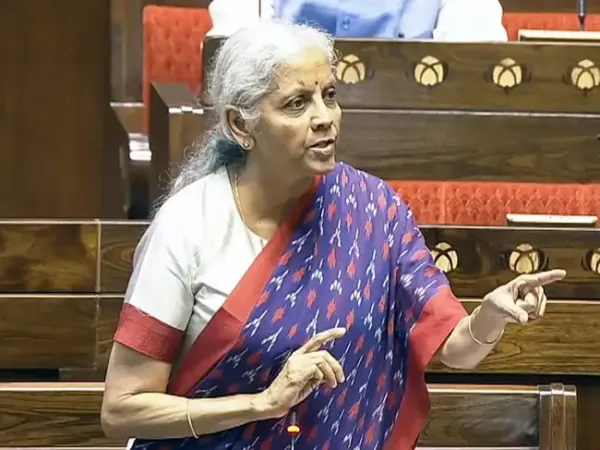
Finance Minister Nirmala Sitharaman has tabled the Finance Bill, 2026, in the Lok Sabha, marking a key step in implementing the Central Government’s financial proposals for the fiscal year 2026–2027.
What is a Finance Bill?
Finance Bill is a key legislative step that will give legal backing to the proposals announced in the Union Budget.
Once passed, the Finance Bill will bring into force changes in income tax rates, duties and other levies, directly affecting how much individuals and businesses pay to the exchequer. The provisions are expected to shape citizens’ disposable income, savings and investment returns, among other measures.
Also Read: Sitharaman introduces Corporate Laws (Amendment) Bill, 2026 in Lok Sabha
What are the key budget proposals?
The key Budget 2026–27 proposals included special focuses on driving growth, creating jobs, and promoting inclusive development.
It emphasises capex-led expansion for infrastructure and private investment, employment and skilling initiatives like Yuvashakti, and support for MSMEs through credit and incentives. Manufacturing, industry, and agriculture will benefit from production-linked schemes, industrial corridors, irrigation, and rural infrastructure. The Budget also prioritises green energy, digital governance, urban development, and connectivity, along with human capital development in education, healthcare, and nutrition. Inclusive growth and social protection are strengthened through welfare schemes, direct benefit transfers, and support for vulnerable populations.
Also Read: Key highlights of PM Modi’s speech in Lok Sabha: ‘West Asia crisis poses new challenges for India’
Earlier on February 1 in her budget 2026 speech, the Finance Minister introduced several key reforms, while maintaining the same standard deduction and income tax slabs as FY 2025–26. The Budget introduced a new Income Tax Act effective April 1, 2026, with simplified rules and forms for easier compliance. TCS on overseas tour packages and LRS remittances for education and medical purposes has been cut to 2%. The deadline for filing revised returns is extended to March 31, while income tax slabs remain unchanged, with no age-based benefits.
Finance Minister Nirmala Sitharaman also introduced the Corporate Laws (Amendment) Bill, 2026 in the Lok Sabha, seeking to amend key provisions of the Limited Liability Partnership Act, 2008 and the Companies Act, 2013.
What is a Finance Bill?
Finance Bill is a key legislative step that will give legal backing to the proposals announced in the Union Budget.
Once passed, the Finance Bill will bring into force changes in income tax rates, duties and other levies, directly affecting how much individuals and businesses pay to the exchequer. The provisions are expected to shape citizens’ disposable income, savings and investment returns, among other measures.
Also Read: Sitharaman introduces Corporate Laws (Amendment) Bill, 2026 in Lok Sabha
What are the key budget proposals?
The key Budget 2026–27 proposals included special focuses on driving growth, creating jobs, and promoting inclusive development.
It emphasises capex-led expansion for infrastructure and private investment, employment and skilling initiatives like Yuvashakti, and support for MSMEs through credit and incentives. Manufacturing, industry, and agriculture will benefit from production-linked schemes, industrial corridors, irrigation, and rural infrastructure. The Budget also prioritises green energy, digital governance, urban development, and connectivity, along with human capital development in education, healthcare, and nutrition. Inclusive growth and social protection are strengthened through welfare schemes, direct benefit transfers, and support for vulnerable populations.
Also Read: Key highlights of PM Modi’s speech in Lok Sabha: ‘West Asia crisis poses new challenges for India’
Earlier on February 1 in her budget 2026 speech, the Finance Minister introduced several key reforms, while maintaining the same standard deduction and income tax slabs as FY 2025–26. The Budget introduced a new Income Tax Act effective April 1, 2026, with simplified rules and forms for easier compliance. TCS on overseas tour packages and LRS remittances for education and medical purposes has been cut to 2%. The deadline for filing revised returns is extended to March 31, while income tax slabs remain unchanged, with no age-based benefits.
Finance Minister Nirmala Sitharaman also introduced the Corporate Laws (Amendment) Bill, 2026 in the Lok Sabha, seeking to amend key provisions of the Limited Liability Partnership Act, 2008 and the Companies Act, 2013.