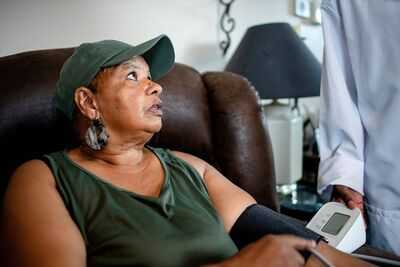
Anew study has shed light on the real toll high blood pressure has on our bodies and its link to a wide array of conditions and diseases. Scientists also discovered that what your blood pressure reading is as a young adult could increase your risk of these conditions in their midlife years.
Adults that hadhigh blood pressure throughout their thirties faced ahigher risk of heart disease, stroke or kidney disease in midlife, after turning 40, the research found. Additionally, people with a systolic reading just 10mmHg higher than their peers had a 27% higher risk of heart disease and a 22% higher risk of kidney disease after 10 years.
Those with the highest systolic readings were 3.5 times more likely - more than triple - to get a heart condition compared to those with the lowest readings. Participants with a diastolic blood pressure 5mmHg higher than their peers for 10 years had a 20% higher risk of heart disease and a 16% higher risk of kidney disease.
- Doctor explains one food 'worse than smoking' and shares main cause of 'early death'
- Cardiologist warning to anyone taking Omeprazole, ibuprofen, diclofenac and naproxen

The optimal blood pressure is 120mmHg/80mmHg, with the top number being systolic and the bottom being diastolic. According to the NHS, high blood pressure is usually measured around 140/90 in professional settings or 135/85 if you’re taking readings at home.
This study showed that a reading of just 130/85 throughout a person’s early adulthood could be enough to increase their risk of heart and kidney disease.
“Our study's findings show that blood pressure levels in early adulthood are important even if short-term risk appears low. Long-term exposure to higher blood pressure from early life may accumulate damage over time, increasing the risk of heart and kidney disease in midlife." said Hokyou Lee, associate professor of preventive medicine at Yonsei University College of Medicine in Seoul.
He continued: “Maintaining optimal blood pressure is a concern for every individual, at every age. Early prevention, diagnosis, monitoring and treatment, if needed, are investments in future heart and kidney health.
“Timely treatment of elevated blood pressure is essential to reduce the effects of years of exposure, which underscores the importance of monitoring and managing blood pressure as soon as a patient has elevated blood pressure levels.”
The South Korean study analysed data from nearly 300,000 adults and was presented at the American Heart Association's EPI|Lifestyle Scientific Sessions 2026. It is currently not peer-reviewed and the findings are still considered preliminary.
These findings were similar across men and women. The study followed participants from the age of 30 to 50 who had no prior history of heart or kidney disease before the age of 40.
If you have high blood pressure and it’s left untreated, this can put strain on your blood vessels, heart and other organs. This is known to increase your risk of strokes, vascular dementia and heart failure according to the NHS.
How lifestyle can influence blood pressureThere are a range of lifestyle choices that can influence your blood pressure. This includes having a balanced diet, exercising regularly and maintaining a healthy weight.
However, there are some risk factors of high blood pressure that we cannot control like age, ethnicity or family history. A GP may prescribe medication if your blood pressure is very high, no lifestyle changes have brought it down or if you’re at a higher risk of problems from high blood pressure.
People over the age of 40 in England can have their blood pressure checked for free at most pharmacies. For those under the age of 40, your GP surgery may be able to check it for you or occupational health departments. Retailers like Boots may also offer checks.
Contact to : xlf550402@gmail.com
Copyright © boyuanhulian 2020 - 2023. All Right Reserved.