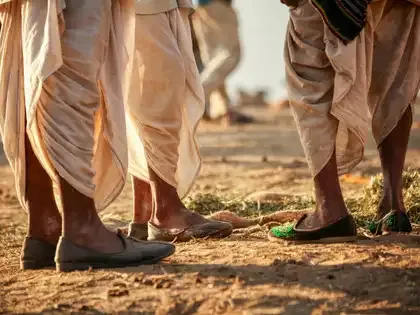
Over 70 years ago, when my father went for the interview that would decide whether he would make it to the Indian Foreign Service, it was the first time he ever wore a suit, belt and tie. All through his college days, his attire was what most young students wore in Kolkata in the 1940s, unless they happened to be scions of Anglicised families: a long, loose, collared and cuffed shirt over a white cotton dhoti and slippers or sandals. Not trousers and laced shoes.
He did abysmally in the interview, as he would recount later, ascribing it to a combination of discomfiture over wearing suit-boot and the Bengali accent in his otherwise fluent and impeccable English. Neither went down well with the sarkari worthies on the interview board who had been habituated to the biases of the British colonial system. Luckily, he had done so well in the written examination that he still became one the three IFS officers of the 1950 batch.
The atmosphere was never conducive enough for Baba to return to the desi dhoti-shirt combo in all his 36 years as a diplomat although while presenting his credentials he had to (reluctantly) don an achkan-churidar, declared by Jawaharlal Nehru to be India's designated formal attire. But Baba always said closely tailored achkans and churidars did nothing for most Indian men's spindly or paunchy physiques! Today the bandhgala suit is an acceptable alternative.
Indeed, much water had flown down the Ganges-now finally called the Ganga even by English-speaking Indians - since then, and neither suit-boot savoir faire nor 'cut glass' accents are now deemed necessary for bureaucratic, diplomatic or corporate careers in India anymore. And for men, a synthesis between desi and western attire has become acceptable in government, corporate, business and politics: the comfortable, all-weather trouser-shirt-bundi ensemble.
And yet that Indian ethos has not permeated the corporate world beyond the bundi. Indian suit-wearers who are not in government or government-aligned jobs mostly follow international trends in cut and colour; they remain curiously reluctant to make a more definite desi switch to dhoti-kurta for workplaces. But they are quite willing to wear embellished versions of the same combination at weddings, thereby reaffirming its appropriateness as formal attire.
With India's newfound confidence growing, though, why not make that leap of faith and revive the dhoti-shirt combination that my father's generation found so convenient and comfortable? Climate-appropriate clothing is accepted as an effective way of reducing the cost for cooling and heating offices. So why should Indian wear - veshti-shirt or dhoti-kurta - be associated with politicians only? Why is everyday Indianwear still looked askance by professionals?
I know at least one very adventurous senior government functionary - not a politician - who regularly wears dhoti-kurta to his sarkari office. But while many women in all professions wear sarees, I cannot think of a single male doctor, engineer, banker or senior executive who does so. The older generation of Indian industrialists did; not so their successors. Was this conforming to western norms necessary even after independence due to a crisis of confidence?
The advantages of asserting our own culture along with our rising clout has a precedent: what men uniformly wear around the world today is a result of western imperialism and cultural dominance, after all. Indian women did not succumb, but men did. However, there is little justification for unthinkingly adhering to it now. Gulf Arabs wear their thawb and bisht with pride and no loss of power. It is time Indian men start doing the same with the dhoti-kurta/shirt and bundi.
He did abysmally in the interview, as he would recount later, ascribing it to a combination of discomfiture over wearing suit-boot and the Bengali accent in his otherwise fluent and impeccable English. Neither went down well with the sarkari worthies on the interview board who had been habituated to the biases of the British colonial system. Luckily, he had done so well in the written examination that he still became one the three IFS officers of the 1950 batch.
The atmosphere was never conducive enough for Baba to return to the desi dhoti-shirt combo in all his 36 years as a diplomat although while presenting his credentials he had to (reluctantly) don an achkan-churidar, declared by Jawaharlal Nehru to be India's designated formal attire. But Baba always said closely tailored achkans and churidars did nothing for most Indian men's spindly or paunchy physiques! Today the bandhgala suit is an acceptable alternative.
Indeed, much water had flown down the Ganges-now finally called the Ganga even by English-speaking Indians - since then, and neither suit-boot savoir faire nor 'cut glass' accents are now deemed necessary for bureaucratic, diplomatic or corporate careers in India anymore. And for men, a synthesis between desi and western attire has become acceptable in government, corporate, business and politics: the comfortable, all-weather trouser-shirt-bundi ensemble.
And yet that Indian ethos has not permeated the corporate world beyond the bundi. Indian suit-wearers who are not in government or government-aligned jobs mostly follow international trends in cut and colour; they remain curiously reluctant to make a more definite desi switch to dhoti-kurta for workplaces. But they are quite willing to wear embellished versions of the same combination at weddings, thereby reaffirming its appropriateness as formal attire.
With India's newfound confidence growing, though, why not make that leap of faith and revive the dhoti-shirt combination that my father's generation found so convenient and comfortable? Climate-appropriate clothing is accepted as an effective way of reducing the cost for cooling and heating offices. So why should Indian wear - veshti-shirt or dhoti-kurta - be associated with politicians only? Why is everyday Indianwear still looked askance by professionals?
I know at least one very adventurous senior government functionary - not a politician - who regularly wears dhoti-kurta to his sarkari office. But while many women in all professions wear sarees, I cannot think of a single male doctor, engineer, banker or senior executive who does so. The older generation of Indian industrialists did; not so their successors. Was this conforming to western norms necessary even after independence due to a crisis of confidence?
The advantages of asserting our own culture along with our rising clout has a precedent: what men uniformly wear around the world today is a result of western imperialism and cultural dominance, after all. Indian women did not succumb, but men did. However, there is little justification for unthinkingly adhering to it now. Gulf Arabs wear their thawb and bisht with pride and no loss of power. It is time Indian men start doing the same with the dhoti-kurta/shirt and bundi.
Reshmi R Dasgupta