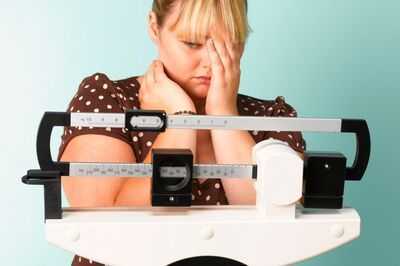
Millions of Brits have been wrongly classified as overweight or obese, new research suggests.
Scientists found the body mass index (BMI) measure used by the NHS wrongly classified 34% of people as obese while 53% were wrongly classified as overweight. Their study compared BMI - calculated by dividing someone’s weight by their height - with a gold-standard measure which scanned for distribution of body fat, muscle and bone as well as factoring in a person’s age.
Two thirds of the UK population are currently classified as overweight or obese by the NHS according to the BMI criteria. If the Italian study applied to the UK population, it would suggest around five million Brits have been wrongly told they are obese abnd over ten million wrongly classified as overweight.
• Extreme ‘no food’ diet NHS is prescribing to record numbers to reverse diabetes
• 'Fake' Wegovy weight loss jabs set to become widely available in UK within months
The research comes as new evidence shows the NHS is currently rationing access to life-changing surgery such as joint replacements based on a patient’s BMI.
Study lead Professor El Ghoch, of the University of Verona, said: "Despite the fact that the BMI seems to be reliable in determining body weight status in the normal weight range, over a third of the general population was misclassified, as the current BMI classification appears to inflate the prevalence of underweight, overweight and obesity among the general population."
BMI has long been criticised as a crude measure and experts have used the example or fit professional rugby players who it categorises as obese. However the new study based on 1,350 adults in Italy suggests it is wrongly labelling a huge proportion of the population.
People were then reclassified using dual-energy X-ray absorptiometry (DXA) scans which revealed 34% of patients who were obese based on BMI were misclassified, and should have been in the overweight category. Some 53% of those labelled overweight based on BMI were in the wrong category.
Three-quarters of the misclassified overweight patients were a normal weight when scanned, while the remainder should have been in the obese category.
It comes as a report by Arthritis UK showed one in five NHS Integrated Care Boards are rationing access to knee and hip replacement surgery based on a person’s BMI. The charity found that when looking at all surgeries, 54% of the regional NHS commissioning bodies are refusing or delaying operations based on patients having a BMI considered too high. The practice is a breach of regulator guidelines set by the National Institute for Care and Excellence (NICE).
Deborah Alsina, Chief Executive of Arthritis UK, said: “This practice is unfair and flies in the face of all guidelines and evidence. People waiting for joint replacement surgery have already spent many months or years with their health and mobility in decline as joint replacement surgery is the final line of treatment.
“Joints in need of replacement are incredibly painful and severely impact the ability of individuals to exercise which can lead to weight gain.”
What is BMI and how is it calculated?The BMI is calculated by dividing an adult's weight in kilograms by their height in metres squared. The NHS gives the examples that, if you weigh 70kg and are 1.70m tall, you work out your BMI by:
- squaring your height in metres: 1.70 x 1.70 = 2.89
- dividing your weight in kilograms: 70 ÷ 2.89 = 24.22
Your result will be displayed to one decimal place, for example, 24.2.
BMI thresholds define healthy weight as 18.5 to 24.9, overweight as 25 to 29., and obese as over 30 for adults, generally applying to white backgrounds. Lower thresholds are used for black, Asian, and other minority ethnic groups - with overweight 23–27.4 and obese over 27.5 - due to higher risk of obesity-related conditions at lower weights
Contact to : xlf550402@gmail.com
Copyright © boyuanhulian 2020 - 2023. All Right Reserved.