Some years ago, I met a fascinating man on a train. When I asked him what he did, he said he helped the dead make money. Since I barely manage that while alive, I was intrigued. He explained that, early in his career, he worked for a life insurance company and would attend strangers' funerals, approach the bereaved, and ask whether they knew what the deceased might have left behind in a life insurance policy.
After getting over the shock and anger at the inappropriateness of the timing, most realised they didn't know. Soon after, they were grateful to this gent for having found them money from a long-lost policy. In India, billions of rupees are lost not to theft or extravagance, but to not knowing you have them.
Also Read: Health insurance records strong growth momentum with premiums exceeding Rs 1.2 lakh crore in FY25
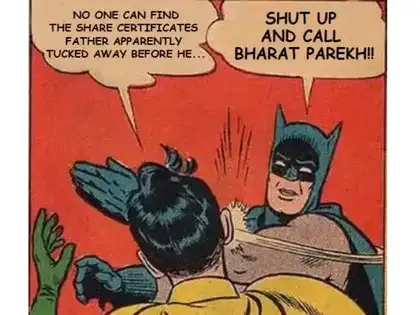
Meet Bharat Parekh. In 2022, BBC did a story on him, 'LIC: How the dead helped a salesman to become a star agent', in which Parekh explained his modus operandi. 'You don't need funeral invitations in India. You identify the bereaved family by the people carrying the bier. You approach relatives and friends of the deceased and tell them you are offering your free services to settle any claims on life insurance the dead person had. And you leave behind your visiting card'.
Parekh has reportedly sold $324 mn worth of life insurance, almost all of it in and around Nagpur, where he is based. What is fascinating about the Indian financial ecosystem is that in a culture obsessed with money, we are one of the worst cultures at having open discussions with family members about investments. It's commonplace to discover random FDs, some long-forgotten share certificates, and equally, unknown debts, once some old patriarch passes away.
It is usually Indian men, for some reason, who love to die with secrets. As a financial adviser once put it, 'Once a man passes away, and all these documents and people come out of the woodwork... finally you get an accurate picture of who the father or grandfather really was. He may have been kind, loving, entrepreneurial, or fiery, but that's not the real person. You may find he took a wild bet on say ITC in the 1970s, which he forgot about, only to leave his descendants very wealthy. Or a 20-year court case over a huge debt amount, which might bankrupt his grandkids'.
In all cases, he dies with the information. People like Parekh show up, while embers are still red, with information that could change everything. Did the old man open an LIC policy eons ago that he told no one about and paid premiums for? According to Parekh, this is far more frequent than an aberration.
When I reached out to him for a chat, he explained, 'Life insurance can do what no one else can. Condolences eventually stop. But it is only life insurance that brings in the money.' He gave me his book to read, in which he explained that not everyone welcomes a stranger at a funeral. But everyone wants to know if the deceased left behind a policy and the amount. To quote him, 'A wife cannot realise the importance of life insurance, only a widow can.'
The book also has an incredible anecdote about Usha Uthup. Parekh recounts a Uthup concert organised by Gondwana Junior Chamber. He noticed that arrangements-stage design, sound systems, lighting, and ambience-were handled by her team, which arrived 3 days before the event. Uthup, however, arrived only 2 hours before the show. It taught him a powerful lesson: delegate all small logistics and show up at the end to give the star presentation, presumably leaving the LIC-buying family mesmerised.
What men like Parekh teach us about money is that one may have an obsession for it, but until families learn to speak to each other honestly, one relies on the kindness of strangers at funerals to tell us what we're worth.
After getting over the shock and anger at the inappropriateness of the timing, most realised they didn't know. Soon after, they were grateful to this gent for having found them money from a long-lost policy. In India, billions of rupees are lost not to theft or extravagance, but to not knowing you have them.
Also Read: Health insurance records strong growth momentum with premiums exceeding Rs 1.2 lakh crore in FY25
Meet Bharat Parekh. In 2022, BBC did a story on him, 'LIC: How the dead helped a salesman to become a star agent', in which Parekh explained his modus operandi. 'You don't need funeral invitations in India. You identify the bereaved family by the people carrying the bier. You approach relatives and friends of the deceased and tell them you are offering your free services to settle any claims on life insurance the dead person had. And you leave behind your visiting card'.
Parekh has reportedly sold $324 mn worth of life insurance, almost all of it in and around Nagpur, where he is based. What is fascinating about the Indian financial ecosystem is that in a culture obsessed with money, we are one of the worst cultures at having open discussions with family members about investments. It's commonplace to discover random FDs, some long-forgotten share certificates, and equally, unknown debts, once some old patriarch passes away.
It is usually Indian men, for some reason, who love to die with secrets. As a financial adviser once put it, 'Once a man passes away, and all these documents and people come out of the woodwork... finally you get an accurate picture of who the father or grandfather really was. He may have been kind, loving, entrepreneurial, or fiery, but that's not the real person. You may find he took a wild bet on say ITC in the 1970s, which he forgot about, only to leave his descendants very wealthy. Or a 20-year court case over a huge debt amount, which might bankrupt his grandkids'.
In all cases, he dies with the information. People like Parekh show up, while embers are still red, with information that could change everything. Did the old man open an LIC policy eons ago that he told no one about and paid premiums for? According to Parekh, this is far more frequent than an aberration.
When I reached out to him for a chat, he explained, 'Life insurance can do what no one else can. Condolences eventually stop. But it is only life insurance that brings in the money.' He gave me his book to read, in which he explained that not everyone welcomes a stranger at a funeral. But everyone wants to know if the deceased left behind a policy and the amount. To quote him, 'A wife cannot realise the importance of life insurance, only a widow can.'
The book also has an incredible anecdote about Usha Uthup. Parekh recounts a Uthup concert organised by Gondwana Junior Chamber. He noticed that arrangements-stage design, sound systems, lighting, and ambience-were handled by her team, which arrived 3 days before the event. Uthup, however, arrived only 2 hours before the show. It taught him a powerful lesson: delegate all small logistics and show up at the end to give the star presentation, presumably leaving the LIC-buying family mesmerised.
What men like Parekh teach us about money is that one may have an obsession for it, but until families learn to speak to each other honestly, one relies on the kindness of strangers at funerals to tell us what we're worth.
(Disclaimer: The opinions expressed in this column are that of the writer. The facts and opinions expressed here do not reflect the views of www.economictimes.com.)
Anuvab Pal
Anubav Pal is an Indian stand up comedian, screenwriter, playwright and novelist