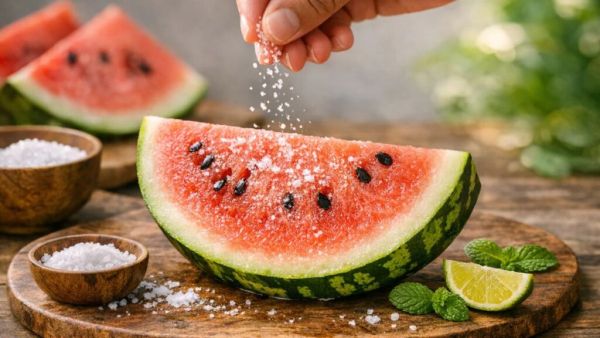
Watermelon is closely tied to summer eating, often cut fresh and eaten as it is. Yet, in many homes, it’s casually seasoned with a pinch of salt before being served. The habit is familiar enough to go unnoticed, even though it seems unnecessary for a fruit already known for its sweetness and juiciness. Over time, this small detail has simply become part of how the fruit is eaten, rarely questioned or explained. But like many everyday food habits, there’s more to it than convenience or tradition. Let’s understand why you should have watermelon with a pinch of salt and what it does to your body.
Here’s Why You Should Add A Pinch Of Salt To Watermelon
1. It Enhances Natural Sweetness
Photo: Unsplash
A pinch of salt can actually make watermelon taste sweeter – without adding any sugar. This happens because salt affects how our taste receptors perceive flavour. A 2023 study published in eLife found that chloride ions from salt can interact with sweet taste receptors, enhancing sweetness perception and reducing bitterness at low concentrations. In simple terms, salt sharpens and amplifies the fruit’s natural sugars, making each bite taste more flavourful. This subtle flavor boost is a well‑known technique in sensory science and is why salt is often used to enhance sweetness in otherwise naturally sweet foods.
2. Helps Replace Lost Electrolytes
Watermelon is naturally high in water, which makes it refreshing and hydrating. However, it contains very little sodium, which is an essential electrolyte that the body loses through sweat, especially in hot weather. Adding a small pinch of salt helps replenish this lost sodium, supporting better fluid retention and hydration. Research published in the journal Nutrients explains that sodium plays a key role in maintaining plasma volume and helping the body hold on to the water it consumes, rather than flushing it out quickly. This is why a combination of water and sodium is often more effective for rehydration than water alone, particularly after heat exposure or physical activity.
3. May Improve Flavor Balance

Sometimes watermelon can taste bland or overly watery, especially if it is not perfectly ripe. A pinch of salt helps balance the flavor profile, making each bite more satisfying. It sharpens the overall taste and reduces the dullness that can come with under-ripe or less sweet fruit.
4.Can Support Digestion
In small amounts, salt may help stimulate digestive juices, which can make it easier for the body to process food. While watermelon is already easy to digest, this small addition can enhance the overall eating experience, especially when consumed after meals or as a snack.
5. Encourages Mindful Eating
Adding salt to watermelon is a small step, but it often slows down how you eat it. Instead of quickly finishing a bowl, you tend to savor each bite. This can help with portion control and make the snack feel more satisfying overall.
How Much Salt Is Enough?

Photo: Unsplash
The key is moderation. A small pinch is all you need. Too much salt can overpower the fruit’s natural taste and increase sodium intake unnecessarily. If you prefer, you can also add a mix of black salt and a squeeze of lemon for extra flavour.
So, adding a pinch of salt to watermelon does not change the fruit’s nutritional value dramatically, but it can make the eating experience more enjoyable and balanced.
Contact to : xlf550402@gmail.com
Copyright © boyuanhulian 2020 - 2023. All Right Reserved.