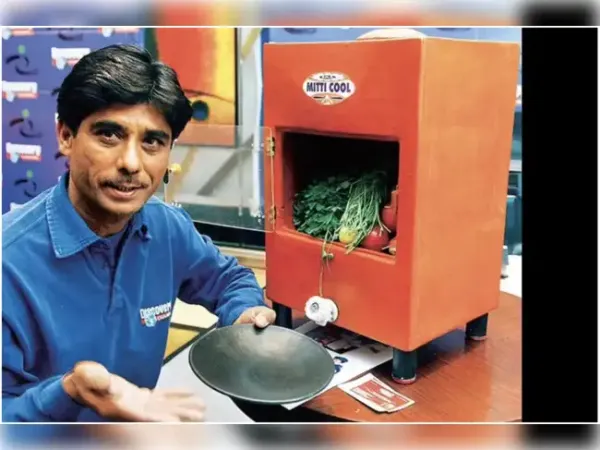
In a country where heat and unreliable electricity remain everyday challenges, a clay refrigerator developed by Gujarat-based potter Mansukhbhai Prajapati has emerged as a practical, low-cost solution for preserving food without power. Built on the simple principle of evaporation, the device can keep milk, vegetables and water cool for up to two to three days, reports TOI.
The idea for the refrigerator took shape after the 2001 Gujarat earthquake, when widespread damage left many families without electricity or basic storage facilities. Witnessing these challenges, Prajapati began experimenting with clay-based solutions to address food preservation in low-resource settings.
The innovation did not come quickly. Prajapati reportedly spent four to five years refining the clay composition, eventually using a mix of clay, sand and sawdust to create a porous structure. This allowed water to seep through and evaporate, enabling the cooling process.
The National Innovation Foundation has described the product as a natural refrigerator made entirely from clay, developed through sustained experimentation.
According to the National Innovation Foundation, the refrigerator can maintain temperatures around 5 to 8 degrees Celsius lower than the outside environment and is most effective in hot, dry climates.
The device was intended for households that cannot afford expensive refrigerators or consistent electricity, offering a practical alternative for daily needs.
He has since expanded his work to include other clay-based products such as water filters, cookers and kitchenware.
Its continued relevance highlights a broader point: effective solutions do not always rely on advanced technology, but can emerge from local materials, practical understanding and the need to solve everyday problems.
(With inputs from TOI)
The idea for the refrigerator took shape after the 2001 Gujarat earthquake, when widespread damage left many families without electricity or basic storage facilities. Witnessing these challenges, Prajapati began experimenting with clay-based solutions to address food preservation in low-resource settings.
The innovation did not come quickly. Prajapati reportedly spent four to five years refining the clay composition, eventually using a mix of clay, sand and sawdust to create a porous structure. This allowed water to seep through and evaporate, enabling the cooling process.
The National Innovation Foundation has described the product as a natural refrigerator made entirely from clay, developed through sustained experimentation.
How the clay refrigerator works
The device operates using evaporative cooling. Water is poured into an upper chamber and gradually seeps through the porous clay walls. As the water evaporates, it absorbs heat from the interior, lowering the temperature inside.According to the National Innovation Foundation, the refrigerator can maintain temperatures around 5 to 8 degrees Celsius lower than the outside environment and is most effective in hot, dry climates.
Cost of clay refrigerator
Designed for affordability, the clay refrigerator costs significantly less than conventional appliances. Reports have placed its price at around ₹2,500, while global organisations such as the United Nations Conference on Trade and Development have highlighted it as an example of frugal innovation.The device was intended for households that cannot afford expensive refrigerators or consistent electricity, offering a practical alternative for daily needs.
From local craft to national recognition
Prajapati’s work gained wider attention after being recognised by the National Innovation Foundation in 2009. He was later featured in a 2010 Forbes list highlighting rural Indian entrepreneurs making an impact through innovation.He has since expanded his work to include other clay-based products such as water filters, cookers and kitchenware.
A model of grassroots innovation
The clay refrigerator stands as an example of how traditional knowledge can be adapted to modern challenges. Developed outside formal laboratories, the innovation reflects a focus on accessibility, low cost and real-world utility.Its continued relevance highlights a broader point: effective solutions do not always rely on advanced technology, but can emerge from local materials, practical understanding and the need to solve everyday problems.
(With inputs from TOI)