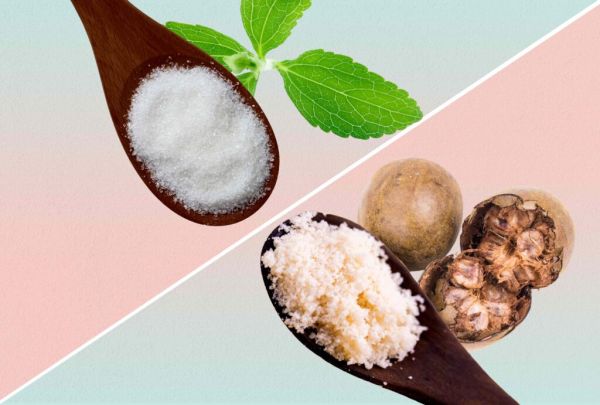
From protein powder to zero-sugar yogurt, more and more foods are sweetened with stevia and monk fruit. Which one wins out for blood sugar management?
Reviewed by Dietitian Karen Ansel, M.S., RDN
Key Points
- Stevia and monk fruit are popular sugar- and calorie-free sweeteners.
- Experts and research agree that they are equally helpful for blood sugar management.
- They have different flavors and aftertastes, so choose the one you like best.
Stevia and monk fruit are naturally occurring, calorie-free sweeteners that are frequently added to low- and sugar-free foods and drinks, like protein powders, yogurt, energy bars and drinks. But how do they impact blood sugar, and is one better than the other? Turns out, it’s a tie. “Stevia and monk fruit are both nonnutritive sweeteners, so they generally don’t raise blood glucose the way sugar does because they contribute little to no digestible carbohydrate,” says Olayide Adejumobi, MS, RDN, LD.
“The main difference is where the sweetness comes from. Stevia contains compounds called steviol glycosides from the stevia leaf, while monk fruit’s sweetness comes from antioxidants called mogrosides,” explains Talia Follador, RDN, LDN. Both of these sweeteners come from plants, unlike artificial sweeteners that are made in a lab.
Read on to learn how stevia and monk fruit impact blood sugar and why they’re both solid choices.
How Stevia Impacts Blood Sugar
Since stevia is sugar-free, it’s often used as a sugar alternative for folks looking to cut down on added sugars. “Research shows that steviol glycosides do not increase post-meal glucose,” says Follador. What about its impact on longer-term blood sugar management? One systematic review and meta-analysis found that consuming stevia for up to four months helped lower blood sugar levels in people with diabetes, high blood pressure or obesity. However, another systematic review and meta-analysis that included adults without diabetes concluded that stevia had no impact on long-term blood sugar management. In both cases, researchers said that the quality of the evidence is low, so more research is needed.
What Monk Fruit Does to Blood Sugar
Just like stevia, monk fruit delivers sweetness without raising blood sugar. “Replacing sugar with monk fruit extract has resulted in lower post-meal glucose responses in several randomized trials,” says Follador. Research shows that monk fruit may reduce post-meal blood sugar by up to 18% and insulin levels by as much as 22%. It may also help protect against inflammation, thanks to its antioxidant properties. Yet, like stevia, researchers caution that more study is needed.
Why It’s a Tie
They Have a Similar Effect on Blood Sugar
“I don’t typically recommend one over the other because they function very similarly metabolically,” says Follador. Adejumobi agrees, saying, ”I don’t see one as universally better.” While both sweeteners are shown to reduce post-meal blood sugar, monk fruit may have a slight edge for improving insulin sensitivity. However, the methods and populations used to study each of these sweeteners were different, so more research on their impact on insulin sensitivity is needed.
In the meantime, they’re safe and effective for reducing sugar intake. If you want a sweetener that won’t raise your blood sugar, like table sugar, honey or syrup will, they are both viable options.
They Taste Different
Stevia and monk fruit have distinct flavors and aftertastes, which is partly why one isn’t definitively better than the other. Everyone’s taste preferences are different, so it’s worth trying them both to see which one you prefer. “I don’t think one is automatically better—I recommend the one you like the taste of and will actually use,” says Adejumobi. After all, if you don’t use it because you don’t like the flavor, you won’t reap the blood sugar benefits. “I usually encourage people to choose the option they enjoy the taste of and tolerate well,” adds Follador.
They Travel with Different Ingredients
While stevia and monk fruit won’t raise your blood sugar, they are often used in products that include other sweeteners that can raise blood sugar. “Some sweeteners marketed as stevia or monk fruit actually contain very small amounts of these plant extracts and larger amounts of other sweeteners or fillers,” says Follador.
Instead of stressing over whether to choose stevia or monk fruit, focus on the other ingredients they are combined with. “I look at the ingredient list first,” says Adejumobi. “If it’s a stevia or monk fruit product with no added sugar, either can work well.” She recommends checking the label for blood-sugar-raising sweeteners, such as sugar, dextrose, maltodextrin or syrups.
What to Consider When Choosing a Sweetener for Healthy Blood Sugar
Stevia and monk fruit are both good options if you are watching your blood sugar. But they aren’t the only ones. These expert-backed tips can help you choose the best sweetener for your needs.
- Check the ingredient list. Regardless of which sweetener you choose, scan the ingredient list to be sure there aren’t added sugars or other sweeteners you don’t want. “Some people experience bloating or digestive discomfort with certain sweetener blends, especially sugar alcohols like sorbitol or xylitol,” says Follador. Alternatively, some stevia or monk fruit-containing products may include tiny amounts of the sugar dextrose or another sugar alcohol called erythritol.
- Notice what your body tolerates best. “Start small and see how you tolerate it. The best option is the one you can use consistently without side effects,” says Adejumobi. You may notice that you feel fine when you use stevia or monk fruit, for example, but not after other sweeteners.
- Focus on the big picture. While nonnutritive sweeteners, like stevia and monk fruit, can be useful tools to manage blood sugar, the foods and drinks they are added to still matter. These ingredients are often used to sweeten nutritionally empty foods, like cookies, candy and gummy snacks, which do little to improve your health. As Adejumobi says, “Use [monk fruit or stevia] as a ‘bridge,’ not a free pass. Sweeteners help reduce sugar, but overall meal balance still matters.”
Our Expert Take
Experts and research agree—stevia and monk fruit are equally helpful sugar alternatives for blood sugar management. “If a product is pure stevia or pure monk fruit (without added sugar), either can be a helpful swap for people trying to reduce added sugar,” says Adejumobi. To help make your decision, check the ingredient list to be sure there aren’t other added sweeteners that may raise blood sugar or irritate your stomach. And remember—everybody is a little different. You may find that you tolerate one better or prefer the taste of one over the other. Go with what best suits your body and taste preferences!
Contact to : xlf550402@gmail.com
Copyright © boyuanhulian 2020 - 2023. All Right Reserved.