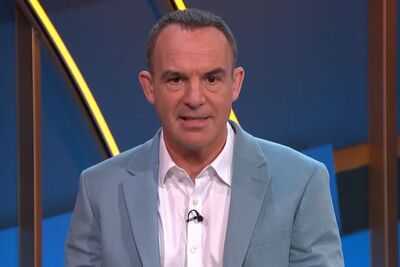
Martin Lewis has encouraged shoppers to look out for a specific product label code while browsing the aisles. The consumer advocate shared this guidance on his BBC podcast after inviting listeners to contribute their own cost-cutting strategies.
He encouraged fans to reveal any valuable insights they'd gained through their work that might help others save some cash. One contributor, who had worked in pharmaceutical research, highlighted that generic medicines are frequently the same as pricier branded alternatives. They cited the example of Panadol tablets, which contain paracetamol, which can be purchased far more affordably as a supermarket own-brand version. Mr Lewis readily backed this money-saving recommendation. He said: "Quite right, it's the active ingredient that does the job.
"So if it has the same active ingredient, it's doing the same job." The active ingredient refers to the component of a tablet or medicine that delivers the therapeutic benefit, such as paracetamol, aspirin or retinol.
Mr Lewis added the caveat that occasionally two medications containing the same active ingredient may differ in their mechanism, for instance one might be quick release. He mentioned another detail to check when comparing products is the PL code, or product licence code.
When two separate products share identical PL codes, the tablet or medicine contained within is precisely the same product, so you may as well go for the cheaper one. Mr Lewis said: "You can find in some pharmacies, different pharmaceuticals, like hay fever tablets: one might be an own brand at half the price of the branded one, but they have the same PL code.
"Then it's not just the same active ingredient, it's absolutely the same stuff. It's the same tablet inside." Another health-focused suggestion came in from a listener who has worked for many years as a doctor and GP.
• BBC Morning Live Doctor Punam issues infection 'spike' warning in coming weeks
• 'We thought our little girl was just playing too much on her iPad - we were wrong'
People underestimate these schemesThey strongly advised people to consider taking out health insurance based on their professional experience. Addressing this recommendation, Mr Lewis said: "I certainly think many people underestimate healthcare cashback schemes, which is mutual cover.
"These are plans where you get dental or optical, even on the NHS, anything you're paying for on the NHS or private. Then you take your receipts at the end and they refund you up to a certain limit."
Another money-saving pointer was suggested by somebody who works at a GP surgery. They said that anyone regularly collecting prescriptions for HRT (Hormone Replacement Therapy) might benefit from purchasing a prepayment certificate.
Many people miss outMr Lewis responded: "Quite right, couldn't support that any more. There are many women missing out on that one and it is a big way to save."
By purchasing a prepayment certificate, you pay a fixed price that covers all your NHS prescriptions. If you require more than three items in three months, or 11 items in 12 months, this can result in savings.
A three-month prepayment certificate is available for £32.05, or a 12-month one for £114.50, while the current prescription charge per item in England stands at £9.90.
Contact to : xlf550402@gmail.com
Copyright © boyuanhulian 2020 - 2023. All Right Reserved.