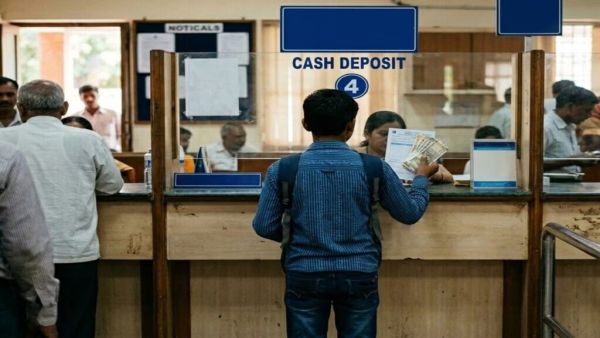
Under ‘Payments Vision 2028’, the Reserve Bank of India (RBI) is working on a major plan to provide better banking services to customers. Switching a bank account to another bank will be similar to mobile network portability. In addition, RBI is also focusing on ensuring fraud protection and improving the efficiency of cross-border payment systems.
Switching bank accounts will be easier
RBI is developing a new system called ‘Payments Switching Service (PaSS)’. The platform will act as a central hub, where customers can view and control all their payment orders in one place. Additionally, they can easily transfer these instructions from one bank to another. This means, customers can easily port their bank accounts. It will be like changing network without changing mobile number. Customers can now switch banks without any financial hassle. Currently, switching bank accounts is a complicated process for most bank customers. Once the account is linked to services like salary, subsidy, EMI and insurance, it becomes difficult to transfer it to another bank due to numerous automated payments.
“Do not just assemble, design in India”; Ashwini Vaishnav’s Nirvani warning to electronics companies, otherwise…
In addition, there are plans to improve the international payment system. RBI is reviewing existing regulations and technical barriers to ensure faster, cheaper and transparent international transactions. The expansion of Central Bank Digital Currency (CBDC) is expected to further boost global payments.
E-check
Regarding cheques, the RBI said it is planning to review the design and security features to prevent fraud. Electronic checks will also be introduced. According to the Reserve Bank of India, the possibility of introducing electronic checks in India will be explored. RBI is now working on a “shared liability” approach to curb unauthorized transactions.
The RBI has said that liability arising from unauthorized digital payment transactions will be split between both the customer’s bank (issuing bank) and the beneficiary’s bank. Similar to how card controls work today, RBI plans to introduce a facility to enable or disable transactions on any digital payment mode. RBI highlighted the growing role of e-commerce platforms in payment transactions. The central bank said that e-commerce marketplaces and centralized platforms now have significant responsibilities. Therefore, the scope of direct regulation will be extended to include these institutions.
Contact to : xlf550402@gmail.com
Copyright © boyuanhulian 2020 - 2023. All Right Reserved.