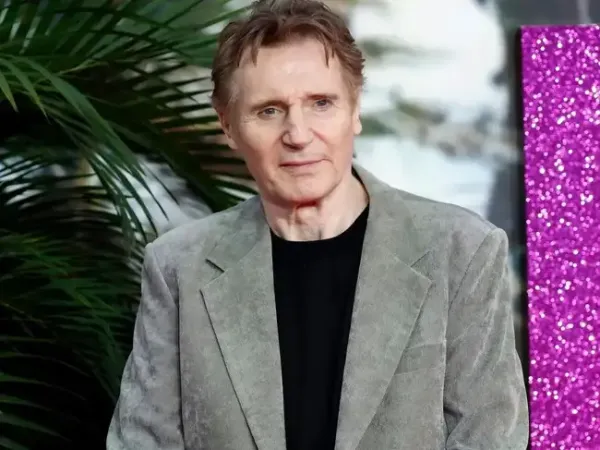
Grief is often described in quiet metaphors, but rarely with the raw clarity that Liam Neeson brings to it. The actor, known for his commanding on-screen presence, once revealed a deeply personal side while reflecting on loss. Speaking about the death of his wife, actress Natasha Richardson, Neeson shared a perspective that resonated with many, capturing how grief doesn’t follow a straight line but arrives in powerful, unpredictable surges that reshape everyday life.
Beyond his personal life, Neeson’s journey has been marked by an extraordinary career spanning over four decades. From his breakout role in Schindler's List, directed by Steven Spielberg, to iconic performances as Qui-Gon Jinn in Star Wars: Episode I – The Phantom Menace and Ra’s al Ghul in Batman Begins, he has remained one of Ireland’s most respected actors. His personal loss, however, adds a profound layer to his public persona—one that reflects resilience, vulnerability, and the quiet strength to keep going.
Quote of the day by Liam Neeson
In an interview with CBS, he spoke candidly about those lingering moments of absence that still feel real. He shared that there were moments in his New York home when he heard the door opening and was taken back to the early years after her passing. Back then, she would walk in, drop her keys on the table, and call out a greeting. Even now, that familiar sound makes him instinctively expect to hear her voice again, as if she has just returned. He then shared, “And, then, it's-- grief's like-- it hits you. It's like a wave. You just get this profound feeling of instability. You feel like a three-legged table. Just suddenly, you just-- the Earth isn't stable anymore. And then it passes and becomes more infrequent, but I still get it sometimes.”Meaning of Liam Neeson’s quote
What Neeson expresses here is the disorienting nature of loss. Grief, in his words, is not constant but episodic, arriving suddenly and shaking one’s sense of stability. The imagery of a wave reflects how overpowering it can feel in the moment, while the comparison to a three-legged table captures that imbalance, that sudden loss of grounding. Yet, there is also a quiet acknowledgement that with time, these waves grow less frequent, allowing space for healing without ever fully erasing the pain.Deeper meaning and theme behind Liam Neeson’s words
The theme that emerges from his reflection is one of enduring love and the human capacity to carry loss forward. Neeson’s experience highlights how grief is deeply tied to memory—how ordinary sounds, like a door opening, can bring back an entire presence. It also speaks to acceptance, not as forgetting, but as learning to live alongside absence. His words remind us that grief is not something to “move on” from, but something that evolves, softens, and becomes part of who we are over time.Beyond his personal life, Neeson’s journey has been marked by an extraordinary career spanning over four decades. From his breakout role in Schindler's List, directed by Steven Spielberg, to iconic performances as Qui-Gon Jinn in Star Wars: Episode I – The Phantom Menace and Ra’s al Ghul in Batman Begins, he has remained one of Ireland’s most respected actors. His personal loss, however, adds a profound layer to his public persona—one that reflects resilience, vulnerability, and the quiet strength to keep going.
( Originally published on Apr 01, 2026 )