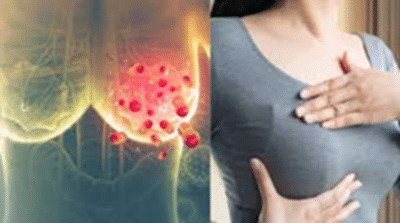
Inflammation and Cancer Growth: Breast cancer cells begin to use the lungs' natural repair system to their advantage. Let's explain how this damages the lungs.

Why does breast cancer spread to the lungs?
Why Breast Cancer Spreads To Lungs: Breast cancer in women is the leading cause of cancer deaths and cases in India and worldwide. When breast cancer spreads to other parts of the body, it becomes even more dangerous. The lungs are among the most common organs where this cancer spreads. Doctors have long known that cancer becomes difficult to treat once it reaches the lungs, but until now, it wasn't entirely clear why tumours grow so rapidly there.
What did the research reveal?
Recently, research at the University of Colorado Cancer Centre made a significant discovery. According to this study, published in Cancer Research Community, breast cancer cells begin to use the lungs' natural repair system to their advantage. In fact, the lungs have a unique ability to heal themselves quickly. When air sacs, called alveoli, are damaged, the body immediately initiates the repair process. This process is essential for breathing and maintaining lung health.
Why does the tumor spread easily?
But when cancer cells reach the lungs, they disrupt this healing system. This process, which normally operates intermittently, becomes continuously active in the presence of cancer. This perpetuates inflammation and creates an environment in which tumours can easily grow. Research has also revealed that alveolar type 2 cells play a key role in this process. These cells normally help repair the lungs, but in the presence of cancer, they begin to emit signals that promote tumor growth. Cancer cells also maintain contact with them, continuing this cycle.
What is the way to escape?
To address this issue, scientists tested a drug, roflumilast, already used to treat chronic obstructive pulmonary disease. Experiments found that the drug could slow the growth of lung tumors by altering the environment conducive to cancer growth. This approach differs from traditional treatments, which attempt to directly eliminate cancer cells. The focus here is on inhibiting the support systems that help cancer grow. This research is currently in its early stages, and further testing is needed before it can be implemented in humans.
Contact to : xlf550402@gmail.com
Copyright © boyuanhulian 2020 - 2023. All Right Reserved.