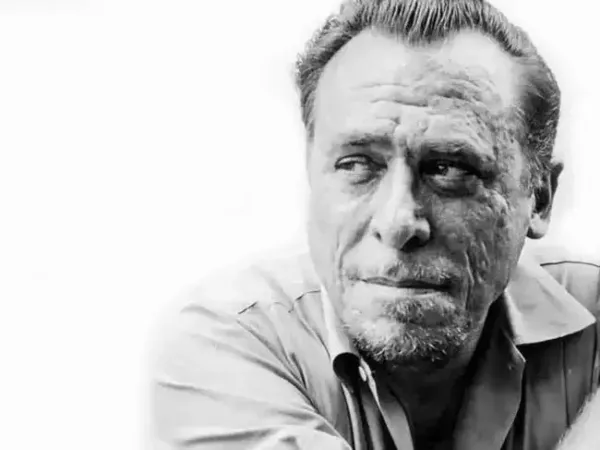
Quote of the Day: Life in the modern world often presents a paradox. We talk about freedom as if it is something everyone can enjoy, yet in reality, freedom can sometimes be a heavy burden. The ability to act independently, to make choices without consulting anyone else, is often seen as an ideal. But this independence can also leave a person feeling isolated, questioning whether what we call freedom is truly liberating or quietly becomes loneliness. Charles Bukowski, the renowned American poet and novelist, captures this tension with remarkable clarity:
"And when nobody wakes you up in the morning, and when nobody waits for you at night, and when you can do whatever you want. What do you call it, freedom or loneliness?"
At first glance, Bukowski’s words appear to celebrate the autonomy of living unrestrained by societal norms or expectations. For many, the idea of waking up without obligations, setting one’s own schedule, and making decisions entirely for oneself is the epitome of personal freedom. This resonates strongly with those who live alone or pursue unconventional lifestyles, offering the thrill of unrestricted choice. The mornings when no one calls or knocks can feel like small victories of independence. The evenings spent entirely on personal interests, without compromise, can seem liberating.
However, Bukowski’s observation also exposes a deeper layer: the loneliness that often accompanies unbounded freedom. When no one waits for you, when the day passes without shared experiences, solitude can begin to feel empty. Independence may come at the cost of companionship, and what initially seems exhilarating may slowly turn isolating. This duality—freedom versus loneliness—is at the heart of Bukowski’s quote, forcing readers to reflect on the price of autonomy.
His literary alter ego, Henry Chinaski, embodies Bukowski’s own experiences as an outsider navigating the world. Through Chinaski, Bukowski explored the complexities of solitude, independence, and survival, without romanticizing or sugarcoating them. This character, appearing in novels such as Post Office (1971) and Women (1978), allows readers to see both the exhilaration and emptiness of living life on one’s own terms. Bukowski’s experiences in low-paying jobs, the barroom culture of Los Angeles, and transient relationships deeply informed his writing, giving it a raw, authentic quality that resonates even today.
The modern context makes this reflection particularly relevant. In an era of remote work, urban living, and digital communication, many people experience freedom in unprecedented ways. They can set their own schedules, live independently, and travel freely, but often at the cost of meaningful interactions. Bukowski’s insight reminds us that freedom is not purely external; it is also shaped by relationships and connections. Without these, autonomy may feel hollow.
Over his lifetime, Bukowski published more than forty books of poetry, prose, and novels, including collections such as It Catches My Heart in Its Hands (1963) and Slouching Toward Nirvana (2005, posthumous). His influence extends beyond literature; he has inspired generations of readers and writers who seek authenticity in their creative expression. His reflections on solitude, in particular, continue to provoke thought about the human desire for both independence and connection.
For many readers, Bukowski’s quote serves as both a warning and a meditation. It suggests that the pursuit of independence should be balanced with attention to emotional needs and relationships. True freedom, it implies, is not just about doing whatever one wants; it is also about sharing moments, connections, and experiences that give life depth and meaning.
"And when nobody wakes you up in the morning, and when nobody waits for you at night, and when you can do whatever you want. What do you call it, freedom or loneliness?"
At first glance, Bukowski’s words appear to celebrate the autonomy of living unrestrained by societal norms or expectations. For many, the idea of waking up without obligations, setting one’s own schedule, and making decisions entirely for oneself is the epitome of personal freedom. This resonates strongly with those who live alone or pursue unconventional lifestyles, offering the thrill of unrestricted choice. The mornings when no one calls or knocks can feel like small victories of independence. The evenings spent entirely on personal interests, without compromise, can seem liberating.
However, Bukowski’s observation also exposes a deeper layer: the loneliness that often accompanies unbounded freedom. When no one waits for you, when the day passes without shared experiences, solitude can begin to feel empty. Independence may come at the cost of companionship, and what initially seems exhilarating may slowly turn isolating. This duality—freedom versus loneliness—is at the heart of Bukowski’s quote, forcing readers to reflect on the price of autonomy.
Quote of the day: Bukowski’s Life and His Perspective
Charles Bukowski (1920–1994) was born in Andernach, Germany, and immigrated to the United States with his family at a young age. He grew up in Los Angeles, enduring a difficult childhood marked by abuse from his father and social alienation due to severe acne. These early struggles shaped his understanding of isolation and suffering, which later became central themes in his work. Bukowski’s life was defined by both hardship and independence; he worked various menial jobs, experienced repeated rejection as a writer, and eventually embraced a solitary, unconventional lifestyle.His literary alter ego, Henry Chinaski, embodies Bukowski’s own experiences as an outsider navigating the world. Through Chinaski, Bukowski explored the complexities of solitude, independence, and survival, without romanticizing or sugarcoating them. This character, appearing in novels such as Post Office (1971) and Women (1978), allows readers to see both the exhilaration and emptiness of living life on one’s own terms. Bukowski’s experiences in low-paying jobs, the barroom culture of Los Angeles, and transient relationships deeply informed his writing, giving it a raw, authentic quality that resonates even today.
Quote of the day: The Balance Between Freedom and Isolation
Bukowski’s work consistently examines the tension between freedom and isolation. His poetry and prose explore how independence can empower a person while simultaneously highlighting the emotional cost of solitude. Many of his characters, including Chinaski, relish the ability to act without restriction but also grapple with the loneliness that comes from the absence of human connection. The question Bukowski poses—freedom or loneliness?—invites readers to consider whether autonomy can exist fully without companionship or shared experiences.The modern context makes this reflection particularly relevant. In an era of remote work, urban living, and digital communication, many people experience freedom in unprecedented ways. They can set their own schedules, live independently, and travel freely, but often at the cost of meaningful interactions. Bukowski’s insight reminds us that freedom is not purely external; it is also shaped by relationships and connections. Without these, autonomy may feel hollow.
Bukowski’s Literary Style and Influence
Bukowski’s writing is often described as direct, raw, and intensely personal. He avoids decorative language or abstraction, preferring to convey truths in stark, unfiltered terms. This approach allows him to express the subtle complexities of freedom and loneliness with immediacy and impact. Critics have noted that his work resonates because it portrays the human experience without pretense, capturing both the struggles and small joys of life lived outside societal norms.Over his lifetime, Bukowski published more than forty books of poetry, prose, and novels, including collections such as It Catches My Heart in Its Hands (1963) and Slouching Toward Nirvana (2005, posthumous). His influence extends beyond literature; he has inspired generations of readers and writers who seek authenticity in their creative expression. His reflections on solitude, in particular, continue to provoke thought about the human desire for both independence and connection.
Reflections on Freedom in the Modern Age
The paradox Bukowski highlights—freedom intertwined with loneliness—is increasingly relevant today. People can live alone, work remotely, travel freely, and control their own schedules, yet social isolation remains a pressing concern. Bukowski’s question encourages reflection on what constitutes a meaningful life. Is freedom simply the absence of constraint, or is it enriched by human connection? Can we truly feel liberated if we are alone in our experiences?For many readers, Bukowski’s quote serves as both a warning and a meditation. It suggests that the pursuit of independence should be balanced with attention to emotional needs and relationships. True freedom, it implies, is not just about doing whatever one wants; it is also about sharing moments, connections, and experiences that give life depth and meaning.