The Easter bank holiday weekend has finally arrived, and numerous motorists will be planning journeys by car. However, drivers could unwittingly breach lesser-known Highway Code rules, and face fines of up to £5,000 as a consequence.
To help motorists stay safe on the roads and avoid simple errors that could result in expensive penalties, experts from leasing agents Nationwide Vehicle Contracts highlighted five rules which drivers should be mindful of when making a journey this weekend. Keith Hawes, Director of Nationwide Vehicle Contracts, said: "As millions of drivers head out over the Easter weekend, it's important to remember that the roads will be busier and enforcement is often stepped up.
"Simple oversights can lead to costly penalties such as driving with unrestrained pets, overloading the vehicle, and driving whist tired. Our advice is simple: plan, secure everything properly, take regular breaks, and keep your focus on the road. A bit of preparation can help ensure a smooth and safe Easter journey."
- New Chinese model in UK 'cheaper than Kia with more equipment'
- Car tax April 2026 rates confirmed as 59 vehicles pay £5,690 from this week - full list
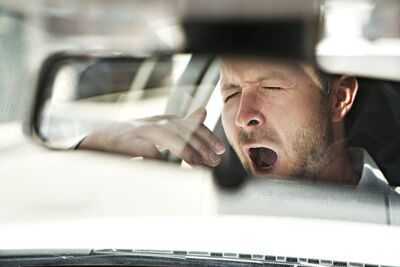
Driving while tired
Motorists will want to ensure they are fit to drive to and from their destination over the weekend. If you're experiencing fatigue, driving is deemed dangerous and carries substantial risks, not only for yourself, but also for passengers and other road users.
Nationwide Vehicle Contracts highlighted that fatigue is estimated to play a role in 10 per cent to 20 per cent of all road accidents. Rule 91 outlined the various methods you can use to reduce the risk, making certain you are fit to drive.
The Highway Code read: "Do not begin a journey if you are tired. Get sufficient sleep before embarking on a long journey. Avoid undertaking long journeys between midnight and 6am, when natural alertness is at a minimum.
"Plan your journey to take sufficient breaks. A minimum break of at least 15 minutes after every two hours of driving is recommended. If you feel sleepy, stop in a safe place. Do not stop in an emergency area or on a hard shoulder of a motorway (see Rule 262 for guidance on places to take a break when travelling on motorways)."
Motorists could face an unlimited fine if they are discovered to be driving while tired or missing rest breaks and not being sufficiently fit to drive.
Overloading vehicles
When travelling over the extended weekend, motorists must make sure that they don't surpass their vehicle's recommended load capacity. Overloading a vehicle can make it harder to control, raise fuel consumption, and put pressure on the tyres and suspension, potentially raising the chance of an accident, highlighted Nationwide Vehicle Contracts.
Rule 98 of The Highway Code stipulates that drivers must not overload their vehicle or trailer, ensuring it is within the manufacturer's limits. Failure to adhere to the manufacturer's limits could lead to a fine and three penalty points on your licence.
However, in more severe scenarios – such as if an accident occurs – it may even invalidate your insurance.
According to Cinch, the fines can range from as low as £100 and three points on your licence for not abiding by the rules. The fine can escalate to as high as £5,000 and you're banned from driving if it's deemed seriously dangerous and you're taken to court.

Travelling with pets in the car
If you're journeying with pets, drivers are cautioned that having them unsecured in the car could result in a hefty fine. Drivers will need to ensure that dogs or other animals are "suitably restrained" during trips.
Rule 57 of the Highway Code read: "When in a vehicle make sure dogs or other animals are suitably restrained so they cannot distract you while you are driving or injure you, or themselves, if you stop quickly. A seat belt harness, pet carrier, dog cage or dog guard are ways of restraining animals in cars."
Violating this rule could lead to a fine of up to £5,000, as well as three to nine points on your licence. This can also jeopardise your car insurance being voided, too, if you're involved in an accident.
Unsecured sat-nav or phone
Travelling to unfamiliar destinations and relying on your sat-nav or phone navigation for guidance is commonplace, but it's crucial to ensure the devices are mounted in a proper manner. You must utilise a secure holder and guarantee the device doesn't obstruct the view of the road.
Rule 149 makes it unlawful to hold and use any handheld device (phone, sat-nav, tablet) while driving or in traffic. The rule stated: "You must exercise proper control of your vehicle at all times. You must not use a hand-held mobile phone, or similar device, capable of interactive communication (such as a tablet) for any purpose when driving or when supervising a learner driver.
"This ban covers all use of a hand-held interactive communication device and it applies even when the interactive communication capability is turned off or unavailable. You must not pick up the phone or similar device while driving to dial a number and then put it in the cradle for the duration of the conversation. You must not pick up and use your hand-held phone or similar device while stationary in traffic."
This rule carries a £200 fixed penalty fine and six penalty points on your licence. In severe cases or court summons, the fines can escalate to up to £1,000.
Eating or drinking while driving
While consuming food and drink while driving isn't illegal, it can easily distract drivers and diminish their control of the vehicle. Removing a hand from the wheel or shifting attention, even momentarily, heightens the risk of accidents, especially during busy travel periods like Easter.
The Highway Code (Rule 148), as reported by the Express, advises drivers to avoid distractions to maintain concentration. This could encompass other activities such as attempting to read maps, initiating or adjusting any music or radio, arguing with passengers and other road users, and smoking.
Violating these rules can result in fines ranging from as little as £100 to £5,000, as well as between three to nine penalty points on your licence.
Contact to : xlf550402@gmail.com
Copyright © boyuanhulian 2020 - 2023. All Right Reserved.