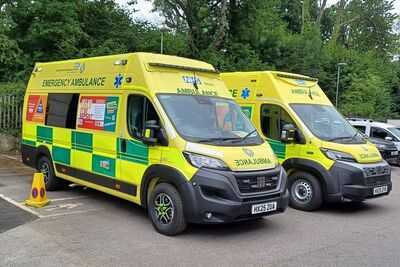
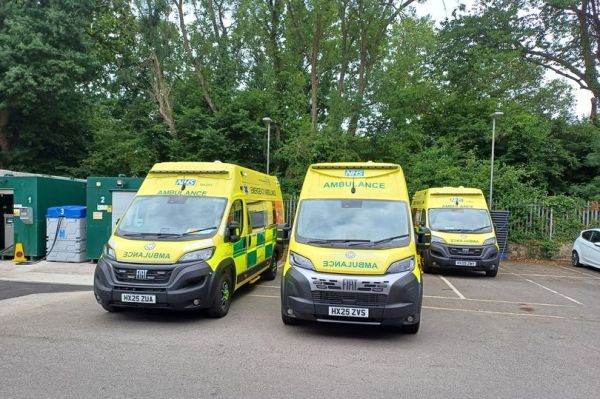
A new fleet of semi-autonomous ambulances have been rolled out to 999 services across England.
The NHS added 1,141 new or replacement ambulances in 2025/26 - the highest on record in a single year - in an effort to tackle rising 999 response times which had skyrocketed in the previous decade. The modern Fiat, MAN and Ford vans are equipped with Advanced Driving Assistance Systems (ADAS) which use cameras, radar and ultrasonic sensors to detect surrounding objects and respond to potential dangers.
When speeding through traffic they can detect vehicles, pedestrians and cyclists - and apply automatic braking if a collision is imminent.
• Wes Streeting announces Labour will ‘end corridor care’ in NHS hospitals by 2029
• Keir Starmer's first year: Mirror expert verdicts on Labour's first 12 months
Writer for the Mirror, health minister Zubir Ahmed said this will mean “quicker help arriving at the door”. He said: “By modernising the NHS fleet, our hardworking paramedics are equipped with all the tools they need to do their jobs safely and effectively… these vehicles are equipped with the technology to better protect staff and support faster, more effective treatment.”
Ambulance response times had worsened since the Tories came to power in 2010 amid staffing problems and an ageing fleet, reaching a record low point during the Covid-19 pandemic. In December 2022, responses to Category 2 calls - which include strokes, heart attacks, epileptic fits and sepsis - took an average of one hour and 33 minutes.
The Mirror reported on national polling in 2024 showing Brits were avoiding calling an ambulance because they feared it would take too long to arrive. The Savanta poll of 2,000 adults showed 57% drove themselves or asked a family member to drive them to A&E instead.
We spoke to the family of Iqbal Rahman who died on Christmas Eve 2022 aged 58 after ambulances were delayed because they were stuck queuing outside A&E and he eventually stopped breathing.
Iqbal arrived for a family Christmas getaway at an AirBnB in Hereford complaining of shoulder pain. The family noticed he had a fever and was excessively sweating and called 999 at 7.07pm.
Iqbal deteriorated but an ambulance was not sent until the family called a third time after he stopped breathing at 8.04pm. By this point it had become a Category 1 call and NHS guidelines state an ambulance should arrive within about seven minutes but it arrived at 8.28pm.
Call-out times have been increasing since then and improved this winter compared to the previous year, despite an increase in 999 call volumes. Latest average response times data suggests the NHS in England is now just over the 30 minute target for Cat 2 calls - still quicker than it has been for half a decade.
Anna Parry, managing director of the Association of Ambulance Chief Executives, said: “Delivering more than 1,100 new and replacement ambulances in a single year is a great achievement. Replacing older vehicles with modern, better‑equipped ambulances means greater reliability, fewer breakdowns and more time on the road where they are needed most.
"A modern, resilient fleet is fundamental to improving response times and ensuring patients receive timely, safe care wherever they are when it is needed.”
The partial driving automation in the new modern fleet of double-crewed ambulances has automatic braking as a last resort. Drivers are alerted first by a heads-up display or audio cue. The tech also detects vehicles in blind spots and alerts the driver.
Dr Fenella Wrigley, NHS England’s national adviser for ambulances, said: “Reliable, modern, well-equipped ambulances allow emergency teams to stay out on the road and do what they do best, responding to patients quickly and ensuring they get the care they need.”
The breakdown of how many new vehicles each NHS ambulance trust received is as follows:
- East of England – 183
- East Midlands – 54
- Isle of Wight – 6
- London – 100
- North East – 36
- North West – 119
- South Central – 138
- South East Coast – 97
- South Western – 145
- West Midlands – 150
- Yorkshire – 113
Health Minister Zubir Ahmed
Ambulances are where the NHS meets people at their most vulnerable. When someone dials 999, they are not thinking about systems or structures – they are relying on a fast, skilled response that can save a life. That is why modernising our ambulance fleet is not just a logistical upgrade; it is a frontline reform that directly benefits patients and the paramedics who care for them.
Over the past year, we have delivered a record 1,141 new and replacement ambulances across England. The majority have replaced older vehicles, meaning fewer breakdowns, less time off the road, and more crews available to respond when it matters most.
For patients, that translates into quicker help arriving at the door. For staff, it means safer, more reliable working conditions and the confidence that their equipment will not let them down in a critical moment. But fleet modernisation is only one part of the story. We are also taking a different approach to urgent and emergency care – one that focuses on getting patients the right care, first time.
That means better triage, stronger community services, and improved coordination across the system so ambulances can hand over patients as quickly as possible and get back out on the road to help even more people.
The early signs are encouraging. Despite another winter of intense demand, ambulance response times for serious conditions like heart attacks and strokes have improved, and A&E waits are at their lowest level in almost half a decade.
There is more to do, but the direction is clear. By investing in modern tools, supporting our workforce, and modernising how urgent care operates, we are putting the system back on a stronger footing – and ensuring patients get the fast, high-quality care they deserve.
Contact to : xlf550402@gmail.com
Copyright © boyuanhulian 2020 - 2023. All Right Reserved.