A new study by Snap Inc. and Kantar makes one thing clear: traditional digital advertising is losing its grip on Gen Z, and immersive formats like augmented reality are stepping in to fill that gap.
Titled State of AR in India, the report arrives at a time when users are increasingly skipping, muting, or simply ignoring ads. In that environment, AR is emerging less as an experimental format and more as a practical solution to declining attention spans and engagement.
One of the biggest shifts highlighted in the study is how AR changes the nature of engagement. Unlike static posts or even video, AR demands participation. It turns viewers into users.
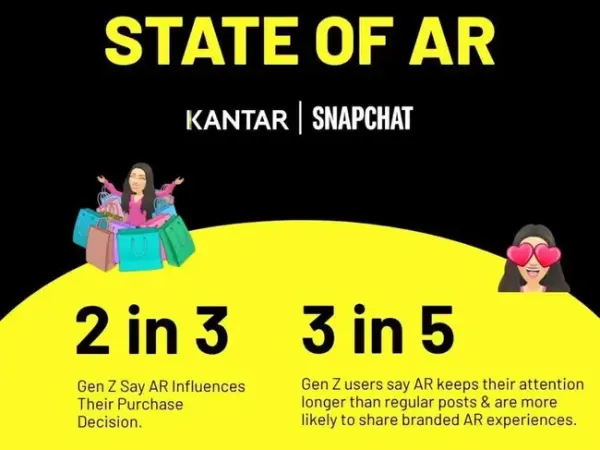
That difference shows up in the data. AR lenses deliver over 2x higher effectiveness and 3x greater efficiency in capturing active attention compared to other formats. More importantly, nearly 3 in 5 Gen Z users say AR holds their attention longer than regular content.
In a feed-driven ecosystem where most content is designed to be skipped, that kind of voluntary engagement is becoming increasingly valuable.
What’s more interesting is that AR is no longer limited to top-of-funnel awareness. It’s starting to influence actual purchase behaviour.
According to the study, 2 in 3 Gen Z users say AR helps them decide whether to try or buy a product, while also improving their understanding of it. That’s a significant shift from traditional digital ads, which often struggle to move beyond visibility into real intent.
As Soumya Mohanty puts it, AR is now directly impacting the three things that matter most in marketing: understanding, believability, and intent. That combination makes it far more than just a creative layer. It’s becoming a conversion driver.
There’s also a strong cultural layer to how AR is being used in India. From festivals to local moments, brands are increasingly using AR to plug into context rather than just push messaging.
For Snap, India is not just another growth market. It’s shaping how AR evolves globally.
Neha Jolly Sawhney points out that AR in India is moving beyond experimentation and delivering measurable outcomes. When a majority of Gen Z users say these experiences influence buying decisions, it signals a broader shift in how digital advertising is being consumed.
For a platform like Snapchat, which has always positioned itself as camera-first, this plays directly into its core strategy of blending communication, content, and commerce.
Another key takeaway from the report is how AR is blurring the line between advertising and content creation.
Nearly 3 in 5 Gen Z users prefer posting interactive AR content over static formats. At the same time, about two-thirds say AR makes brand experiences more immersive, entertaining, and worth sharing.
This is where AR stands apart. It’s not just something users consume, it’s something they actively create with. That shift turns branded experiences into social currency, extending their reach organically.
It also ties into identity. A similar share of users say AR helps them express their personality better, making it a tool for self-expression as much as brand interaction.
The bigger story here isn’t just about AR adoption. It’s about how digital behaviour is changing.
Gen Z isn’t rejecting ads outright. They’re rejecting passive formats. What they’re responding to instead are experiences that are interactive, contextual, and personal.
AR sits right at that intersection. And if the trends in this report hold, it’s likely to move from being a differentiated format to a default layer in how brands communicate online.
Titled State of AR in India, the report arrives at a time when users are increasingly skipping, muting, or simply ignoring ads. In that environment, AR is emerging less as an experimental format and more as a practical solution to declining attention spans and engagement.
From passive scrolling to active attention
One of the biggest shifts highlighted in the study is how AR changes the nature of engagement. Unlike static posts or even video, AR demands participation. It turns viewers into users.
That difference shows up in the data. AR lenses deliver over 2x higher effectiveness and 3x greater efficiency in capturing active attention compared to other formats. More importantly, nearly 3 in 5 Gen Z users say AR holds their attention longer than regular content.
In a feed-driven ecosystem where most content is designed to be skipped, that kind of voluntary engagement is becoming increasingly valuable.
Not just engagement, AR is influencing decisions
What’s more interesting is that AR is no longer limited to top-of-funnel awareness. It’s starting to influence actual purchase behaviour.
According to the study, 2 in 3 Gen Z users say AR helps them decide whether to try or buy a product, while also improving their understanding of it. That’s a significant shift from traditional digital ads, which often struggle to move beyond visibility into real intent.
As Soumya Mohanty puts it, AR is now directly impacting the three things that matter most in marketing: understanding, believability, and intent. That combination makes it far more than just a creative layer. It’s becoming a conversion driver.
There’s also a strong cultural layer to how AR is being used in India. From festivals to local moments, brands are increasingly using AR to plug into context rather than just push messaging.
India is becoming a key AR market
For Snap, India is not just another growth market. It’s shaping how AR evolves globally.
Neha Jolly Sawhney points out that AR in India is moving beyond experimentation and delivering measurable outcomes. When a majority of Gen Z users say these experiences influence buying decisions, it signals a broader shift in how digital advertising is being consumed.
For a platform like Snapchat, which has always positioned itself as camera-first, this plays directly into its core strategy of blending communication, content, and commerce.
Where content, creators, and commerce meet
Another key takeaway from the report is how AR is blurring the line between advertising and content creation.
Nearly 3 in 5 Gen Z users prefer posting interactive AR content over static formats. At the same time, about two-thirds say AR makes brand experiences more immersive, entertaining, and worth sharing.
This is where AR stands apart. It’s not just something users consume, it’s something they actively create with. That shift turns branded experiences into social currency, extending their reach organically.
It also ties into identity. A similar share of users say AR helps them express their personality better, making it a tool for self-expression as much as brand interaction.
The larger shift
The bigger story here isn’t just about AR adoption. It’s about how digital behaviour is changing.
Gen Z isn’t rejecting ads outright. They’re rejecting passive formats. What they’re responding to instead are experiences that are interactive, contextual, and personal.
AR sits right at that intersection. And if the trends in this report hold, it’s likely to move from being a differentiated format to a default layer in how brands communicate online.