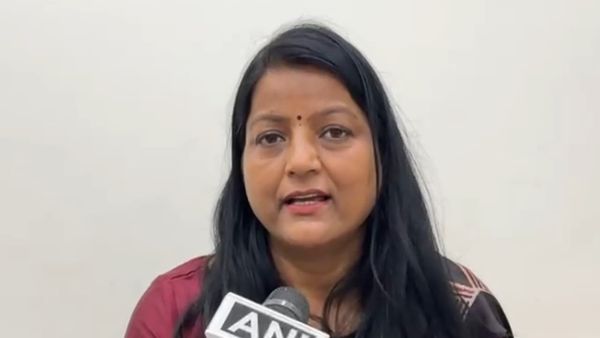
India holds 85% of the world's thorium, a resource that could power the nation for 500 years. However, public resistance and reliance on coal hinder the adoption of nuclear energy, says DAE scientist Neelam Goyal.
India possesses vast nuclear energy resources, particularly thorium reserves, that can generate around 5,000 units of electricity per person per year for nearly 500 years, but greater public awareness is needed to address safety concerns and accelerate adoption.

The Need for Energy Self-Reliance
Speaking to ANI on India's advancing nuclear programme, Senior Scientist, Department of Atomic Energy, Neelam Goyal said that electricity remains the backbone of India's economy, supporting agriculture, industry and services. "At present, around 70 per cent of India's electricity comes from coal, with much of the quality coal imported from Indonesia. This costs the country roughly Rs 12,000 crore annually," she said, stressing the need for energy self-reliance.
She highlighted that India holds nearly 85 per cent of the world's thorium reserves, which can significantly boost long-term energy security. However, nuclear energy projects often face delays of a decade or more due to public resistance driven by misconceptions and fear.
Challenges and Awareness Efforts
Goyal added that efforts have been made since 2011, following the Fukushima disaster, to raise awareness and reduce opposition to nuclear energy across states such as Haryana, Rajasthan, Tamil Nadu and Gujarat. She stated "India possesses vast reserves of thorium--around 85 per cent of the world's supply--enough to generate 5,000 units of electricity per person per year for 500 years, compared to the current 1,000 units. Yet nuclear energy faces public resistance due to misconceptions and fear. As a result, nuclear projects are often delayed for a decade or more".
India's Three-Stage Nuclear Strategy
Currently, India operates 23 nuclear reactors using uranium, which is largely imported from countries like Australia and Mongolia. She explained that uranium is a fissile material, and its by-product plutonium is also used as fuel. India's fast breeder reactor programme uses plutonium, which when combined with thorium can be converted into uranium-233, a powerful fuel for future nuclear energy.
She also added "I have worked to raise awareness and reduce opposition to nuclear energy across states, including Haryana, Rajasthan, Tamil Nadu, and Gujarat".
Major Milestone: PFBR Achieves Criticality
In a major boost to India's nuclear ambitions, the Department of Atomic Energy announced that the 500 MWe Prototype Fast Breeder Reactor (PFBR) achieved first criticality--the start of a controlled nuclear fission chain reaction--on April 6, 2026, at 08:25 PM. Fast Breeder Reactors are central to India's long-term nuclear strategy. Unlike conventional reactors, the PFBR uses Uranium-Plutonium Mixed Oxide (MOX) fuel.
The reactor is designed in such a way that it produces more fuel than it consumes by converting Uranium-238 into Plutonium-239 using fast neutrons. The reactor is also capable of eventually using Thorium-232, which can be converted into Uranium-233. This is a key part of India's three-stage nuclear power programme and is expected to significantly enhance fuel efficiency while reducing dependence on imported uranium.
The PFBR technology was developed indigenously by the Indira Gandhi Centre for Atomic Research, while the reactor was built and commissioned by Bharatiya Nabhikiya Vidyut Nigam Limited under the Department of Atomic Energy.
Expert believe that with such advancements, India is moving closer to long-term energy independence. However, they emphasise that increasing public awareness and addressing safety concerns will be critical to fully unlocking the potential of nuclear energy in the country.
(Except for the headline, this story has not been edited by Asianet Newsable English staff and is published from a syndicated feed.)
Contact to : xlf550402@gmail.com
Copyright © boyuanhulian 2020 - 2023. All Right Reserved.