
Wait, is your ice cream actually healthy?
Every few months, the internet rediscovers a delicious idea: ice cream is healthy. Screenshots resurface. Captions get bolder. Suddenly, that late-night tub of salted caramel feels like a very good decision.
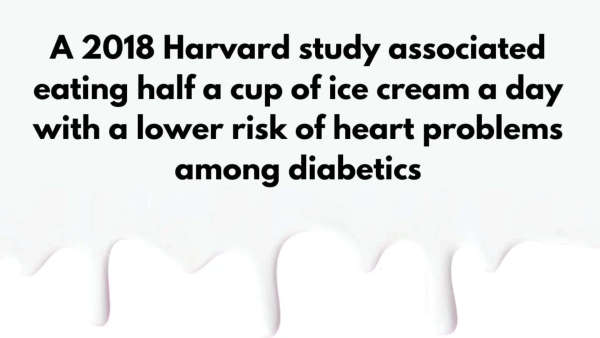
It isn’t entirely made up. For decades, researchers have stumbled upon a curious link between ice cream and metabolic health. A widely shared 2018 Harvard study found that people with Type 2 diabetes who ate small amounts regularly appeared to have a lower risk of heart disease.
But when public health historian David Merritt Johns dug into the claim for The Atlantic, he found the link was decades old and still unexplained. Similar signals had surfaced as early as the 2000s, when researchers noticed that dairy-based desserts, largely ice cream, were associated with reduced odds of insulin-resistance syndrome.
It’s a classic puzzle: are you healthy because of the ice cream, or eating ice cream because you’re already healthy? “To this day, I don’t have an answer for it,” epidemiologist Mark Pereira told Johns.
Even the researchers couldn’t crack it.
When science meets wishful thinking
“Most people assume studies have found ice cream to be healthy. They didn’t,” says Krish Ashok, author of Masala Lab: The Science of Indian Cooking. “What they found was that people who reported eating more ice cream appeared to have lower risk. That’s not the same as cause and effect.”
The missing question is simple. What was ice cream replacing? “If someone chose it over something more calorie-dense, it may just be the less unhealthy option,” Ashok says, “not a healthy one.”
Doctors agree. “These are observational studies. They show association, not causation,” says Dr Abhimanyu Bhatia, HOD of Critical Care. “In clinical practice, we would never advise ice cream for cardiovascular benefit.”
Researchers have also flagged other explanations. One of the most widely accepted is reverse causation – people at higher risk of disease often cut back on desserts, making ice cream eaters appear healthier by comparison. There’s also reporting bias. Food studies rely heavily on self-reported diets, and people tend to underreport foods they perceive as unhealthy.
Add shifting habits, lifestyle differences, and the fact that healthier people are more likely to indulge occasionally, and the picture gets murky. The pattern is familiar. Science offers a sliver of ambiguity. Social media turns it into permission. As Ashok puts it, ice cream can fit into a balanced lifestyle. But it doesn’t earn a health halo. “One food can never make or break your health,” says nutritionist Sakshi Salwan. “It’s your lifestyle in totality that does.”
So why does it sound believable?
Because ice cream isn’t nutritionally empty.
Researcher Dariush Mozaffarian has pointed out that it contains fat, some protein, and even a lower glycaemic index than foods like brown rice. “There’s this perception that ice cream is unhealthy,” he told The Atlantic, “but it’s better for you than bread.”
But context matters. Ice cream is still an ultra-processed food, high in sugar, fat and calories – factors linked to higher risk of Type 2 diabetes and heart disease.
Some studies have also linked higher ice cream intake to fatty liver risk, but similar patterns show up across diets, reinforcing a bigger point: overall diet matters more than any one food.
Even Mozaffarian isn’t fully convinced. Reverse causation remains the likeliest explanation. “I’m not sure, and I’m kind of annoyed by that,” he admitted. “If this were a drug, we’d already have a definitive trial.”
And that may be the most honest takeaway: the data is intriguing but deeply inconclusive.
No health halo here
Nutritionists bring it back to basics. “Ice cream isn’t truly healthy,” says Sakshi. “But calling it unhealthy alone misses the point. It’s an enjoyment food. It can fit into a balanced diet.”
That balance is key. Lifestyle matters more than any single food. Diet, sleep, activity, stress. Get those right, and an occasional scoop won’t hurt.
Just don’t call it a health hack.
It isn’t entirely made up. For decades, researchers have stumbled upon a curious link between ice cream and metabolic health. A widely shared 2018 Harvard study found that people with Type 2 diabetes who ate small amounts regularly appeared to have a lower risk of heart disease.
But when public health historian David Merritt Johns dug into the claim for The Atlantic, he found the link was decades old and still unexplained. Similar signals had surfaced as early as the 2000s, when researchers noticed that dairy-based desserts, largely ice cream, were associated with reduced odds of insulin-resistance syndrome.
It’s a classic puzzle: are you healthy because of the ice cream, or eating ice cream because you’re already healthy? “To this day, I don’t have an answer for it,” epidemiologist Mark Pereira told Johns.
Even the researchers couldn’t crack it.
When science meets wishful thinking
“Most people assume studies have found ice cream to be healthy. They didn’t,” says Krish Ashok, author of Masala Lab: The Science of Indian Cooking. “What they found was that people who reported eating more ice cream appeared to have lower risk. That’s not the same as cause and effect.”
The missing question is simple. What was ice cream replacing? “If someone chose it over something more calorie-dense, it may just be the less unhealthy option,” Ashok says, “not a healthy one.”
Doctors agree. “These are observational studies. They show association, not causation,” says Dr Abhimanyu Bhatia, HOD of Critical Care. “In clinical practice, we would never advise ice cream for cardiovascular benefit.”
Researchers have also flagged other explanations. One of the most widely accepted is reverse causation – people at higher risk of disease often cut back on desserts, making ice cream eaters appear healthier by comparison. There’s also reporting bias. Food studies rely heavily on self-reported diets, and people tend to underreport foods they perceive as unhealthy.
Add shifting habits, lifestyle differences, and the fact that healthier people are more likely to indulge occasionally, and the picture gets murky. The pattern is familiar. Science offers a sliver of ambiguity. Social media turns it into permission. As Ashok puts it, ice cream can fit into a balanced lifestyle. But it doesn’t earn a health halo. “One food can never make or break your health,” says nutritionist Sakshi Salwan. “It’s your lifestyle in totality that does.”
So why does it sound believable?
Because ice cream isn’t nutritionally empty.
Researcher Dariush Mozaffarian has pointed out that it contains fat, some protein, and even a lower glycaemic index than foods like brown rice. “There’s this perception that ice cream is unhealthy,” he told The Atlantic, “but it’s better for you than bread.”
But context matters. Ice cream is still an ultra-processed food, high in sugar, fat and calories – factors linked to higher risk of Type 2 diabetes and heart disease.
Some studies have also linked higher ice cream intake to fatty liver risk, but similar patterns show up across diets, reinforcing a bigger point: overall diet matters more than any one food.
Even Mozaffarian isn’t fully convinced. Reverse causation remains the likeliest explanation. “I’m not sure, and I’m kind of annoyed by that,” he admitted. “If this were a drug, we’d already have a definitive trial.”
And that may be the most honest takeaway: the data is intriguing but deeply inconclusive.
No health halo here
Nutritionists bring it back to basics. “Ice cream isn’t truly healthy,” says Sakshi. “But calling it unhealthy alone misses the point. It’s an enjoyment food. It can fit into a balanced diet.”
That balance is key. Lifestyle matters more than any single food. Diet, sleep, activity, stress. Get those right, and an occasional scoop won’t hurt.
Just don’t call it a health hack.
Contact to : xlf550402@gmail.com
Copyright © boyuanhulian 2020 - 2023. All Right Reserved.