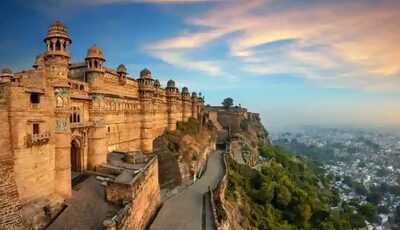
Gwalior, a city rich in history and cultural heritage, stands among India’s most captivating tourist destinations. Located in Madhya Pradesh, it has witnessed countless historical milestones and served as a stronghold for several powerful dynasties. Here are some of the top must-visit places in Gwalior:
# Gwalior Fort
Often hailed as the “Crown Jewel of Madhya Pradesh,” Gwalior Fort is a magnificent symbol of India’s glorious past. Believed to have been founded over a thousand years ago by Raja Suraj Sen, the fort has seen the rise and fall of many great rulers.
Blending history, architecture, and archaeology, the fort complex is alive with local markets and eateries. Key attractions inside include the Man Mandir Palace and the Saas Bahu Temples.
Why Visit:
Known as the “Gibraltar of India,” this hilltop fort offers breathtaking panoramic views. Its massive परिसर houses palaces, temples, and water reservoirs, showcasing diverse architectural styles.
Location: Gwalior, Madhya Pradesh
Timings: 9:30 AM to 5:30 PM
Entry Fee: ₹5 (Indians), Free (children below 15), ₹100 (foreigners)
Things to Do:
Explore grand palaces like Man Mandir Palace
Visit temples such as Teli Ka Mandir and Saas Bahu Temples
Attend the evening light and sound show
# Man Mandir Palace
A stunning example of medieval architecture, Man Mandir Palace was built by Raja Man Singh Tomar in the late 15th century. The palace beautifully combines Hindu design elements with intricate carvings, colorful tiles, and artistic detailing.
Why Visit:
Famous for its ornate stone carvings and vibrant mosaic work, the palace reflects the grandeur of the Tomar dynasty.
Location: Inside Gwalior Fort
Timings: 9:30 AM to 5:30 PM
Entry Fee: Included with fort ticket
Things to Do:
Walk through beautifully designed chambers
Explore ancient prison cells
Admire the iconic blue tile decorations
# Suraj Kund
Suraj Kund, an ancient reservoir believed to date back to 425 AD, is steeped in legend. It is said that King Suraj Sen was cured of leprosy after drinking its water.
Why Visit:
A peaceful and historically significant site, Suraj Kund is considered sacred and ideal for quiet reflection.
Location: Within Gwalior Fort
Timings: Open 24 hours
Things to Do:
Relax by the tranquil waters
Discover the fascinating legend behind the kund
# Phool Bagh
Located near the railway station, Phool Bagh is a charming green retreat in the city. Established in 1922 by the Prince of Wales, it also houses a zoo, museum, and palace.
Why Visit:
A perfect spot to unwind amidst greenery and enjoy a calm escape from the city.
Location: Near Gwalior Railway Station
Timings: 8:00 AM to 6:00 PM
Things to Do:
Take a leisurely stroll in the gardens
Visit the nearby museum to explore local history
# Saas Bahu Temples
Despite their name, these temples are not related to family relationships. The twin temples, dedicated to Lord Vishnu, are admired for their detailed carvings and architectural beauty.
Why Visit:
Dating back to the 9th century, they are a fine example of intricate temple architecture.
Location: Near Gwalior Fort
Timings: 8:00 AM to 6:00 PM
Things to Do:
Admire intricate carvings depicting mythological tales
Enjoy the peaceful temple surroundings
# Haathi Pol
Also known as the Elephant Gate, Haathi Pol is the grand entrance to Gwalior Fort and the last among its seven gateways.
Why Visit:
This massive gate reflects the fort’s strength and was designed to allow elephants to pass through, showcasing ancient engineering brilliance.
Location: Gwalior Fort
Timings: Open 24 hours
Things to Do:
Walk through the historic gateway
Capture stunning photographs
# Memorial of Tansen
Dedicated to the legendary musician Tansen, this memorial is surrounded by serene gardens and hosts the famous Tansen Music Festival every year.
Why Visit:
A peaceful tribute to one of India’s greatest classical musicians and a must-visit for music lovers.
Location: Near Gwalior Fort
Timings: 8:00 AM to 6:00 PM
Things to Do:
Attend the annual Tansen Music Festival
Explore the tranquil surroundings
# Jai Vilas Mahal
Jai Vilas Mahal is a grand palace built in European architectural style by Maharaja Jayaji Rao Scindia. A part of it still serves as the royal residence, while the rest has been converted into a museum.
Why Visit:
The palace showcases royal luxury with its grand Durbar Hall, massive chandeliers, and rare artifacts.
Location: Lashkar, Gwalior
Timings: 10:00 AM to 5:00 PM (Closed Mondays)
Entry Fee: ₹100 (Indians), ₹650 (foreigners)
Things to Do:
Explore the Scindia Museum
Admire royal interiors and antique collections
# Gujari Mahal Archaeological Museum
Originally built by Raja Man Singh for his queen Mrignayani, Gujari Mahal now functions as an archaeological museum.
Why Visit:
It houses a rich collection of sculptures, coins, and artifacts dating back to ancient times.
Location: Gwalior Fort
Timings: 10:00 AM to 5:00 PM
Entry Fee: ₹15 (Indians), ₹200 (foreigners)
Things to Do:
Explore rare historical artifacts
Learn about the region’s ancient history
# Tomb of Muhammad Ghaus
This 16th-century tomb, dedicated to the Sufi saint Muhammad Ghaus, is a fine example of Mughal architecture, known for its intricate latticework and serene ambiance.
Why Visit:
A peaceful site with stunning architecture and historical importance.
Location: Near Tansen Tomb
Timings: 8:00 AM to 6:00 PM
Things to Do:
Admire detailed carvings and design
Visit nearby historical sites including Tansen’s tomb
Contact to : xlf550402@gmail.com
Copyright © boyuanhulian 2020 - 2023. All Right Reserved.