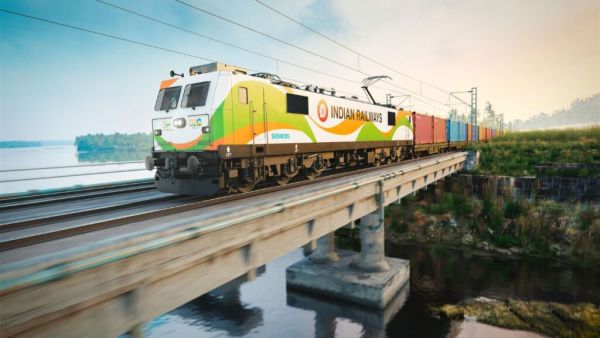
- Around 492 new locomotives are planned to be produced in the financial year 2026-27.
- Special focus on seventh generation WAP-7 and Amrit Bharat Express class engines.
- Making rail travel safer, more comfortable and faster.
Indian Railways: Indian Railways is gearing up to step on the threshold of a historic transformation for the people of India. Today, crores of people travel by rail every day across India. To make the journey of these passengers faster, safer and more comfortable, the Ministry of Railways has planned a grand plan to build 492 new passenger locomotives (engines) in the financial year 2026-27. These will mainly include advanced seventh generation ‘WAP-7’ and ‘Amrit Bharat’ class engines. Meanwhile, let’s learn about how the railways started in the country and how far they have progressed since the first generation.
Public Interest Litigation: ‘Time to cancel Public Interest Litigation!’; Central Govt
Railway travel in India started in 1853 with steam locomotives like Sahib, Sind and Sultan. The first railway started in India on 16 April 1853. The situation then was completely different from today. The railway engines of that time ran on coal and water (steam). These engines were very smoky and very slow in speed. The journey was noisy and arduous.
In the early days, the railway coaches were made entirely of wood and lacked amenities. The compartment doors used to open outwards, which was a safety hazard. Until 1905, trains did not even have the simple facility of fans. In summer, ice packs were used to keep the coaches cool.
Today’s seventh generation: power and speed
Today’s seventh generation engines (eg WAP-7) are technologically very advanced. These engines produce more than 6,000 horsepower (HP). These engines are capable of running at a speed of 130 to 160 km per hour. Also, these are fully electric and pollution free engines.
Sugar exports will continue, selling price increase is considered; Important information about the center
Modern coaches: safety and comfort
Today’s LHB (Linke Hofmann Busch) and Amrit Bharat class coaches are very capable in terms of passenger safety. Recent railway coaches are made of stainless steel and are ‘anti-telescoping’, meaning they do not climb over each other in the event of an accident. Vacuum toilets, air conditioning and the indigenous safety system *’Kavach’, which protects against accidents, has been installed in it.
Future Goals: Hydrogen and Aerodynamic Design
Indian Railways is now working on hydrogen powered coaches to reduce dependence on fuel. Also, engines with aerodynamic design like ‘WAP-7D’ are being developed to reduce air resistance. With these new experiments, Indian Railways is all set to create a new identity globally.
Contact to : xlf550402@gmail.com
Copyright © boyuanhulian 2020 - 2023. All Right Reserved.