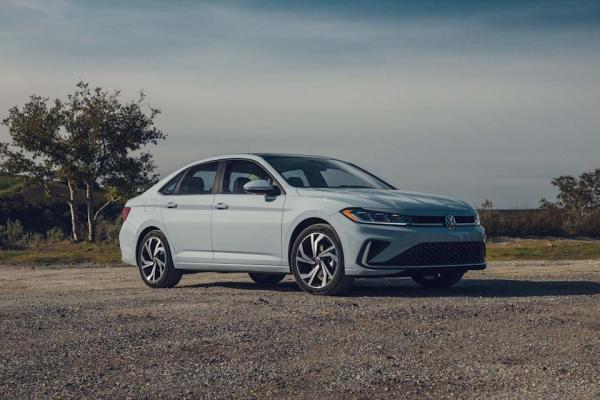
Volkswagen may be selling more SUVs than ever in the United States, but the German automaker isn’t ready to abandon cars just yet. Despite SUVs making up a staggering 78 percent of Volkswagen’s 329,813 U.S. sales last year, the company says traditional passenger cars still play a crucial role in shaping the brand’s identity.
Over the past decade, Volkswagen’s car lineup has shrunk considerably. Models like the Passat, Arteon, and Beetle have quietly disappeared, leaving just a handful of non-SUV offerings: the Jetta sedan, the Golf GTI, the Golf R, and the electric ID.Buzz minivan.
Still, according to Volkswagen of America CEO Kjell Gruner, cars remain central to the company’s long-term strategy.
Cars That Define the Brand
Speaking at the New York Auto Show during the reveal of the 2027 Atlas, Gruner emphasized that success isn’t just about volume. Some vehicles, he explained, carry more emotional weight than others.
“There are different roles for different vehicles, and you can’t measure success just by volume,” Gruner said. “You also need to measure it by heartbeat.”
That “heartbeat,” according to Gruner, comes from enthusiast favorites like the Golf GTI and Golf R. While these hot hatchbacks sold just 10,554 units combined in the U.S. last year, they continue to represent Volkswagen’s performance heritage and driving fun.
These models, he noted, serve as brand icons, helping define what Volkswagen stands for. Even as manual transmissions fade away, the Golf GTI and Golf R still deliver the engaging driving experience that enthusiasts expect.
The ID.Buzz also plays a role, though in a different way. The retro-inspired electric minivan taps into nostalgia while showcasing Volkswagen’s electric future.
The Jetta’s Quiet Strength
Interestingly, Gruner didn’t label the Jetta as a brand icon, but its importance is clear. Volkswagen sold 54,291 Jettas in the U.S. last year, making it the brand’s third best-selling vehicle behind the Tiguan and Atlas.
The Jetta continues to appeal to buyers who prefer practicality over height and bulk. It offers better fuel efficiency, a lower price point, and a more traditional driving experience than most SUVs.
Gruner highlighted that this customer group remains important.
“It’s for people who want something different, don’t want the SUV, like the better gas mileage, and don’t need all-wheel drive,” he explained.
In other words, while SUVs dominate sales charts, not everyone wants one.
No Expansion, But No Exit Either
While Volkswagen confirmed its commitment to cars, buyers shouldn’t expect a major expansion of the lineup. The company appears content with its current strategy: the Jetta for mainstream buyers, the Golf GTI and Golf R for enthusiasts, and the ID.Buzz for electric innovation.
That said, Volkswagen made one thing clear: cars aren’t going anywhere.
“So that’s always going to be there,” Gruner said, referring to compact cars. “With a compact car, you can do things that you just can’t do with an SUV.”
And that’s the key takeaway. SUVs may dominate the market, but Volkswagen believes cars still have a place not just for practicality, but for personality, passion, and brand identity.
For enthusiasts and sedan fans alike, that’s reassuring news.
Contact to : xlf550402@gmail.com
Copyright © boyuanhulian 2020 - 2023. All Right Reserved.