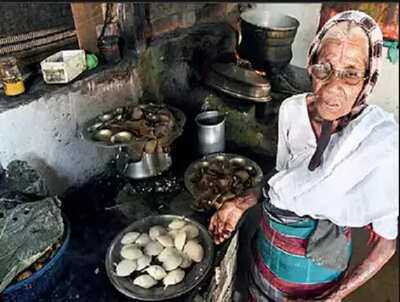
At dawn in a small corner near Coimbatore, the first thing people noticed was not the sound of traffic or the rush of a busy market. It was the smell of idli batter steaming over a wood-fired stove, and the sight of an elderly woman quietly doing what she had done for decades: making sure workers, students and anyone with an empty stomach could start the day with a hot meal. Her name is K. Kamalathal , but Tamil Nadu came to know her simply as “Idli Amma.” Scroll down to know why...
The woman behind the legend
Kamalathal lived in Vadivelampalayam village on the outskirts of Coimbatore, where she sold idlis from her home for years at a price that barely seemed possible: ₹1 apiece. Reports say she had begun at even lower prices long ago, and kept the rate low because she saw food not as a business trick, but as a daily necessity for people who often worked hard and ate little. During the lockdown, she did not raise the price, even as costs climbed around her.
That simple act is what turned her into a national figure. In a country where inflation can change breakfast plans overnight, her stubborn generosity felt almost radical. She was not building a brand. She was protecting a habit of care. And that is why her story travelled so quickly.
How a tweet turned into a promise
Kamalathal first drew wider attention in 2019, when Anand Mahindra posted about her and said he wanted to support her work. What followed was not just praise from afar. The idea grew into a practical promise: a house that could also function as her workspace, so she could keep cooking and selling in better conditions.
By April 2021, reports said Mahindra’s team had registered land in her name and planned a house-cum-workspace next to her existing shop. Kamalathal herself said then that she was happy because the new place would be of great use to her. The promise was finally fulfilled on Mother’s Day in 2022, when she was handed a new home with a special kitchen designed for her work.
What she is doing now
The most recent coverage still places Kamalathal in the same role that made her famous. A January 2025 profile described her as 89 years old and still selling idlis for ₹1 from Vadivelampalayam, while brands have offered to help her business and build a house-cum-workspace where she could cook and sell idlis. A July 2025 Hindi write-up likewise described her as continuing the same service-minded work. In other words, the story did not end with the house. It continued with the woman inside it, still tied to the stove, still known for feeding people affordably.
That detail matters. Many viral stories end with a photo-op and a sentimental headline. Kamalathal’s did not. Her later life, at least in the latest available reporting, still revolves around the same quiet routine: preparing idlis, serving them cheaply, and keeping faith with the people who depend on her. The difference is that she now does it from a safer, better-supported home that was built around her actual work.
Why her story still resonates
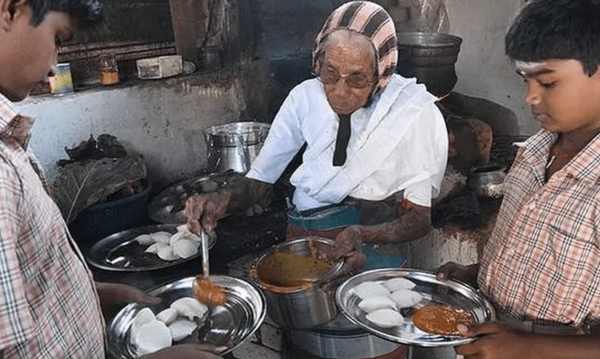
What makes Idli Amma unforgettable is not just the price of the food. It is the moral clarity behind it. She understood something many modern businesses forget: hunger is immediate, and dignity is fragile. Her idlis were never about charity in the polished, public-relations sense. They were about routine kindness, repeated every morning until kindness itself became her identity.
That is also why her story keeps resurfacing years later. It has all the ingredients people instinctively respond to, age, sacrifice, scarcity, and a kind of unadvertised goodness that asks for nothing in return. Yet what lingers most is the simplest image of all: an elderly woman serving a hot breakfast at a price so low it feels almost symbolic, as if she were making a statement about what a meal, and a human life, should be worth.
A small meal, a large legacy
Kamalathal’s life reminds us that the most powerful public figures are not always the loudest ones. Sometimes they are the people who keep showing up before sunrise, with a ladle in hand and a belief that no one should begin the day hungry. That is the legacy of Idli Amma: not just a viral story, but a living example of compassion with a work ethic.
Contact to : xlf550402@gmail.com
Copyright © boyuanhulian 2020 - 2023. All Right Reserved.