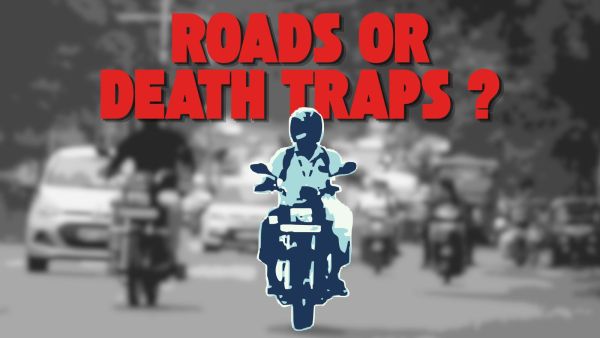
India’s economic progress is often measured through expanding mobility, meaning more roads, more vehicles and faster connectivity. However, the National Crime Records Bureau’s (NCRB) Accidental Deaths and Suicides in India (ADSI) 2023 report, released in 2025, forces us to consider the human cost.
The data shows that although infrastructure is expanding, road safety has not kept pace. This creates a public policy challenge that involves governance, health, planning and behavioural change.
Rising accidents and fatalities
The report records 4,64,029 road accidents in 2023, up from 4,46,768 in 2022. Fatalities increased to 1,73,826, compared to 1,71,100 in 2022, which means one accident every minute and one death every three minutes. Globally, India’s 2021 road traffic death rate, as per the Global Health Observatory data, is 14.6 per 100,000, which is far higher than Australia at 4.5, Denmark at 2.3 and the Philippines at 9.7.

Experts point out that although accident numbers may vary, the steady rise in deaths indicates a deep crisis. This gap may suggest that current policy, while ambitious in terms of infrastructure development, has not been sufficiently aligned with safety enforcement, emergency response or behavioural interventions.
Who is most vulnerable?
The NCRB data shows that two-wheeler users accounted for 46 per cent of deaths, pedestrians 16 per cent and car or SUV occupants around 14 per cent. This may show that the system is unsafe for people who do not have substantial vehicle protection.
The World Health Organization (WHO) describes such groups as vulnerable road users (VRU), meaning pedestrians, cyclists and motorcyclists who lack structural protection. India’s data reflects this pattern, suggesting a possible long-standing neglect of non-motorised travel.
Younger motorcyclists face risks related to poor public transport access, the cost of protective gear and inconsistent helmet enforcement. The high pedestrian deaths highlight inadequate walkability and streets designed without enough focus on safety, although walking and informal modes remain essential for most citizens.
Tamil Nadu reports the highest number of pedestrian deaths, totalling 4,577, while Uttar Pradesh leads in fatalities involving two-wheelers and trucks, highlighting that this is a nationwide concern.
The dangerous hours
The report identifies evening hours between 6 pm and 9 pm as the most dangerous period, contributing over 20 per cent of total accidents. This may reflect a mix of post-work fatigue, high traffic volume, speeding, inadequate lighting and reduced enforcement after office hours. The highest number of accidents occurs in May, which may correspond to summer travel, school vacations and late-night driving during warmer months.
However, the regional distribution highlights a deeper structural issue. Rural areas accounted for 60 per cent of total accidents, whereas urban areas accounted for 40 per cent. This imbalance suggests that road safety has historically been framed as an “urban” concern, although rural roads, including district, village and market routes, remain under-policed and under-equipped with signage, lighting, emergency medical services and awareness programmes.
Over speeding
The NCRB attributes 61 per cent of all accidents to over speeding, leading to more than 1,01,000 deaths. Another 24 per cent of fatalities stem from dangerous or careless driving, including risky overtaking. Together, these two causes account for over 85 per cent of all road deaths in India.
This data is telling. Contrary to popular assumptions, very few deaths resulted from weather, mechanical failure or alcohol alone. Instead, human behaviour remains the defining factor, and this has meaningful policy implications. Legislation by itself cannot guarantee safety unless it is complemented with visible enforcement, incentives for safe behaviour and social reinforcement of responsible driving.
Highways vs local roads
India’s national highways comprise only about 2.1 per cent of total road length, yet they account for over 30 per cent of accidents and more than 34 per cent of fatalities. State highways contribute another 23 per cent of accidents and 42 per cent of fatalities occur on other roads.
This suggests that the “build fast, regulate later” model may not be ideal. As new highways and expressways reduce travel time, they also increase the risk of speeding unless safety systems are embedded in the design and enforcement are in place from the beginning. Meanwhile, rural and district roads, although slower, lack adequate lighting, signboards, pedestrian infrastructure and trauma care, making accidents more likely to be fatal.
Emergency care
A striking pattern emerges from states such as Bihar, Punjab, Jharkhand and Uttar Pradesh, where accidents frequently result in more deaths than injuries. This points to severe collisions, but also to delays in medical intervention. Policies related to the “Golden Hour,” free hospital admission for accident victims and the establishment of trauma centres exist on paper, but implementation may remain uneven across states.
The conversation on road safety must, therefore, go beyond crash prevention and include post-crash care, which is a crucial part of public health.
The way forward
India has made visible improvements in vehicle safety norms, expressway construction and helmet or seatbelt campaigns, yet the NCRB data shows that safety still needs to be central to transport planning. Strengthening outcomes requires interventions that are practical and evidence-based. Mandatory speed-calming measures on rural roads, such as rumble strips, slow zones and raised crossings, can reduce high-speed crashes.
A graduated driver licensing system can help address the higher risks faced by young or inexperienced riders and drivers. A time-bound national programme to fix blackspots, supported by public dashboards, would ensure accountability. Artificial intelligence (AI)-based enforcement should detect speeding and lane violations while incorporating strong privacy safeguards.
Urban planning needs to prioritise pedestrians by ensuring regular crossings, protected school zones, wider footpaths and universal accessibility, consistent with global vulnerable road user frameworks. Financial support for certified helmets, especially for low-income riders and delivery workers, can reduce preventable deaths. Trauma care must also improve through faster establishment of trauma centres in underserved districts and a single, reliable national emergency helpline that works effectively in rural areas.
The government has shown a strong commitment to expanding road networks. Directing similar attention to road safety can help India reverse the fatality trend with adopted targeted policy reforms.
A moment for national reflection
India’s transportation ecosystem is a symbol of economic aspiration. However, mobility without safety cannot be the benchmark of progress. Roads should enable opportunity, not extract a human toll. Every life lost to an avoidable accident represents a family changed forever and a reminder that infrastructure and human wellbeing must be planned together.
The NCRB report should not be read simply as a statistical document. It should be regarded as a call for government responsibility, because only the government can set nationwide standards, enforce laws, design safer roads, regulate vehicles and ensure reliable emergency care.
A safe transport system depends on strong policies, consistent monitoring and equitable investment across both urban and rural regions. Once the government provides this foundation, other stakeholders can act more effectively.
Road engineers can design with safety as a primary goal, law enforcement can implement rules fairly, schools can educate children on safe behaviour and communities can build a culture that values responsible driving. Families, civil society and the private sector all have important roles, but their efforts must revolve around a system shaped and enabled by government leadership. India can achieve meaningful road safety, but it requires steady national commitment supported by aligned action from every stakeholder.
Contact to : xlf550402@gmail.com
Copyright © boyuanhulian 2020 - 2023. All Right Reserved.