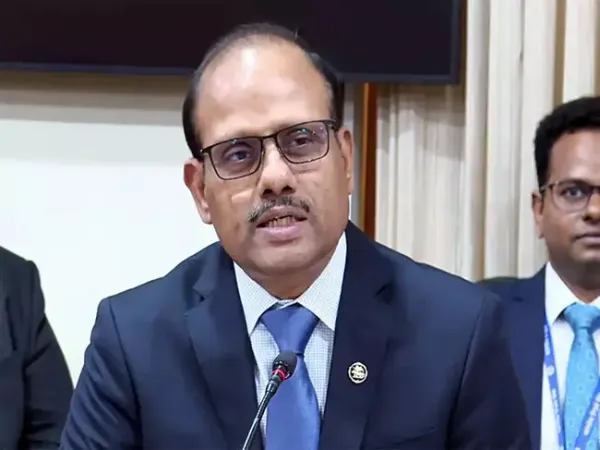
Adoption of artificial intelligence (AI) without safeguards can amplify existing weaknesses and create new problems in the financial sector, Reserve Bank Deputy Governor Swaminathan J has said.
Delivering the CUB Shri V Narayanan Memorial Lecture at the SASTRA University, Thanjavur, he said artificial intelligence is beginning to reshape how financial institutions serve customers, process documents, assess credit, monitor risks, and strengthen oversight.
"The speed of that change is remarkable. The real question before us is not whether finance will become more intelligent but whether it will remain fair, accountable, inclusive, and humane," he said in the lecture delivered on Saturday.
AI-enabled systems can make customer interaction simpler, more intuitive, and responsive. It can also help improve credit delivery, he said.
"Used responsibly, AI can supplement traditional methods by drawing insights from a wider set of patterns in transaction behaviour, repayment flows and business activity.
"This can help identify viable borrowers who might otherwise remain excluded. For a country committed to inclusive growth, this is a significant opportunity," Swaminathan said.
He further said AI can contribute meaningfully to fraud detection, risk management, besides in compliance and supervision. '
"So, the promise is real. But, as history has proven, every powerful technology is a double-edged instrument," the Deputy Governor said.
If AI is adopted without adequate safeguards, it can amplify existing weaknesses and create entirely new forms of harm, he said.
"Therefore, the conversation about AI in finance must be balanced. We should neither be taken in by technological hype nor retreat into being defensive," he said.
The Deputy Governor highlighted five major concerns in this regard, including 'bias and unfair outcomes', 'opacity', 'data privacy and misuse', 'model risk', and 'cyber risk'.
"The enduring task, therefore, is to make finance more intelligent, without making it less human; to make it more digital, without making it less accountable; and to make it more inclusive, without making it less prudent. This, in a nutshell, is what can change and what must never change," Swaminathan said.
V Narayanan is remembered as a transformational leader of City Union Bank, founded in 1904 in Kumbakonam. Under his leadership, City Union Bank grew from a largely regional institution into one with a wider national presence.
Delivering the CUB Shri V Narayanan Memorial Lecture at the SASTRA University, Thanjavur, he said artificial intelligence is beginning to reshape how financial institutions serve customers, process documents, assess credit, monitor risks, and strengthen oversight.
"The speed of that change is remarkable. The real question before us is not whether finance will become more intelligent but whether it will remain fair, accountable, inclusive, and humane," he said in the lecture delivered on Saturday.
AI-enabled systems can make customer interaction simpler, more intuitive, and responsive. It can also help improve credit delivery, he said.
"Used responsibly, AI can supplement traditional methods by drawing insights from a wider set of patterns in transaction behaviour, repayment flows and business activity.
"This can help identify viable borrowers who might otherwise remain excluded. For a country committed to inclusive growth, this is a significant opportunity," Swaminathan said.
He further said AI can contribute meaningfully to fraud detection, risk management, besides in compliance and supervision. '
"So, the promise is real. But, as history has proven, every powerful technology is a double-edged instrument," the Deputy Governor said.
If AI is adopted without adequate safeguards, it can amplify existing weaknesses and create entirely new forms of harm, he said.
"Therefore, the conversation about AI in finance must be balanced. We should neither be taken in by technological hype nor retreat into being defensive," he said.
The Deputy Governor highlighted five major concerns in this regard, including 'bias and unfair outcomes', 'opacity', 'data privacy and misuse', 'model risk', and 'cyber risk'.
"The enduring task, therefore, is to make finance more intelligent, without making it less human; to make it more digital, without making it less accountable; and to make it more inclusive, without making it less prudent. This, in a nutshell, is what can change and what must never change," Swaminathan said.
V Narayanan is remembered as a transformational leader of City Union Bank, founded in 1904 in Kumbakonam. Under his leadership, City Union Bank grew from a largely regional institution into one with a wider national presence.