Picture a sweltering Delhi evening: a young professional is busy preparing dinner while her golden retriever watches her with hopeful eyes. She reaches for pet food, but instead of the usual bland, imported kibble, she serves fresh, premium chicken-and-quinoa meals tailored to her pet’s needs.
India’s pet food market is in its breakout phase, with your pampered pet finally getting gourmet meals, and the numbers are nothing short of explosive.
With more than 30 Mn urban households that have at least one pet, the sector reached $2.5 Bn in 2025 and is expected to become a $4.6 Bn+ opportunity by 2034.
However, what’s driving this surge isn’t just pets, but a different breed of pet parents who treat their pets not like animals but family and are comfortable spending on specialised, premium, and even functional nutrition.
According to the cofounder & CEO of petcare brand Nootie, Akshay Mahendru, many pet parents are reading labels now. They are Googling ingredients they can’t pronounce. This wasn’t happening five years ago.
“This generation of pet parents treats their dog or cat the way they treat themselves. They are buying organic for their kids, they are reading about clean eating, and that is how they are feeding their pets,” he added.
Layer in quick commerce, D2C brands and new entrants, and the category begins to resemble early stage wellness or beauty segments that were once underpenetrated.
Where Does The Growth Lie For D2C Pet Food Players?
The new generation of Indian pet parents — urban, digitally native, emotionally invested in their pets — have started asking questions. Where does the protein come from? Are there artificial preservatives? Is this breed-appropriate?
“This is where Indian D2C brands are finding their opening,” said Sneh Sharma, cofounder and CMO, Dogsee Chew.
Some other factors aiding the D2C sector growth in the pet food industry are as follows:
Functional Agility: D2C brands today can launch a functional supplement chew or a new treat format in a fraction of the time it takes a multinational to navigate its global product development pipeline. Indian D2C pet brands are increasingly competing on product innovation speed, not just price. For instance, Drools recently entered into the fresh pet food segment with Tetra Pak, raising an investment of ₹180 Cr in advanced processing and packaging infrastructure.
Better Customer Retention: Pet food stands out as a high-retention category when executed well, driven by predictable reorder cycles and the strong emotional bond pet parents form with brands that work for their animals. However, many brands underperform by over-indexing on customer acquisition while neglecting retention. Reorders require timely, well-targeted nudges aligned with consumption cycles, with channels like WhatsApp proving especially effective.
Underutilised Service Layer: There’s the service layer, which pure-play D2C brands massively underuse. When a customer’s groomer or vet recommends a D2C product, that’s not marketing, but something that cannot be replicated by spending more on ads.
Bundling Vs Subscription: According to sectoral experts, models like bundling work really well, too. Once a customer shifts from buying one SKU to buying pet food, treats and supplements, they stop looking at prices. This is where customer lifetime value (LTV) goes up significantly.
Subscriptions is another option, but India isn’t quite there yet. The brands that can crack it in the next two or three years will have a very defensible revenue base.
Rise Of The Multi-Format System: The pet food category is evolving from a single-product purchase into a multi-format system. D2C petcare brand Filomilo’s cofounder Prabhu Gandhukumar said dry food is no longer sufficient on its own and is being complemented by wet food, functional toppers, and emerging fresh formats.
There is a shift toward more customised feeding routines, where consumers combine formats based on convenience, perceived health benefits, and pet preferences. As a result, portfolio depth has become more important than dominance.
The White Labelling Puzzle
White labelling is quite prevalent in the sector. This also lowers the bar for launching a pet food brand today. Not to mention, a lot of what’s out there is essentially that.
But there’s a real difference between a brand that has spent years building proprietary formulations versus one that is a marketing layer on top of a generic manufacturer’s catalogue.
Here, the leverage for any authentic D2C brand lies in consumer awareness. As Nootie’s Mahendru explains, the easiest thing a consumer can do is look at the ingredient list.
Brands that have genuinely invested in formulation are specific. Vague terms, like poultry by-product meal, are often a sign that something is off.
It is also important to know who is behind the brand. “Can the founder explain why specific ingredients were chosen? Is there a vet or nutritionist on record? If the answer is no, that’s worth noting,” said Mahendru.
What’s Next For The Indian Pet Food Industry?
Quick commerce is where the next battle is being fought. However, winning there isn’t just about being listed. It’s about pack sizes, visibility, and whether the brand’s unit economics actually work at that margin structure.
At the same time, the brands that have built their entire customer base on Amazon or Blinkit are sitting on borrowed infrastructure. This could have a negative impact if platforms change algorithms, raise fees, or launch private labels.
“Your only real asset is a direct relationship with your customer. Whoever hasn’t built that yet is more exposed than they look on paper. Also, the offline and tier II & III opportunities are still massively underplayed. The brands that figure out omnichannel properly will have a head start that’s very hard to close,” said Nootie’s Mahendru.
The next three years will separate real businesses from brands that just had a good run on ads. The durable moats will be built at the intersection of supply-chain integrity and brand trust, and the two are increasingly inseparable.
Regulatory and quality capability are other areas where the moat is forming. Brands that have invested in NASC, AAFCO-aligned formulations, FDA-registered manufacturing, and clean ingredient sourcing will benefit.
However, as Dogsee Chew’s Sharma indicates, what still holds the market back at a systemic level is the gap in regulatory clarity. FSSAI frameworks for pet food are still evolving, and the absence of AAFCO-equivalent nutritional standards in India means quality signalling is inconsistent.
“Brands investing in international certifications are doing it partly because Indian regulatory frameworks don’t yet provide that assurance domestically,” Sharma added.
While that remains a glaring whitespace and something yet to be solved, India’s pet food market is moving from hype to structure, where brand trust, product quality, and distribution will define winners in the long haul.
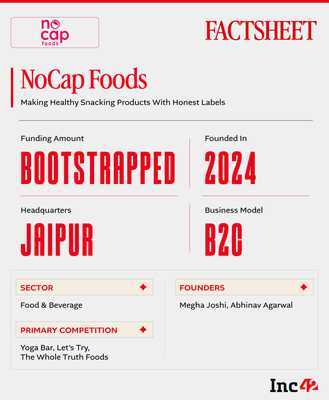
SPOTLIGHT | How NoCap Foods Is Cleaning Up Packaged Food In India
- NoCap Foods claims to be making healthy snacking options without palm oil, maida, refined sugar, additives, or preservatives. It combines traditional ingredients with modern food innovation to maintain a balance between taste and health.
- The Jaipur-based company offers a wide range of products, including millet chips, beetroot chips, oats chips, vegetable chips, and several SKUs of namkeen.
- The brand sells its products via its website, online marketplaces and quick commerce apps. NoCap Foods competes with names like Max Protein (Naturell), SuperYou, Lets Try, and Eat Better.
The Ecommerce Buzz
Swiggy Shuffles Top Deck: Lakshmi Nandan Reddy, the cofounder of Swiggy, has stepped down from the company’s board to pursue other interests. Prosus’ nominee director, Roger Clark Rabalais, has also stepped down from the foodtech giant’s board.
Snitch’s FY26 Show: The D2C fashion brand recorded an 80% jump in its operating revenue to ₹900 Cr in FY26, with its EBITDA being 2-3% of its revenue. It is now targeting ₹1,400 Cr in FY27 while expanding offline stores and quick commerce operations.
Pluckk’s Fundraise: The D2C grocery startup has raised ₹100 Cr in its Series A1 funding round led by existing investor Euro Gulf Investment to establish offline retail presence and expand into tier II locations and international markets in the next six months.
QuickiES Shuts Down: Rebel Foods has discontinued its quick commerce service arm, QuickiES, almost a year after its launch due to high cash burn. Through QuickiES, Rebel Foods used to deliver food in under 15 minutes from brands such as Faasos, Wendy’s, Oven Story, and LunchBox, among others.
The Deep Dive
The Operator Question
How do you decide the right mix between offline distribution, vet-led channels, and D2C/quick commerce, and what data tells you which channel is actually driving sustainable growth?
Cat food brand Smylo founder Kartikeya Gupta says that roughly 60% of the pet care market remains offline, with the widespread presence of stores across nearly every pin code in India forming the backbone of both general and modern trade. However, an equal mix of all the channels is vital for new-age brands.
The Quick Accessibility: Today’s customers expect end-to-end deliveries to be completed within 10 minutes, making quick commerce an inevitable part of distribution strategy. This is especially true since pet food is treated as a daily grocery item, typically restocked every two weeks or so.
Vet-Led Channel Drives Trust: Vet is the most important entry point for a brand, as it brings a lot more trust, and new-age pet parents have a very strong entry point on vets’ recommendations.
And that wraps up another edition of The Checkout by Inc42. See you next week, where we’ll dive into the latest trends shaping the ecommerce landscape.
Thanks,
Meha Agarwal & Palak Sharma
The post Gourmet On The Pet Plate appeared first on Inc42 Media.
Contact to : xlf550402@gmail.com
Copyright © boyuanhulian 2020 - 2023. All Right Reserved.