Heavy lifting, hernia, and cancer risk: What men need to know
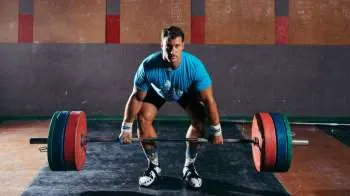
Heavy weight lifting is an aspect of daily activity for most men. The activity may be carried out in the gym, workplace, or even in one's own home environment.
It is usually a repetitive task and appears to be innocuous. However, when performed continuously and recklessly, it has the potential to exert significant pressure on the body.
According to Dr Prashanth Rao, Director of Surgical Gastroenterology and Minimal Access Surgery at Gleneagles Hospital, Parel, the concern is not lifting itself, but how it is done and what gets ignored along the way.
When strain turns into a problem
Lifting heavy weights incorrectly or too frequently increases pressure inside the abdomen. In the long run, this may cause weakening of the muscle and development of a hernia. Most of the time, men neglect the early symptoms since the feeling is tolerable; however, continued stress may only worsen the condition.
What exactly is a hernia
Hernia is defined as a condition where an organ or tissue protrudes to a body cavity through an opening in the body wall caused by weakness. Some of the major causes may be lifting heavy objects, persistent coughing, obesity, and even constipation.
Symptoms may seem mild at first. A slight bulge, a dull ache, or discomfort while standing or lifting. However, if not treated, a hernia could become very dangerous. It may even become strangulated, causing pain, or be deprived of its blood supply, which would necessitate immediate surgical intervention.
The part many people miss
The concern is not just the hernia itself. Some symptoms, such as swelling, pain, or a lump, may be casually assumed to be a hernia when they could point to something more serious. This could, in some instances, cause a delay in diagnosing other conditions such as testicular cancer or abdominal tumours.
There is also another layer to this. When a tumour grows inside the abdomen, it can increase internal pressure, sometimes causing organs to push through weaker areas of the abdominal wall, appearing like a hernia. This is why ignoring symptoms or self-diagnosing can be risky.
When should you see a doctor
The signs are often clear, but easy to delay. In case the lump grows bigger, the pain gets severe, or any other symptoms like weight loss, blood in the urine, or constant pain occurs, it is advisable to consult a doctor. Waiting it out is rarely the safer option. Heavy lifting is not the problem. Ignoring the body’s signals is.
Using proper technique, giving the body time to recover, and paying attention to unusual symptoms can make a significant difference. Because sometimes, what feels like a minor issue is the body asking you to take a closer look.
Contact to : xlf550402@gmail.com
Copyright © boyuanhulian 2020 - 2023. All Right Reserved.