Long before modern cooling systems like air conditioners became widespread, communities across India had already developed ingenious ways to keep their homes comfortable in extreme heat. One such method involved the use of terracotta, a natural material that has been part of Indian life for thousands of years. According to insights published in the Scientific American journal, this technique dates back over 3,000 years, tracing its roots to the Indus Valley Civilization of the Bronze Age. During that period, terracotta vessels were widely used to store water, a practice that continues in many rural households today, where earthen pots naturally cool water without relying on electricity.
The Science Behind Terracotta Cooling
The effectiveness of terracotta lies in its unique physical structure. As explained by Adithya Pradyumna from Azim Premji University, the material contains tiny pores that allow water to seep through gradually. As this moisture evaporates, it draws heat away from the surface, creating a cooling effect in the surrounding environment. This natural evaporation process works similarly to how perspiration cools the human body, making terracotta an energy-free solution for temperature regulation.
Revival in Modern Construction
This traditional knowledge is now being rediscovered and applied in contemporary architecture. A report by The Better India highlights how builders are reintroducing clay-based solutions into modern homes. One notable approach is the “filler slab” technique, an age-old construction method that integrates terracotta pots into roofing structures.
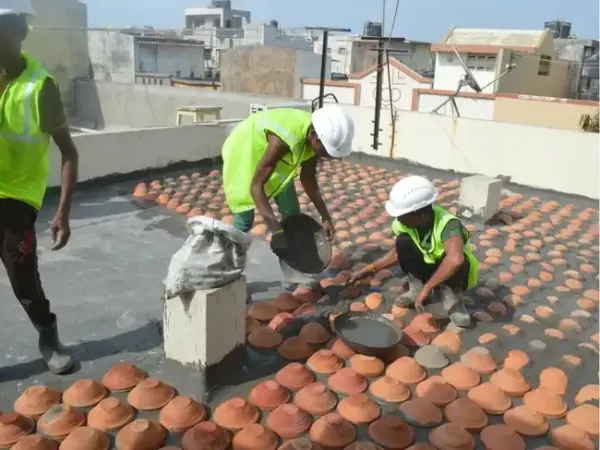
In this process, clay pots are arranged upside down within the roof before concrete is poured over them. Once the structure solidifies, these pots create hollow spaces inside the slab. These air gaps act as insulation, reducing the amount of heat that penetrates the building from above. Additionally, since less concrete is used, the roof absorbs less heat overall, further enhancing its cooling capacity.
Sustainable Comfort for All Seasons
Homes built using this method can experience a significant drop in indoor temperatures, sometimes by as much as 50 percent. The advantages extend beyond comfort, as reduced indoor heat lowers the need for air conditioning, leading to decreased electricity consumption and a smaller environmental impact. Over time, this contributes to both cost savings and sustainability.
Interestingly, the same insulating air pockets that help maintain cooler interiors during summer also preserve warmth in colder months. This dual benefit ensures a balanced indoor climate throughout the year, demonstrating how ancient practices can offer practical, eco-friendly solutions even today.
The Science Behind Terracotta Cooling
The effectiveness of terracotta lies in its unique physical structure. As explained by Adithya Pradyumna from Azim Premji University, the material contains tiny pores that allow water to seep through gradually. As this moisture evaporates, it draws heat away from the surface, creating a cooling effect in the surrounding environment. This natural evaporation process works similarly to how perspiration cools the human body, making terracotta an energy-free solution for temperature regulation.Revival in Modern Construction
This traditional knowledge is now being rediscovered and applied in contemporary architecture. A report by The Better India highlights how builders are reintroducing clay-based solutions into modern homes. One notable approach is the “filler slab” technique, an age-old construction method that integrates terracotta pots into roofing structures.In this process, clay pots are arranged upside down within the roof before concrete is poured over them. Once the structure solidifies, these pots create hollow spaces inside the slab. These air gaps act as insulation, reducing the amount of heat that penetrates the building from above. Additionally, since less concrete is used, the roof absorbs less heat overall, further enhancing its cooling capacity.
Sustainable Comfort for All Seasons
Homes built using this method can experience a significant drop in indoor temperatures, sometimes by as much as 50 percent. The advantages extend beyond comfort, as reduced indoor heat lowers the need for air conditioning, leading to decreased electricity consumption and a smaller environmental impact. Over time, this contributes to both cost savings and sustainability.Interestingly, the same insulating air pockets that help maintain cooler interiors during summer also preserve warmth in colder months. This dual benefit ensures a balanced indoor climate throughout the year, demonstrating how ancient practices can offer practical, eco-friendly solutions even today.