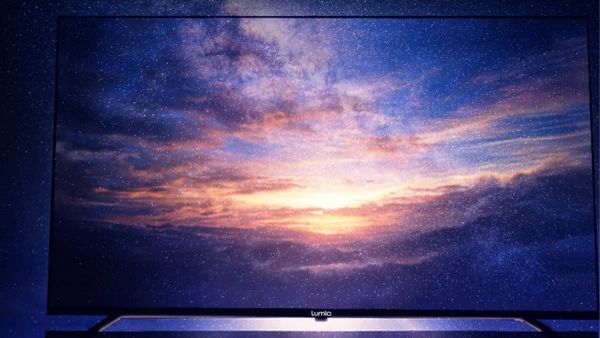
Lumio has launched its Vision 9 (2026) smart TV lineup in India, positioning it as a performance-first television designed to address one of the most common complaints in the category. Slow, lag-heavy interfaces.
The Vision 9 series will be available in 55-inch and 65-inch variants, with the 65-inch model priced at ₹72,999, dropping to ₹64,999 with offers. This model will go on sale from April 24, while the smaller variant will be available in May.
On the other hand, the Lumio 7 series costs ₹29,999 and ₹39,999 for 43-inch and 55-inch models, respectively.
A TV Built Around Speed
Instead of leading with display alone, Lumio is making performance the central pitch.
The Vision 9 runs on MediaTek’s Pentonic 700 chipset, paired with 3GB RAM and faster storage, which the company claims delivers up to twice the performance of competing TVs. The focus here is clear. Faster app loading, smoother navigation, and fewer of those moments where the TV freezes.
It sounds basic, but it’s also one of the biggest pain points in smart TVs today.
Mini LED Display
On the display side, Lumio is going with a QD Mini LED panel combined with its EVA panel technology.
The TV supports up to 800 nits peak brightness, along with Dolby Vision and a wide colour gamut. It also pushes refresh rates up to 4K at 144Hz and 1080p at 240Hz, which puts it firmly in the gaming-friendly category.
Audio That Tries to Replace a Soundbar
Lumio is also pushing audio as a key differentiator. The Vision 9 features a 50W hexa-driver system with dual subwoofers and Dolby Atmos support. The idea is to deliver deeper bass and clearer dialogue without requiring external speakers.
Whether it actually replaces a soundbar depends on expectations, but it’s at least trying to close that gap.
Software Tries to Fix Content Discovery
The more interesting part is the software. Lumio is introducing TLDR 2.0, a content discovery layer designed to simplify how users find what to watch. It aggregates trending content, curated lists, and platform-wide search into a single interface.
More notably, the company is working on something called Project Neo, which turns apps like WhatsApp and Instagram into a control layer for the TV. Instead of typing on a remote, users can send a message or share content, and the system translates that into actions on the TV.
It’s an unusual idea. Also one of the few attempts to actually rethink how people interact with TVs.
Contact to : xlf550402@gmail.com
Copyright © boyuanhulian 2020 - 2023. All Right Reserved.