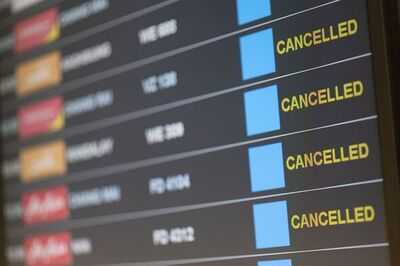
Holidays can take months to plan, from picking a hotel and what activities to do, to arranging transport. But, airlines could derail those decisions in an instant with a 'schedule change' - and this is what holidaymakers are entitled to as compensation.
According to Martin Lewis' MoneySavingExpert (MSE) team, most major UK airlines can change the time or even the date of your flights. It is all in the booking terms and conditions.
This is known as a "schedule change". It is different from when situations are unexpected, like bad weather, crew shortages, industrial action or technical problems.
Despite most holiday providers taking bookings months, if not a year, in advance, airports only confirm flight slots about three months before departure, so the planned slot may not be available on the day. MSE claims that airlines may also "mess about with timings if they change the aircraft type".
MSE says: "UK regulator the Civil Aviation Authority (CAA) confirms that where schedule changes are to the time or date (not the flight number), these are only covered by airline T&Cs, not by any law. If you're moved to a different flight altogether (ie, a different flight number) you'd likely be covered under different, far tighter EU or UK flight cancellation laws where you'd get a full refund or new flight, and possible compensation."
The CAA says airlines should always tell passengers at least 14 days in advance. Generally, an airline will email changes, but it's also worth logging in to the 'manage my booking' section of its website to double-check.
Some airlines say they will call or text a customer if the customer does not respond to an email. If you booked through a travel agent, airlines may not have your contact details, so the agent would be expected to contact you.
What are my rights if my flight time is changed?People will have different entitlements with their airline depending on the situation. It is best to check with your travel provider about what your specific situation is:
Minor change: MSE reports that each airline has a different definition, ranging from departure delays of under an hour to those lasting under 12 hours. MSE says: "The T&Cs usually state you'll need to accept the delay, but it's worth trying to get a refund or alternative flight if the delay is a significant inconvenience, say, you were only going for a short time or needed to be at your destination by a certain time."
Significant change: MSE claims that anything beyond the time your airline classifies as a minor delay becomes a 'significant', opening up more options to travellers. Airlines like Ryanair, easyJet and TUI told MSE that passengers in these situations are "usually offered a refund or a comparable flight".
The team claimed that, before accepting any offers from the airline directly, it might be worth checking the cost of booking new flights yourself. In some cases, last-minute flights may be more expensive or not have enough seats for your whole family, but it could end up being cheaper to claim the refund and book onto new flights yourself.
Can I not get compensation for holiday expenses I won't use?MSE added: "You've no right to additional compensation, such as to make up for a non-refundable hotel or car hire booking (though always ask them for a refund), and there's no law to back you up here. Even if you've got travel insurance, you're unlikely to get anything as compensation as a result of a schedule change, other than in rare cases.
"[MSE] checked with Aviva, Coverwise, Infinity Insurance and Swiftcover, who all said they would not cover this. Some higher-end policies may do, such as LV Premier, though only if the rescheduled time is more than 24 hours later."
Contact to : xlf550402@gmail.com
Copyright © boyuanhulian 2020 - 2023. All Right Reserved.