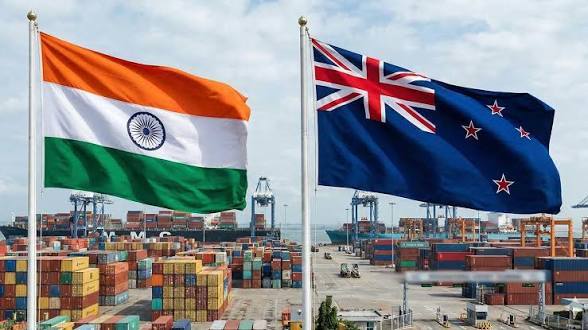
India and New Zealand have signed a landmark Free Trade Agreement (FTA), marking a significant step in strengthening economic ties between the two nations.
The agreement, finalized after months of negotiations, aims to boost trade, create job opportunities, and enhance bilateral cooperation across multiple sectors.
Historic Agreement Strengthens Bilateral Relations
The FTA was signed by Piyush Goyal and New Zealand Trade Minister Todd McClay. The deal was concluded in just nine months, reflecting strong mutual trust and shared economic goals.
Officials described the agreement as a milestone in India’s journey toward becoming a developed economy under the “Viksit Bharat 2047” vision.
Key Highlights of India-New Zealand FTA
The agreement includes several major provisions designed to enhance trade and investment:
- $20 Billion Investment Commitment: New Zealand will invest up to $20 billion in India over the next 15 years.
- Duty-Free Market Access: 100% duty elimination on Indian exports to New Zealand.
- 5,000 Work Visas: Skilled Indian professionals will receive guaranteed temporary employment visas for up to three years.
- Expanded Trade Coverage: The deal covers 20 chapters, including goods, dispute resolution, and legal frameworks.
- Market Access for Goods: Indian sectors like textiles, leather, plastics, and engineering goods will benefit from zero-duty exports.
Opportunities for Professionals and Businesses
A major highlight of the agreement is the introduction of a Temporary Employment Entry Visa, allowing Indian professionals to work in New Zealand in skilled roles. This is expected to open global career opportunities and strengthen workforce mobility.
At the same time, Indian businesses will gain improved access to international markets, boosting exports and manufacturing growth.
Benefits for New Zealand Economy
New Zealand is set to benefit from increased exports to India, including:
- Wool and wood products
- Wine and agricultural produce
- Coal and natural resources
- Fruits like avocados and blueberries
India has opened over 70% of its tariff lines, covering approximately 95% of current imports from New Zealand.
Agriculture and Sectoral Cooperation
The FTA also promotes collaboration in agriculture and allied sectors. Joint initiatives are expected to support Indian farmers in cultivating crops such as:
- Kiwi
- Apples
- Honey production
This cooperation could enhance productivity, diversify crops, and improve farmer incomes.
Strategic Importance of the FTA
The agreement marks India’s seventh major trade deal in recent years and signals a strategic push toward global economic integration. It strengthens India’s engagement with developed economies and enhances its position in global supply chains.
Contact to : xlf550402@gmail.com
Copyright © boyuanhulian 2020 - 2023. All Right Reserved.