Echoes Of 1981: How Trump Scare At Hinckley Hilton Rekindles The Chilling Memory Of Ronald Reagan’s 1981 Shooting
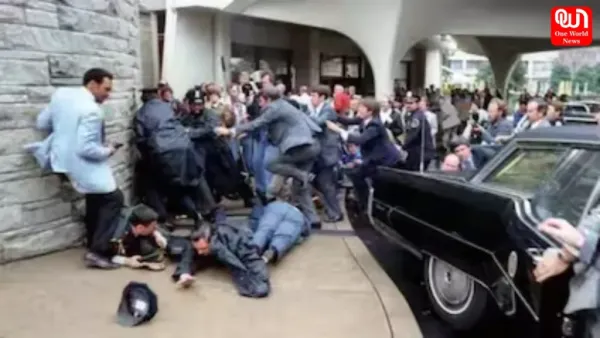
History has a strange way of repeating itself—sometimes in eerily similar locations. The recent shooting scare involving Donald Trump at Washington’s famed hotel, often nicknamed the “Hinckley Hilton,” has stirred chilling memories of one of America’s most shocking moments: the 1981 attempted assassination of President Ronald Reagan.
The parallels are impossible to ignore. The same venue. The same sense of chaos. And once again, a sitting or former U.S. president at the center of a terrifying breach of security.
A Night Of Chaos That Felt Familiar
During the 2026 White House Correspondents’ Dinner, panic erupted when a gunman attempted to breach security at the Washington Hilton. Shots were fired, a Secret Service agent was injured, and Donald Trump was swiftly evacuated from the venue.
Eyewitnesses described confusion, people diving under tables, and security forces flooding the ballroom within seconds.
Although Trump was unharmed, the psychological impact was immediate—and for many, deeply unsettling. The location itself amplified the fear. This wasn’t just any hotel. It was the very place where, 45 years earlier, Ronald Reagan was shot.
read more: Political Roundup: Major Shift as Raghav Chadha and AAP MPs Join BJP
The Shadow Of 1981
On March 30, 1981, President Ronald Reagan exited the same hotel after delivering a speech when John Hinckley Jr. opened fire. Reagan was struck by a bullet that ricocheted off his limousine, lodging dangerously close to his heart.
Three others were wounded, including Press Secretary James Brady, whose life was forever altered by the attack.
The assassination attempt shocked the nation—not just because of its violence, but because of how easily the attacker had gotten close to the president.
Since then, the Washington Hilton has carried a haunting nickname: the “Hinckley Hilton.”
Same Place, Different Era—Same Fear
While the outcomes of the two incidents differ—Reagan was seriously wounded, Trump escaped unharmed—the emotional resonance is strikingly similar.
In 1981, security protocols were far less advanced. Hinckley managed to stand just feet away from Reagan without passing through strict screening layers. Today, despite advanced surveillance, metal detectors, and layered security systems, a determined attacker still managed to create chaos.
This raises an uncomfortable question: Has political security truly evolved enough?
The 2026 incident exposed gaps in perimeter control and access screening, with reports suggesting the attacker was able to bypass multiple layers before being stopped.
The Psychology Of Political Violence
The eerie connection between the two events goes beyond location. Both incidents reflect a deeper issue: the persistence of political violence in American life.
The Reagan shooting was driven by obsession and mental instability. The recent Trump scare, however, appears tied to political grievances and ideological motivations.
This shift is significant. It suggests that modern threats are not only unpredictable but also deeply embedded in political polarization.
Experts warn that even isolated acts can have a chilling effect on democracy—discouraging public engagement and increasing fear among leaders and citizens alike.
A Venue Marked By History
The Washington Hilton is no ordinary location. Over decades, it has hosted presidents, journalists, celebrities, and global figures. Yet its legacy is now intertwined with moments of danger.
From Reagan’s near-fatal shooting to Trump’s narrow escape, the building has become a symbol—of both resilience and vulnerability.
The phrase “Echoes Of 1981” is not just poetic. It’s literal. The sounds of gunfire, the rush of security agents, the confusion in the crowd—these are scenes that have played out twice, separated by nearly half a century.
Lessons That Still Haven’t Been Learned?
If anything, the Trump scare highlights that history’s lessons are still being written.
Security has improved dramatically since 1981, and the quick response in 2026 likely prevented a far worse outcome. But the fact that such an incident could occur at all—at a site already marked by tragedy—raises serious concerns.
Should high-profile political events continue to be held in publicly accessible venues? Are current security protocols enough in an era of rising threats?
Read more: AAP Faces Its Toughest Test After Raghav Chadha Split: Inside Delhi Durbar Power Struggles
These are questions policymakers and security agencies can no longer ignore.
Conclusion: When History Echoes, We Must Listen
The Trump scare at the “Hinckley Hilton” is more than just another security incident—it is a stark reminder of how fragile safety can be, even at the highest levels of power.
The echoes of 1981 are not fading. They are growing louder.
And unless those echoes are truly understood—and acted upon—they may not be the last.
Contact to : xlf550402@gmail.com
Copyright © boyuanhulian 2020 - 2023. All Right Reserved.