At a mediation session in mid-April held by lawyer Tran Thi Ngoc Nu in Ho Chi Minh City, a woman said she filed for divorce because her husband repeatedly forgot to pull the toilet lid down after using it despite frequent reminders, leading to daily conflicts.
In another case, a woman grew resentful after seeing her colleagues receive flowers on holidays while she did not, and her disappointment built up over time, causing her to find fault with everything her husband did, which led to arguments and, ultimately, divorce.
“After more than 20 years working in marriage and family counseling and mediation, I’m seeing more and more cases like this,” Nu says.
Studies and surveys by the Vietnam Institute for Family and Gender Studies consistently show that lifestyle conflicts are among the leading causes of marital breakdown, accounting for 27%, higher than infidelity (25.9%) and financial issues (13%).
Tran Minh Phuc, 36, of Hanoi, once went to court for divorce filing over conflicts stemming from his wife’s habit of not folding up the motorbike footrests. After he was once injured when his bike struck an extended footrest, combined according to him with work- stress, he shouted at and slapped his wife. The incident became the final straw, prompting her to file for divorce.
My Hanh, 34, also of Hanoi, says she was frustrated for years by her ex-husband’s habit of leaving nasal mucus in the sink. The discomfort she felt each morning often lingered through the day, making her irritable.
“It seems trivial, but I can’t accept it.”
Bui Thi Hai Yen, a psychologist and founder of the NHC Vietnam Psychology and Human Development System, says that in 2025 half the couples seeking help from her organization did so because of conflicts in daily routines.
She says life pressures make people more likely to “dump emotional baggage” on those closest to them.
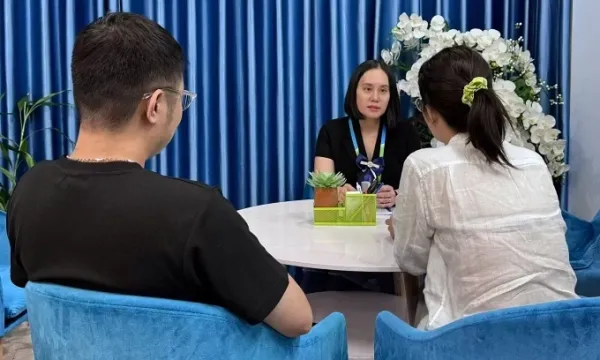
Psychologist Bui Thi Hai Yen counsels a married couple on April 16, 2026. Photo by Read/Pham Nga |
Psychologists describe a phenomenon known as “trigger stacking,” in which small conflicts do not immediately spark arguments but instead build up over time. When that buildup reaches a tipping point, even a minor incident like forgetting to close the toilet lid can overwhelm a person’s emotional control.
Experts also say modern burnout is worsening the problem. Economic pressures and the pace of urban life drain people’s energy outside the home. By the time they return their tolerance is lower, making it harder to overlook a partner’s shortcomings.
Hoang Anh Tu, administrator of a family and marriage forum, recalls a case in which a couple divorced over a bowl of pho with scallions.
The husband did not eat scallions, but his ex-wife forgot to tell the vendor. When the dish was served, he told her: “We’ve been together for five years and you still can’t remember my habits. What do you pay attention to?”
The argument escalated as they brought up past grievances and eventually decided to separate.
“When couples argue over a sock left in the wrong place, it’s no longer about the sock, it’s about feeling unheard and disrespected,” Tu says, explaining that in such cases, small details become evidence of a perceived lack of care.
Yen says these seemingly trivial behaviors stem from habits, which are difficult to change because the brain favors familiarity. When people are asked to change, they may resist, leading to conflict.
“Spouses are mirrors of each other. When you see your partner full of flaws, look at yourself before asking them to change.”
To resolve conflicts, Yen recommends four steps: understand your partner like a friend, discuss issues respectfully, correct your own behavior first, and express your needs tactfully.
She notes that many couples make the mistake of reversing this process by making demands before seeking understanding.
Tu also points out a common paradox: people tend to be polite and accommodating with outsiders but critical of their spouses. He suggests treating one’s partner with the same care and consideration as a “VIP guest.”
“When you pay less attention to trivial details, the home becomes a more comfortable and pleasant place.”
After counseling, Phuc and his wife came to understand the underlying issues in their relationship. She committed to changing her habit, while he said he would help fold up the footrest if she forgot.
*Couples’ names have been changed.
Contact to : xlf550402@gmail.com
Copyright © boyuanhulian 2020 - 2023. All Right Reserved.