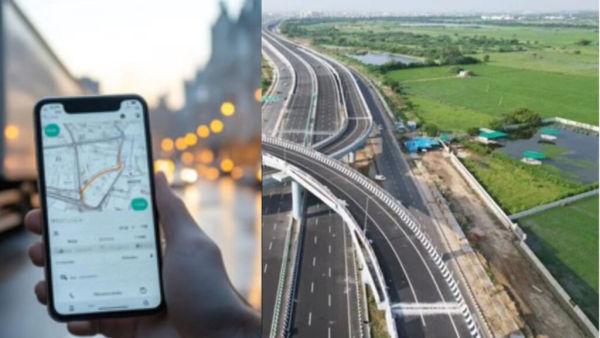
New Delhi: The pace of infrastructure development in India is continuously increasing and in this context, Prime Minister Narendra Modi inaugurated the Ganga Expressway today i.e. on 29th April at Mallawan in Hardoi district of Uttar Pradesh. This expressway extending from Meerut to Prayagraj is going to bring great relief for the passengers traveling long distances. This project, completed at a cost of about Rs 36,000 crore, is being counted among the most ambitious road projects in the country.
However, while there is enthusiasm among the people about this grand project, a question is also being raised rapidly. Why is such a big expressway not yet visible on Google Maps? Even before the inauguration, this issue has become the center of discussion and users want to know the reason behind it.
Why does it take time for updates on Google Maps?
Google Maps does not immediately include any new road or expressway on its platform. There is a process behind this, in which the company first verifies the data at various levels. For this, the exact route, location and other necessary information of the road is collected from the concerned government agencies. Once all the data is properly verified, then government agencies give accurate digital maps and coordinates to Google, then Google can add new roads to its maps.
Investigation is done through satellite imagery
Google Maps also uses satellite imagery to verify that construction is completely complete before adding new roads. The road is not updated on the map until all the information is cleared and verified.
Once this information is clean and completely verified, Google takes the satellite images and updates them. This helps Google identify where new road construction has been completed and needs to be updated on Google Maps.
Important role of users’ GPS data
Apart from this, Google Maps also depends on the GPS data of the users. When a large number of vehicles continuously move along a new route, the system receives a signal that the route has been activated. Only after this that expressway is added to the map.
Contact to : xlf550402@gmail.com
Copyright © boyuanhulian 2020 - 2023. All Right Reserved.