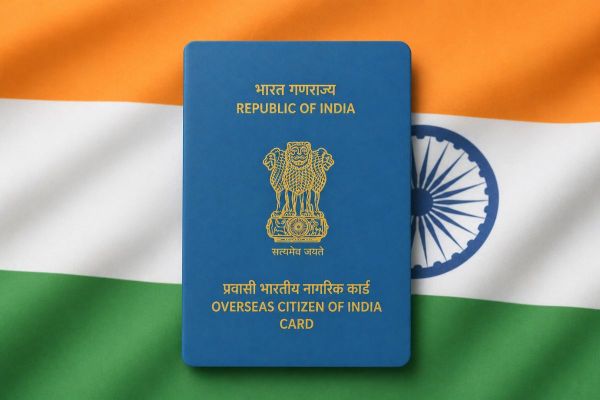
India has quietly made some meaningful changes to the Overseas Citizen of India program. If you travel often, hold an OCI card, or plan to apply soon, these updates are worth paying attention to.
The Ministry of Home Affairs has revised long-standing rules to make the process quicker, but also a bit stricter on compliance.
Apply for OCI Without Waiting Six Months
Here’s the big shift. Earlier, foreign nationals had to stay in India for six months before applying for an OCI card. That waiting period is now gone.
If you arrive with a valid long-term visa and the required documents, you can apply almost immediately. What this really means is:
- Less waiting around in India just to meet eligibility
- Faster processing for people relocating or staying long-term
- Smoother planning for families and frequent travellers
For many, this removes one of the most frustrating steps in the process.
New $25 Fine for Not Updating Passport Details
There’s also a new rule that OCI holders shouldn’t ignore. If you get a new passport, you must update your details on the OCI portal within three months. Miss that deadline, and you could face a fine of USD 25.
It’s a small amount, but the message is clear: keep your records updated.
This matters because:
- Your passport and OCI details must match
- Mismatched data can slow down immigration checks
- Future travel could become more complicated
OCI Eligibility Expanded for Sri Lankan Tamils
Another important update focuses on eligibility. Now, fifth and sixth-generation Indian-origin Tamils in Sri Lanka can apply for OCI cards. Earlier, this was limited to fourth-generation descendants.
This change opens the door for:
- More families with Indian roots to reconnect
- Applicants who may not have complete historical documents
- A wider section of the Sri Lankan Tamil diaspora
It’s a quiet but significant expansion.
Faster Airport Processing with Biometric Upgrades
Behind the scenes, India is also upgrading its immigration systems.
The new rules are tied to improved biometric verification. This will allow faster e-gate processing at airports, where your passport and OCI data can be matched in real time.
For travellers, that could mean:
- Shorter queues at immigration
- Less manual checking
- A more seamless arrival experience
Other OCI Updates You Shouldn’t Miss
India No Longer Accepts PIO Cards
India has officially phased out the Person of Indian Origin (PIO) cards for travel.
- PIO cards are no longer valid for entry into India
- Travellers must convert their PIO to an OCI card
- Or apply for a valid visa before departure
- Airlines may deny boarding if documents are not in order
e-Arrival Card Now Mandatory for OCI Holders
A new digital step has also been introduced for entry into India. The e-Arrival Card is now compulsory for all foreign travellers, including OCI holders.
- It replaces the old paper disembarkation form
- Must be filled out online up to 72 hours before arrival
- Helps speed up immigration checks at airports
What This Means for Travellers
Put simply, India is trying to strike a balance. On one side, it’s making OCI access easier and faster. On the other hand, it’s tightening rules around data accuracy and compliance.
If you already hold an OCI card, stay on top of updates like passport changes.
If you’re planning to apply, the process just became a lot more flexible.
Either way, these changes make the OCI system more practical for today’s global travellers.
Follow and connect with us on Facebook, Twitter, LinkedIn, Instagram and Google News for the latest travel news and updates!
Contact to : xlf550402@gmail.com
Copyright © boyuanhulian 2020 - 2023. All Right Reserved.