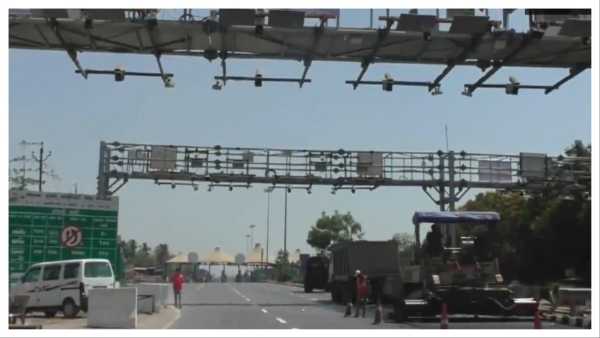
New Delhi: The days of the long, sluggish queues at highway toll plazas might finally be numbered as in a massive move toward digitising the country’s road network, India has just pulled the curtains back on its first-ever Multi-Lane Free Flow (MLFF) tolling system.
The first one will be located at the Choryasi toll plaza on NH-48 near Surat. This pilot project is essentially a “no-stop” zone, allowing drivers to breeze through without hitting the brakes or waiting for a physical barrier to lift.
For anyone who has spent twenty minutes idling in a hot car just to pay a fifty-rupee fee, but this feels like a breath of fresh air. with the removal of the physical booths entirely, the system aims to solve the twin headaches of modern travel of soul-crushing congestion and wasted time. It’s a glimpse into a future where highways actually feel like high-speed corridors rather than a series of parking lots.
The tech behind this magic is actually quite a clever mix of hardware and software. Instead of a concrete booth, the highway is fitted with overhead steel structures called gantries. These gantries are loaded with advanced sensors and high-speed cameras that scan your vehicle while you are driving at normal highway speeds. You don’t need to slow down, you just drive through and the system handles the rest in the background.
#WATCH | Surat,. Gujarat: India’s first barrierless, Multi-Lane Free Flow (MLFF) tolling system has been officially implemented at the Choryasi toll plaza on NH-48 near Surat.
(Visuals from Choryasi toll plaza) pic.twitter.com/jVwAEM8Icu
— ANI (@ANI) May 1, 2026
How free-flow toll system work?
At the heart of the MLFF system are two main technologies- Radio Frequency Identification (RFID) and Automatic Number Plate Recognition (ANPR). If your car has a FASTag, which most do these days, the RFID sensors on the gantry will pick it up instantly. The toll fee will be directly deducted from your linked account in real-time, just like a contactless payment at a coffee shop.
What if someone doesn’t have a tag?
That’s where the high-resolution ANPR cameras come in, as they will snap a clear picture of the license plate and the backend system generates a digital invoice. This data is processed in seconds by a central hub that verifies the vehicle type and calculates the exact fare based on the distance travelled. It’s a seamless loop designed to cut out human error and prevent the bottlenecks caused by cash or faulty scanners.
Why this matters for average Indian driver?
The perks of this system go way beyond just getting home fifteen minutes earlier. As per officials, the estimated value that free-flow tolling can cut travel times by nearly 30%. It also saves a significant amount of fuel since you aren’t constantly stopping and starting which is a win for both your wallet and the environment. Less idling means fewer emissions, making our highways just a little bit greener.
Well, the idea sounds cool, but implementing it nationwide isn’t without its bumps, as for this to work everywhere, the authorities need to ensure that almost every vehicle is tagged and that the camera tech is foolproof even in heavy rain or dust. There are also valid questions about data privacy and how the government will track and fine those who try to game the system.
The Choryasi project will serve as a massive litmus test for the National Highways Authority of India (NHAI). If it holds up, the traditional toll plaza with its barriers, arguments and exhaust fumes might soon become a relic of the past, making road trips across the country a much smoother experience.
Contact to : xlf550402@gmail.com
Copyright © boyuanhulian 2020 - 2023. All Right Reserved.