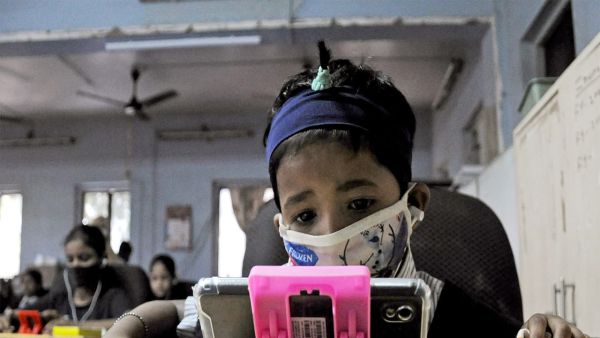
AIIMS research finds a link between excessive mobile phone use in children under two and a higher prevalence of autism. Dr. Shefali Gulati advises parents to reduce screen time and increase personal interaction to mitigate risks and related symptoms.
Research conducted at AIIMS has revealed that children under the age of two who are exposed to excessive mobile phone usage may fall victim to serious conditions such as autism.

In the research, doctors noted that children whose parents cultivated a habit of watching mobile phones between birth and 18 months of age showed a significantly higher prevalence of serious conditions like autism. Autism is a disorder that impairs a child's cognitive and comprehension abilities; consequently, their behaviour deviates from that of typical children.
Scientific Evidence on Screen Time and Autism
During a press conference, Head of the Department of Pediatric Neurology, AIIMS, Shefali Gulati, on Friday, said, "For autism spectrum disorder, especially for screen time, a lot of research has been done. There are a lot of speculations. In that, it has been seen that children who have proven studies, at the age of one year, those who had more screen time, autism is more prevalent in boys at the age of three years, with symptoms of autism in girls as well." She highlighted that other studies and meta-analyses indicated a significant association between early, prolonged screen time and higher risks of autism.
AIIMS Study Confirms Higher Exposure in Autistic Children
Going further, she said their own study was conducted with children with autism and other children, which showed that children with autism were exposed to a higher screen time than other children. "We also conducted a study where we compared autistic children with other children in the hospital. We found that autistic children had started screen time earlier and for longer durations compared to other children. We also looked at addiction scoring, which was higher for them. So, the important thing is to reduce screen time," she said.
Expert Advice for Parents
Gulati underscored the significance of personal interaction with the kids, stating that "the more we interact with the child individually, that is very important." She advised parents to gradually reduce their children's screen time rather than implementing a sudden, abrupt change.
'No Screen Time Under 18 Months' Guideline
She explained that guidelines on the topics are already formulated by many institutions, including stating, "Screen time should not be given to children under the age of 18," she said.
A Humanistic Approach and Seeking Timely Help
Speaking to ANI after the presser, Gulati emphasised that a humanistic approach holds priority in dealing with children with autism. "I would say that a humanistic approach is very important in life. Every person, every child, whether they have some difficulty or are an autistic child, has an equal right to a dignified life. We all have to walk together. All five fingers of our hand are different, but all are very important for our hand and for the fist. So these children are also very important for us and we have to walk together," she said.
"Whenever the symptoms we have described, which could indicate autism, are present, you should consult a pediatric neurologist or a developmental paediatrician. You shouldn't think it will get better on its own," she added.
(Except for the headline, this story has not been edited by Asianet Newsable English staff and is published from a syndicated feed.)Contact to : xlf550402@gmail.com
Copyright © boyuanhulian 2020 - 2023. All Right Reserved.