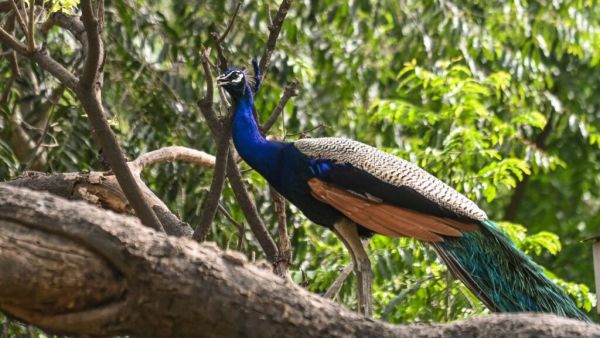
The sudden death of wild peacocks in Tumkuru district of Karnataka has raised concerns in the entire area. Investigation has revealed that the cause of death of about 40 peacocks is H5N1 avian influenza virus, commonly known as bird flu. After this incident, forest department and health agencies have become alert and surveillance has been increased in the affected areas.
The H5N1 virus mainly infects birds, but in some rare cases it can become a threat to humans as well. This situation is raising questions in the minds of people that how dangerous is this virus, what are its symptoms and how can it be prevented.
What is H5N1 avian influenza?
H5N1 is a type of influenza virus that mainly infects birds. It is also called “bird flu” in common language. This virus first appeared in the 1990s and since then it has been spreading periodically among birds in many parts of the world. In recent years, new variants of this virus have emerged, due to which large-scale deaths have been seen in wild birds and poultry.
How does this virus spread?
The H5N1 virus usually spreads through contact with infected birds. It can reach other birds through their feces, saliva or infected environment. This infection in humans occurs in very rare cases, and usually occurs when the person has prolonged contact with infected birds or handles their carcasses.
How serious is its effect on humans?
According to the World Health Organization, infection in humans can cause serious disease, with a high mortality rate. It can cause problems like high fever, difficulty in breathing, cough and in severe cases, lung infection. However, this virus does not spread easily from one person to another.
Prevention and Precautions
To protect yourself from this virus, it is most important to keep distance from infected birds.
- Do not touch dead or sick birds
- Immediately inform the forest department or health authorities
- Take care of cleanliness in poultry farm
- Avoid going to infected areas
H5N1 avian influenza is a serious virus that primarily affects birds, but can also be dangerous to humans in rare cases. Its spread can be stopped with timely caution and awareness.
Contact to : xlf550402@gmail.com
Copyright © boyuanhulian 2020 - 2023. All Right Reserved.