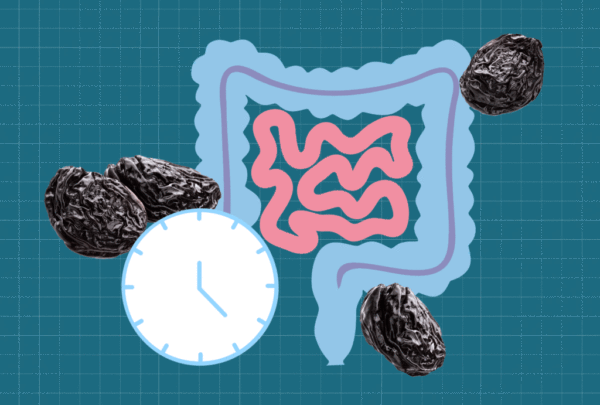
When it comes to prunes and gut health, consistency is key.
Reviewed by Dietitian Madeline Peck, RDN, CDN
Key Points
- There is no ideal time for prunes; eating them consistently matters more for gut-health benefits.
- Prunes ease constipation with fiber and sorbitol that soften stool.
- Regular prune intake can support a healthy gut microbiome and beneficial bacteria.
Nearly everyone experiences constipation at one time or another. Travel, missing out on physical activity, not drinking enough water or even changing up your diet—there are plenty of reasons your digestive system may be feeling a bit sluggish. Thankfully, there are natural remedies that can ease the discomfort of constipation. Prunes can be a gut-health genie, helping you poop while also positively impacting your gut microbiome for long-term benefits. With so much gut-friendly potential wrapped up in prunes, is there an ideal time to eat prunes to maximize those benefits? Read on to find out what the experts have to say.
The Best Time to Eat Prunes
The short answer—there’s no ideal time to enjoy prunes. “Prunes can really be enjoyed any time of the day, and current research doesn’t indicate that there is a better time of day, but if you’re more sensitive to their pooping benefits you may want to eat them at a time you’re at home,” says Amanda Sauceda, MS, RD. That said, if you are more sensitive to the effects of prunes, you may want to plan on snacking on them earlier in the day. Some folks may experience gas and bloating from prunes, especially if you don’t normally eat much fiber, so eating them in the morning may help avoid potentially disrupting your sleep.
“In my opinion, consistency matters more than timing,” says Julie Balsamo, MS, RDN. “The research showing real gut benefits is built around daily intake of about 50 grams (roughly five to six prunes), not a specific window of the day. The best time is the one you’ll actually stick with daily!” Just be sure to drink plenty of water throughout the day as well to maximize the stool-softening benefits of your prunes.
How Prunes Support Gut Health
They Help You Poop
You probably already know that prunes can help you poop, but did you know why? “They contain sorbitol, a sugar alcohol that gently pulls water into the colon and softens stool, plus a mix of soluble and insoluble fiber,” says Balsamo. A standard serving of prunes, ¼ cup or about four to six prunes, provides 3 grams of fiber to help get things moving. “There’s research showing prunes can actually outperform psyllium for chronic constipation,” she adds.
Snacking on whole prunes isn’t the only way to get those helpful pooping benefits; the juice is effective too. “A study found that when participants drank prune juice [they] reported improved bowel movements, less of the hard and lumpy stools often seen with constipation, and an increase in normal stool shape,” says Sauceda.
They Provide Prebiotics
Your gut microbiome is closely associated with gut motility; the more balanced the microbiome, the less likely you are to struggle with constipation or other digestive issues. So making sure the good bacteria in your gut are happy and thriving may also alleviate constipation. Prunes provide a few different good-bacteria-boosting compounds like polyphenols, which are inflammation-fighting antioxidants, and pectin, a type of soluble fiber. Pectin is considered a prebiotic since it feeds the beneficial bacteria in your gut.
They Can Improve Your Gut Microbiome
The prebiotics in prunes don’t just keep your good gut bacteria fed. They could have a positive impact on the makeup of your gut microbiome as well. “Eating prunes regularly was also seen to influence certain gut bacteria in a study where postmenopausal women ate prunes regularly for a year. That study was looking at the bone-health benefits of prunes and found that if [the subjects] had a specific [type of] gut bacteria, [then] prunes may help with bone density,” shares Sauceda.
Another study found that prunes help bacteria from the Lachnospiraceae family flourish. Bacteria in this family are considered the “good” bacteria, since they help keep inflammation in check and support gut lining integrity. In other words, prunes are doing more than just keeping you regular; they’re also feeding the cells that keep your gut barrier strong, says Balsamo.
Ways to Enjoy Prunes
Snacking on a few dried prunes as a quick pick-me-up isn’t the only way to enjoy this tasty fruit. Here are some other creative ways to add them to your diet.
- Use as a topping. “My go-to is chopped prunes added into my morning oatmeal or yogurt bowls!” says Balsamo. You can also simmer dried prunes in water or juice with some sweetener and spices until softened, then use them as a sweet sauce on a variety of dishes from oatmeal to pancakes.
- Add to baked goods. Prunes function as a no-added-sugar sweetener in a variety of baked goods. You could also use them in place of other dried fruit like raisins in muffins, cakes and breads.
- Add to savory dishes. Prunes aren’t limited to sweet dishes, either. Sauceda says to try using prunes in savory sauces or roast them alongside your protein, like in a Moroccan beef tagine. “This feels like such a fun way to add fiber and sweetness to your dinner plate,” she adds. They also make a tasty addition to hearty grain-based salads.
Our Expert Take
Prunes are more than just a tasty dried fruit. They are a surprisingly effective natural remedy for getting things moving again if you’re feeling backed up. That’s because these fruits contain a variety of nutrients like fiber and sorbitol that work together to tackle constipation and support overall gut health. To get the most gut-health benefits from your daily prunes, you may be wondering when you should be eating them. Experts say that the timing doesn’t matter as much as eating them consistently—and be sure to chase them with plenty of water to help soften stools so they pass easily.
Contact to : xlf550402@gmail.com
Copyright © boyuanhulian 2020 - 2023. All Right Reserved.