India’s newest airport is not only a gateway to global travel, but it is also becoming a symbol of how science and sustainability can reshape infrastructure.
Read Desk. The Noida International Airport in Jewar has achieved a significant milestone as it is India’s first large-scale civil engineering project to be built using low-carbon Limestone Calcined Clay Cement or LC3. Developed in a global scientific collaboration in Switzerland and also implemented in India, this technology could change the way the world builds cities while tackling climate change.
At the heart of this story is a brilliant international partnership that brought together researchers from the Indian Institutes of Technology in Delhi and Madras, the École Polytechnique Fédérale de Lausanne (EPFL), Switzerland, and other global institutions. Over more than a decade of research, scientists worked to develop a cement that could significantly reduce carbon emissions without compromising strength or durability.
Today, it has grown from a research lab to one of India’s largest infrastructure projects.
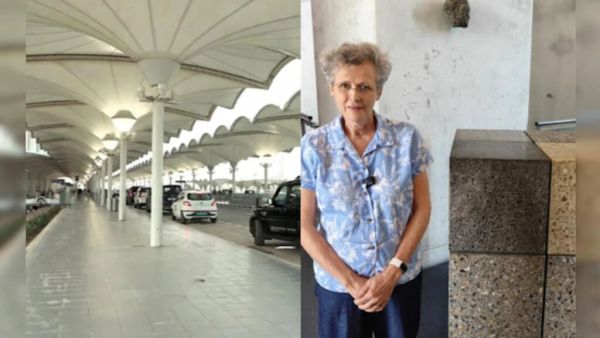
Speaking to NDTV in Lausanne, Switzerland, Professor Karen Scrivner of EPFL, pioneer of LC3 technology, confirmed that the use of this cement at Noida Airport is not experimental but on full scale. “It was definitely a full-scale use,” he said. “We typically talk about a 40% reduction in CO2.”
His words show the scale of the efforts being made. Cement production is one of the largest contributors to global greenhouse gas emissions, accounting for about 8% of the world’s total emissions due to the energy intensive process of making clinker, the main ingredient in conventional cement.
LC3 works by replacing a large portion of this clinker with calcined clay and limestone. This simple but powerful change reduces both the energy required during production and the carbon dioxide emitted.
“It’s a low carbon cement,” Professor Scrivner explained, adding that the key innovation was “replacing as much of what is called clinker with another material as possible”.
The impact of this change will be far reaching. To make new cement, a much lower temperature is required, about 800 degrees Celsius, whereas the old portland cement requires a temperature of about 1450 degrees Celsius. This saves a lot of energy and reduces emissions.
In Professor Caron’s EPFL lab, one of the researchers responsible for creating a more eco-friendly cement is Dr Mehnaz Dhar, a Kashmir-born civil engineer, who says LC3 cement is the eco-friendly need India needs today.
The Noida International Airport project is using this technology in both buildings and airside infrastructure, including the runway. According to Professor Scrivener, LC3 can be used in all applications without any limitations. “You can use it in all applications. I think they’re using it for runways, but you can definitely use it in buildings,” he said.
This is important because cement concrete is the most used material on earth after water. Worldwide, more than 30 billion tons of concrete are produced each year, which is the backbone of modern infrastructure. As Professor Scrivener points out, cement-based materials account for approximately three-quarters of all materials used by humans on Earth today.
Therefore, the environment is at stake.
“If we use a technology like LC3, we could probably reduce global emissions by about 2%, and combined with other measures perhaps by 5%,” he said.
For India, one of the world’s largest cement producers and consumers, this has even greater significance. The country produces millions of tonnes of cement every year and spends huge sums on building infrastructure, from highways and bridges to airports and smart cities. The construction sector is one of the biggest drivers of economic growth, but it also increases the country’s carbon footprint.
In this context, the adoption of LC3 at Noida Airport signals a shift towards green construction practices.
Major Indian cement companies like UltraTech, Dalmia Bharat, JK Cement, Shree Cement and JK Lakshmi Cement have already moved towards commercial production of LC3. This means that this technology is not limited to research institutions only, but is also ready for use at the industrial level.
Still a big question remains. Can this new cement match the performance and durability of conventional cement in tough applications like airports? Professor Scrivner is confident. “Of course it will last. We hope its durability will be better than existing concrete,” he stressed to NDTV. He further said that tests have been done on a large scale.
Follow the LALLURAM.COM MP channel on WhatsApp
Contact to : xlf550402@gmail.com
Copyright © boyuanhulian 2020 - 2023. All Right Reserved.