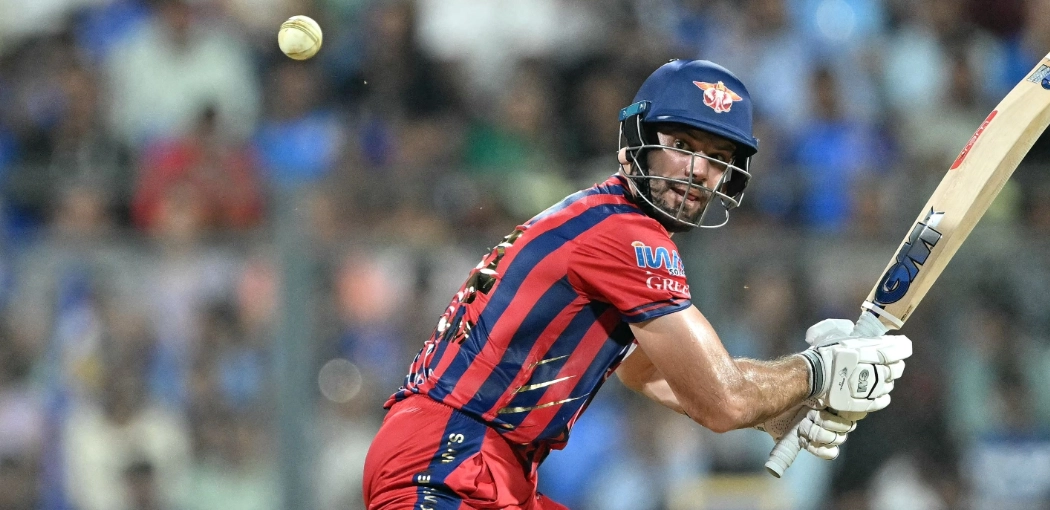
There was a moment, inside the first ten balls of MI London's chase of 144, when the match looked as though it might be heading in an entirely different direction. Two wickets down for 8 runs, with Will Jacks and Jason Roy both back in the shed, the platform that a 144-run target requires had collapsed before it had been laid. What followed over the next 74 balls was a methodical, then explosive, dismantling of Sunrisers' hopes.
The Early Collapse
MI London's openers were sent back in quick succession by Brydon Carse. Jacks went for 2 in the sixth ball of the innings, spooning a catch to cover after being beaten by movement off the pitch. Roy lasted just two deliveries on his 36th birthday, edging behind to slip for a duck. The score read 8 for 2, and Carse had bowled all ten of the deliveries MI had faced.
The situation demanded composure from the middle order. James Vince arrived and, alongside captain Sam Curran, set about rebuilding the innings with patience. Neither batter attempted to force the pace prematurely. Vince worked the ball into gaps, and Curran focused on rotating strike and keeping himself in position to accelerate later. By the midpoint of the innings MI had moved to 33 for 2, still requiring 111 from 70 balls — a challenging rate, but one within reach if the partnership held.
Curran Anchors the Middle Overs
Sam Curran's innings was the foundation on which the chase was constructed. He came to the crease early, with the innings under real stress, and remained until the winning runs were struck. His 60 not out from 39 balls included five fours and two sixes, but the raw numbers tell only part of the story. In the middle phase, when Sunrisers introduced variations through Benny Howell and Abrar Ahmed, Curran managed spin and cutters effectively, picking up singles, rotating the strike, and punishing the loose delivery when it came.
His first six of the innings, launched over straight midwicket off Abrar Ahmed on the 71st ball, was described as imperious. A second six followed two balls later off the same bowler. When Potts returned in the final stages and offered a full toss, Curran launched it over wide long on as MI closed in on the target. His fifty had arrived from 34 deliveries, and by the time the win was sealed his partnership with Pooran had produced 93 runs from 40 balls.
Vince and the Turning Point
James Vince's 17 from 18 balls was a necessary contribution in the context of MI London's innings. The period he spent at the crease with Curran allowed the chase to reach a point from which Pooran could attack freely without needing to be cautious at the start of his innings. The dismissal — bowled by Ellis for 17 when a sharp delivery nipped back and took out the off stump — came at 51 for 3, but by that stage the required rate, while still demanding, was manageable for the batting that followed.
Pooran's Cameo Changes Everything
Nicholas Pooran arrived with MI requiring 93 from 56 balls. Within three overs the match was effectively over. His innings of 58 not out from 22 balls was built on clean striking and an ability to hit against the spin and pace of multiple bowlers. He hit three successive boundaries off Howell, two sixes off Abrar Ahmed in consecutive deliveries, and struck freely off Ellis and Potts in the closing stages.
His fifty came from 19 balls — the fastest in MI London's franchise history across both their current and previous identities. According to the match commentary, his recent form coming into this match included a century in his last T20 appearance, and that confidence was evident in every stroke he played at the Kia Oval.
When Pooran drove Potts beyond mid off for the winning boundary in the 84th ball of the innings, MI London had reached 144 for 3 with 16 balls remaining. The margin of seven wickets and the ease of the final stages obscured how precarious the opening ten balls had been. The recovery from 8 for 2 to a seven-wicket win was the defining story of MI London's evening.