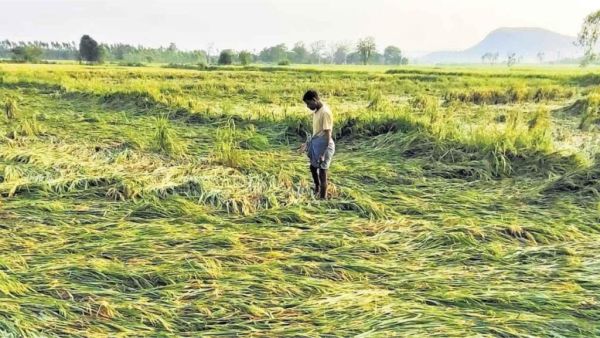
Crop Damage: Kharif crops on thousands of hectares have been severely damaged due to heavy monsoon rains and continuous heavy rains in the state. With the standing crops on the verge of rotting due to water logging in the fields, Baliraja is once again in trouble. In such a situation, many farmers are confused about the exact procedure to be followed to get the right amount of assistance and crop insurance announced by the government. Failure to register with the administration in a timely and proper manner may lead to difficulties in getting compensation. So, we are going to understand step-by-step the entire legal and technical process from crop loss to direct deposit of aid in bank account. So let’s find out about it…
The most important ’72 hour’ rule and precedent
The first 72 hours after the loss is considered very sensitive for crop insurance compensation. During this period it is mandatory for the farmers to do the following…. Crop Damage
Inform the Company: Register the loss digitally by calling the toll-free number of your respective crop insurance company or through the central government’s ‘Crop Insurance’ mobile app.
Crop Damage
Written Application: If the app does not work due to technical difficulties, submit the application in writing directly to the local agricultural supervisor, agricultural assistant or taluka representative of the insurance company. Crop Damage
Collecting important documents and evidence
Farmers should keep their documents and evidence of farm conditions ready before the administrative survey starts.. Crop Damage
- Photos and Videos: Keep clear photos and videos of standing water in the field, rotten or lying crops in your mobile phone.
- File of documents: Carry the 7/12 (seventeen) current year statement, proof of 8-A, clear xerox of first page of bank passbook (which has IFSC code) and Aadhaar card.
- Insurance Receipt: An official receipt from the bank or CSC center for payment of crop insurance during the current season is very important. Crop Damage
Government ‘Joint Panchnama’ process
Physical inspection is conducted by the Revenue and Agriculture Departments to assess the affected areas. Crop Damage
- Taking cognizance of your application, a joint team of talathi, gram sevak and agricultural assistant comes to the farm to conduct panchnama.
- According to government norms, 33% or more loss of agricultural crops If done, farmers are eligible for assistance.
- Once the panchnama report is prepared, it must be signed by the local representative (eg police patil or sarpanch) and the farmer himself. Crop Damage
E-Panchnama and data uploading
The entire process has now been digitized to bring transparency. Crop Damage
Online Registration : Panchnama report prepared by local administration and list of affected farmers are uploaded on ‘e-Panchnama’ system or official MahaIT portal of Govt. Crop Damage
List Check : After a few days the list of affected eligible farmers is published in Gram Panchayat Office or Chavadi. Farmers should ensure that their name and bank account number is correct in this list. Crop Damage
Direct deposit of funds into bank account
This is the final and most important step in this process.. Crop Damage
Compensation from Insurance Company: Private crop insurance companies disburse the sanctioned insurance amount directly to the farmer’s account as per their survey.
Government NDRF Assistance: Per hectare assistance determined under dryland, horticultural or horticultural crops released from the State Disaster Response Fund is directly credited to the bank account. Crop Damage
Although it is difficult to recover the damage caused by rains, the correct procedure done at the right time can reduce the financial crisis to some extent. Your help depends on only three things – filing a complaint within 72 hours, arranging joint panchnama and providing accurate bank details. Crop Damage
Contact to : xlf550402@gmail.com
Copyright © boyuanhulian 2020 - 2023. All Right Reserved.