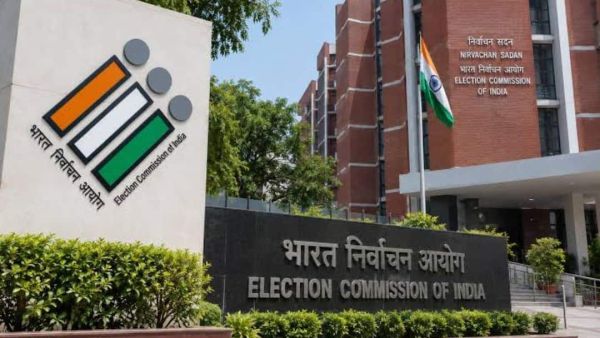
The Election Commission of India (ECI), the constitutional body responsible for conducting elections in the country, has faced several controversies over the decades — ranging from disagreements within the poll panel and questions over its independence to disputes over electoral rolls, Electronic Voting Machines (EVMs), voter turnout data and the Model Code of Conduct (MCC).
The latest controversy emerged in September 2026, with reports of differences between Chief Election Commissioner Gyanesh Kumar and Election Commissioners Sukhbir Singh Sandhu and Vivek Joshi over several decisions, including the Special Intensive Revision (SIR) of electoral rolls.
Here is a look at some of the major controversies involving the poll panel.
1. 2026: Reported Differences Within The ECI Over SIR
The latest controversy concerns reported differences within the three-member Election Commission.
According to reports, Election Commissioners Sukhbir Singh Sandhu and Vivek Joshi recorded objections to several decisions of the poll panel over a 10-month period, including decisions linked to the SIR exercise. One report said the two ECs had raised objections 14 times between October 2025 and August 2026.
The ECI has rejected the suggestion that its decisions were taken unilaterally, maintaining that differences are part of deliberations and that its decisions were unanimous.
The controversy comes amid the expansion of SIR across states and Union Territories.
2. Bihar SIR And The Electoral Roll Dispute
The SIR exercise in Bihar became one of the biggest electoral controversies of 2025.
The ECI ordered the revision of electoral rolls in Bihar in June 2025. Nearly 65 lakh electors were excluded from the draft electoral roll published on August 1, 2025, compared with the 7.89 crore electors on the roll before the exercise.
Several petitions challenged the exercise before the Supreme Court.
In May 2026, the Supreme Court upheld the validity of the Bihar SIR, holding that the ECI had the power to conduct the exercise under Article 324 of the Constitution read with Section 21(3) of the Representation of the People Act, 1950. The court also held that the exercise had a legitimate purpose and met the requirements of proportionality.
During the proceedings, however, the Supreme Court directed the ECI to publish the names of excluded electors with reasons, allowed Aadhaar to be considered as a document for establishing identity, and issued other directions relating to the revision process.
3. West Bengal SIR And Lakhs Of Deletions
The SIR process also became a major issue in West Bengal ahead of the 2026 Assembly election.
The ECI told the Supreme Court in September 2026 that 27.16 lakh voters had been removed during the adjudication process. More than 22 lakh of those voters — around 82 per cent — subsequently filed appeals seeking reinstatement.
In total, 38.31 lakh appeals were filed, including 22.21 lakh seeking inclusion and 16.10 lakh seeking further deletions.
The Supreme Court had earlier ordered the adjudication of the eligibility of certain electors by judicial officers, citing a trust deficit between the then West Bengal government and the ECI. Around 700 judicial officers were tasked with examining cases flagged by the Commission's system.
The ECI defended the deletions, attributing them to categories including absentee, shifted, dead and duplicate entries, and maintained that the prescribed process had been followed.
4. Delhi SIR And ‘Logical Discrepancy’ Notices
The SIR process has also come under judicial scrutiny in Delhi in September 2026.
The Supreme Court questioned the ECI over notices issued to voters under the category of “logical discrepancies”. The court sought an explanation from the poll panel regarding the basis for issuing such notices.
The court also observed that some notices appeared to have been issued “almost mechanically” and suggested that voters could be allowed to respond through platforms such as WhatsApp and email.
The issue has added another layer to the wider debate over the ECI's electoral-roll revision process.
5. 2024 Lok Sabha Polls: Delay In Final Voter Turnout Figures
The ECI faced questions over the release of final voter turnout figures during the 2024 Lok Sabha elections.
Congress president Mallikarjun Kharge questioned why the turnout figures for the first two phases increased significantly between the preliminary figures released soon after polling and the final numbers released later.
The ECI rejected the allegation that the delay indicated an attempt to manipulate the final results. It said the initial figures were preliminary estimates and that final data required the collection and verification of information from polling stations across constituencies.
The controversy also involved demands for wider publication of polling-station-level data and Form 17C, which records the number of votes polled at each polling station.
In May 2024, the Supreme Court declined to direct the ECI to upload booth-wise turnout figures and Form 17C on its website within 48 hours of polling, noting that such interim relief would effectively amount to granting the final relief sought in the pending case.
6. Maharashtra Elections: Voter Addition And Turnout Questions
The ECI also faced allegations relating to voter numbers and turnout during the 2024 Maharashtra Assembly election.
Rahul Gandhi and the Congress questioned the increase in the number of electors between the 2024 Lok Sabha and Assembly elections, with Gandhi alleging that 70 lakh voters had been added in five months.
EC data cited in subsequent reporting showed that 48,81,620 electors were added between the two elections, while 8,00,391 were deleted, resulting in a net addition of 40,81,229 electors.
Questions were also raised over the reported increase in turnout between the provisional figure released on polling day and the figure available the following morning.
The ECI's data and officials disputed the allegations, while subsequent scrutiny of the figures highlighted the distinction between provisional and final turnout data.
7. EVM And VVPAT Controversy
Electronic Voting Machines and Voter Verifiable Paper Audit Trail (VVPAT) machines have been at the centre of repeated political and legal disputes.
Petitioners before the Supreme Court in 2024 sought measures including a return to paper ballots and 100 per cent verification of VVPAT slips against EVM results.
The Supreme Court rejected the demand for 100 per cent VVPAT verification. However, it increased the number of EVMs subjected to VVPAT verification from one to five per Assembly constituency or Assembly segment in a parliamentary constituency.
The court also noted that it had previously rejected challenges seeking a return to paper ballots and 100 per cent VVPAT verification.
8. 2023 Appointment Law And Question Of ECI Independence
The process of appointing the CEC and Election Commissioners has also become a major constitutional controversy.
In March 2023, the Supreme Court's Constitution Bench in Anoop Baranwal v Union of India directed that, until Parliament enacted a law, appointments would be made on the recommendation of a committee comprising the Prime Minister, the Leader of Opposition and the Chief Justice of India.
Parliament subsequently enacted the Chief Election Commissioner and Other Election Commissioners (Appointment, Conditions of Service and Term of Office) Act, 2023. The law replaced the CJI on the selection committee with a Union Cabinet minister nominated by the Prime Minister.
The law has been challenged before the Supreme Court. In September 2026, a two-judge bench referred the matter to the Chief Justice of India for consideration of a Constitution Bench.
9. Ashok Lavasa's Dissent During 2019 Lok Sabha Polls
One of the most prominent instances of internal dissent came during the 2019 Lok Sabha elections.
Election Commissioner Ashok Lavasa differed from the majority view in several complaints alleging Model Code of Conduct violations by Prime Minister Narendra Modi and then BJP president Amit Shah.
Lavasa reportedly opposed five clean chits given to Modi and Shah. The decisions were taken by the majority of the Commission.
The episode subsequently became an important example in discussions about how dissent is recorded and handled within a multi-member Election Commission.
10. Arun Goel's Sudden Resignation In 2024
Another controversy emerged shortly before the 2024 Lok Sabha election schedule was announced, when Election Commissioner Arun Goel resigned.
Goel's resignation in March 2024 left Chief Election Commissioner Rajiv Kumar as the sole member of the Commission temporarily.
Reports subsequently pointed to possible differences between Goel and Kumar, including during a visit to West Bengal. However, the precise reason for Goel's resignation was never publicly established. Kumar said Goel had cited personal reasons and that his personal space should be respected.
11. N Gopalaswami-Navin Chawla Row
In 2009, the ECI witnessed an unusually public internal dispute.
Then Chief Election Commissioner N Gopalaswami recommended the removal of Election Commissioner Navin Chawla, alleging that Chawla had acted in a partisan manner. The allegations were rejected by Chawla.
The recommendation triggered a political and constitutional controversy. The government rejected Gopalaswami's recommendation, and President Pratibha Patil accepted the government's advice. Chawla remained an Election Commissioner and later became Chief Election Commissioner.
12. T N Seshan And The Multi-Member Election Commission
One of the landmark institutional controversies involving the ECI dates back to the 1990s.
When T N Seshan was Chief Election Commissioner, the government appointed two additional Election Commissioners, M S Gill and G V G Krishnamurthy, in October 1993.
Seshan challenged the move, arguing that the creation of a multi-member Commission diluted the authority of the CEC.
The Supreme Court rejected his challenge in 1995 and held that the Constitution permitted a multi-member Election Commission. It also established that the other Election Commissioners were members of the Commission and had a role in its decision-making.
The episode remains significant because it shaped the understanding of the ECI as a collective constitutional body rather than an institution functioning solely through the CEC.
What These Controversies Have Been About
Across these episodes, the disputes have centred on several recurring issues: the independence of the poll panel, internal decision-making, electoral-roll revisions, transparency of voter data, EVM and VVPAT verification, the Model Code of Conduct, and the appointment process for Election Commissioners.
Importantly, the existence of a controversy does not by itself establish wrongdoing by the ECI. In several cases, allegations made by political parties or petitioners have been disputed by the Commission, while courts have either rejected particular challenges or issued directions concerning the process.
As of September 2026, the reported internal differences over SIR, the continuing legal scrutiny of the appointment law, and questions surrounding electoral-roll revisions remain among the latest areas of public and judicial debate concerning the poll panel.
Contact to : xlf550402@gmail.com
Copyright © boyuanhulian 2020 - 2023. All Right Reserved.