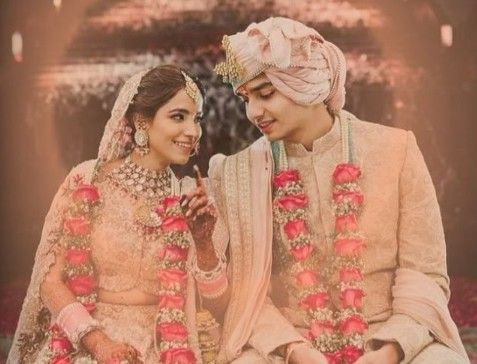
Marriage Rituals: Marriage is considered as an important ritual in Hindu Sanatan Dharma. In Hinduism, marriage is a ceremony that unites two people and their families. It is a legal and social ceremony. A Hindu wedding involves many religious and cultural rituals.
Marriage creates the relationship of husband and wife between two persons. A wedding ceremony not only connects two individuals but also connects two different families. A wedding involves various traditions and rituals.
Marriage Rituals
Kanyadan, Saptapadi, Mangalashtake etc. are done in the wedding ceremony. It also has the ritual of Varmalaya. Varmala ceremony is one of the most beautiful moments in a wedding. In this ceremony, the bride and groom wear garlands of flowers called varmala around each other’s necks.
Varmala is worn by both husband and wife around each other’s neck. But this ritual is usually initiated by the bride. That means the bride first puts the garland around the groom’s neck. But now the important question is when did the varmala ritual start? And why is this ritual done? Meanwhile, today we are going to know the answer to this question.
When and why was Varmala method started?
In fact, the varmala ritual performed during the wedding ceremony has been directly linked to the Ramayana. It is said that in ancient India there was a tradition of “Swayanwar”, in which a princess would accept the son of her choice by wearing a necklace and accepting him as her spouse.
In the Ramayana too, a similar Swayamvara took place. Sita-Rama Swayamvar ceremony is an important part of Ramayana. This ceremony was held in Janakpuri. Mother Sita had taken a vow that she would choose as her life partner whoever picked up the bow of Shiva from Swayamvara.
Meanwhile, in this Swayamvara, Lord Shri Rama broke Shiva’s bow and at that moment Mother Sita put a garland around his neck and accepted him as her husband. Meanwhile, from this event, the Varmala method became customary in Hindu Sanatan Dharma.
It is from this Swayamvara that the tradition of giving the garland to the groom first by the bride was established in the Hindu wedding ceremony. This is not only a religious angle but also considered an important practice from a social point of view.
From a social point of view, Varmala is a symbol of acceptance, respect and equality. This ritual socially means that the bride accepts the groom as her life partner, while the groom also promises to honor the bride.
The varmala ritual marks the beginning of a new chapter in the lives of both. Saptapadi and Varmala rituals are considered very important whether the wedding is small or big.
In short Varmala is not just an exchange of flowers, it is a symbol of bond, trust and unity. Putting on a bridal necklace is like taking a pledge of love, dedication and being with one’s partner through all the ups and downs of life.