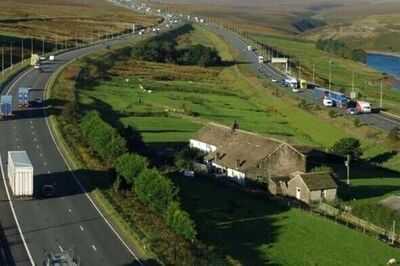
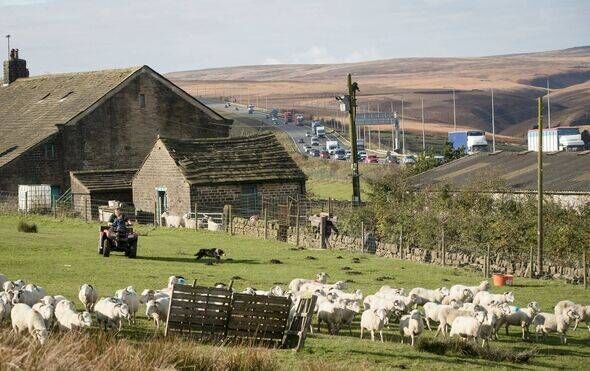
Travel along the M62 towards Leeds and a remarkable sight appears in the carriageway - an 18th-century farmhouse, with sheep quietly grazing nearby, situated in a divide between the motorway lanes.
Stott Hall Farm in West Yorkshire, affectionately known as the "Little House on the Prairie", has attracted considerable local legend.
According to folklore, this unusual landmark emerged when farmer Ken Wild refused to sell his property to motorway developers in the 1960s.
Finding themselves unable to convince Ken and his wife Beth to move, the builders allegedly chose to construct the road around them, leaving the farm encircled by asphalt, with three busy lanes passing by on either side.
Yet the truth is far more mundane. In 1983, Michael Clegg, a Yorkshire journalist fascinated by the structure, made his way to Stott Hall to interview Ken and Beth for the BBC.
The couple explaied they had lived at the property since 1934, whilst the land itself had been farmed since 1737. As for their reasons for staying? It wasn't their choice to make.
The farmhouse wasn't in their possession at the time - it was owned by Yorkshire Water.
Michael explained: "A geological fault beneath the farmhouse meant it was more practical for engineers to [go around] it rather than blast through [the farm] and destroy it."
Ultimately, the engineers discovered that the ground beneath the farm was unable to bear the weight of the motorway and the 90,000 vehicles using it each day.
This stroke of luck spared Stott Hall from certain demolition.
Ken said: "It looked like we would have to move, but they found out they couldn't get all six lanes together."
The pair still forfeited approximately 70 acres of farmland because of the works. Nevertheless, overall, they weren't particularly concerned.
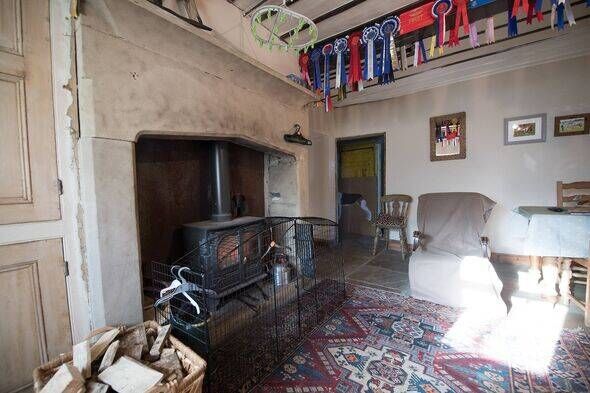
He added: "Outside the noise is relentless but inside it's as peaceful and cosy as any farmhouse."
Yet the peculiar position did bring its fair share of complications. One morning, at roughly 4:20am, the couple were jolted awake by a deafening crash beyond their home.
Despite being used to considerable noise, the impact prompted them outdoors, where they found a 32-ft, multi-tonne lorry capsized in their yard. Beth remembered: "The driver climbed out through the windscreen. He wasn't hurt at all."
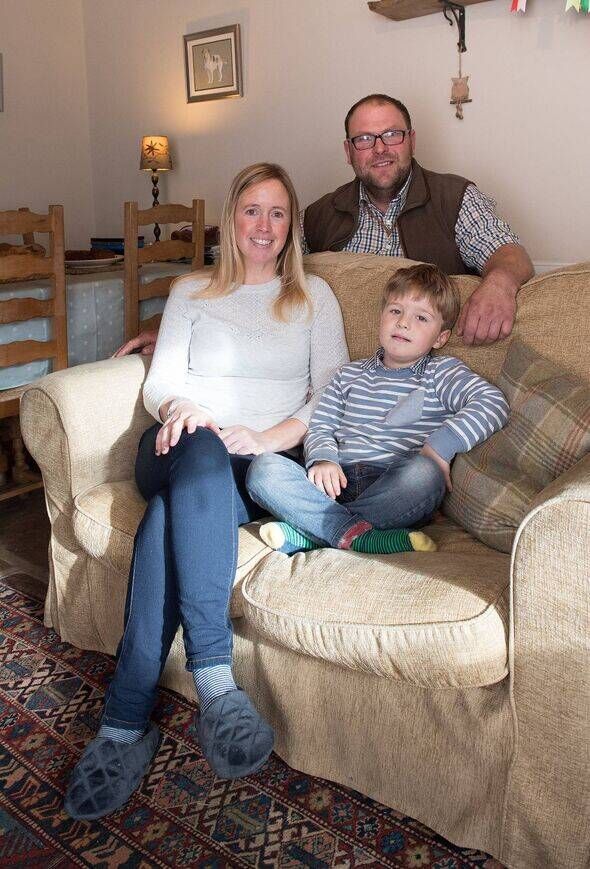
In 2009, the famous farm was bought by Jill and Phil Thorp from the couple. The Thorps refurbished the dwelling and lived there with their son, John-William.
Tragically, Ken has since died. Speaking to the Manchester Evening News, Jill said: "Traffic is very close. But it's always windy here, which takes the pollution away. Students from the University of Huddersfield took soil and air samples and actually pollution is surprisingly low."
Despite acknowledging she remains "sensitive" to the noise, Jill wouldn't alter her circumstances.
"A lot of people say it's bleak and like Wuthering Heights but I don't see it like that. I think it's beautiful."
The M62, a 172km stretch of motorway in the North of England, connects Liverpool and Hull via Manchester, Bradford and Leeds.
Opening in 1960 and finishing in 1976, it's recognised as "the UK's highest motorway" because it crosses the Pennine Hills between Manchester and Leeds, reaching elevations of 1,221ft above sea level.
When the Queen opened a section of the motorway in 1971, she had to wear a specially designed hat to stop it from being blown off by the wind. Stott Hall Farm sits between junctions 22 and 23 on the motorway.