Curiosity Corner for kids: How do astronauts not get lost in space?
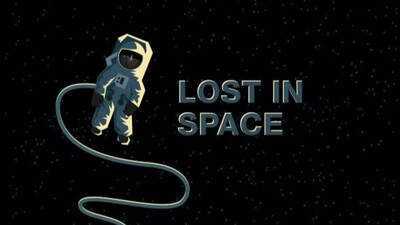
Although space may look empty and confusing to us, astronauts don’t travel in space alone. They are always accompanied by a large group of scientists and engineers on Earth. For example, if astronauts are on a mission to the International Space Station, they are always in touch with teams on Earth. These teams track their location and movement with their powerful computers and satellite technology. The path of their spacecraft is already planned before they travel. While they are on their way to their destination, scientists continuously track their path. This way, astronauts always know where they are and where they are going.
Astronauts don’t travel alone in space
Astronauts don’t travel alone in space. They are always accompanied by a large group of scientists and engineers on Earth. For example, astronauts on a mission to the International Space Station are always in touch with teams on Earth. They track their location and movement with their powerful computers and satellite technology. The path of their spacecraft is already planned before they travel.While they are on their way to their destination, scientists track their route. This way, the astronauts will always know where they are and where they are going.
Spacecraft use navigation systems
Just like how ships and planes have the Global Positioning System and navigation systems, spacecraft have similar navigation systems. Spacecraft have computers that help them know how fast they are going, the direction they are going, and how far they are from the Earth or other space objects. Scientists send signals from the Earth to the spacecraft to help them navigate and ensure that the spacecraft moves in the correct direction. Spacecraft have gyroscopes and star trackers that help them know where they are in space. This helps the astronauts know the direction the spacecraft is facing and the direction it needs to move. This is the main reason astronauts do not get lost in space.
Stars help astronauts find direction
One way astronauts navigate through space is by using the position of the stars. Since the position of the stars does not change relative to each other, the spacecraft can easily navigate using the position of the stars. This is because the stars act as a map in the sky. The spacecraft has special devices called star trackers that help it know where it is using the position of the stars. This is similar to how sailors used the position of the stars to navigate through the sea thousands of years ago. Even today, the position of the stars is used to help the spacecraft move in the correct direction.
Missions are planned years in advance
Spacecraft do not travel randomly. Each time a spacecraft moves, it does so according to a plan that is made many years in advance. For example, NASA sends many space missions into space. Each time the spacecraft moves, it does so according to a plan. The plan includes the route the spacecraft will take, the time it will take to get there, and the alternatives in case something fails. Since the spacecraft moves according to a plan, the astronauts do not get lost in space. This is because the route the spacecraft follows is a fixed route, and it does not move randomly.
Constant communication with Earth
Among the most important reasons why astronauts never get lost is the fact that they are constantly in contact with the earth. They receive instructions, directions, and updates from the mission control team during the entire period of the mission. If the spacecraft goes off course by a small distance, scientists immediately send signals to correct its course. Thus, it is evident that the astronauts are never off course because of the constant contact they have with the earth. Because of the help of technology, it is possible for the astronauts to travel through space without getting lost.
Disclaimer
This article is intended for educational and informational purposes for children and young readers. The space concepts mentioned are simplified to make them easier to understand. Space science is complex and constantly evolving, and new discoveries may change our understanding in the future. This content is meant to inspire curiosity and learning.
Astronauts don’t travel alone in space
Astronauts don’t travel alone in space. They are always accompanied by a large group of scientists and engineers on Earth. For example, astronauts on a mission to the International Space Station are always in touch with teams on Earth. They track their location and movement with their powerful computers and satellite technology. The path of their spacecraft is already planned before they travel.While they are on their way to their destination, scientists track their route. This way, the astronauts will always know where they are and where they are going.
Spacecraft use navigation systems
Just like how ships and planes have the Global Positioning System and navigation systems, spacecraft have similar navigation systems. Spacecraft have computers that help them know how fast they are going, the direction they are going, and how far they are from the Earth or other space objects. Scientists send signals from the Earth to the spacecraft to help them navigate and ensure that the spacecraft moves in the correct direction. Spacecraft have gyroscopes and star trackers that help them know where they are in space. This helps the astronauts know the direction the spacecraft is facing and the direction it needs to move. This is the main reason astronauts do not get lost in space.
Stars help astronauts find direction
One way astronauts navigate through space is by using the position of the stars. Since the position of the stars does not change relative to each other, the spacecraft can easily navigate using the position of the stars. This is because the stars act as a map in the sky. The spacecraft has special devices called star trackers that help it know where it is using the position of the stars. This is similar to how sailors used the position of the stars to navigate through the sea thousands of years ago. Even today, the position of the stars is used to help the spacecraft move in the correct direction.
Missions are planned years in advance
Spacecraft do not travel randomly. Each time a spacecraft moves, it does so according to a plan that is made many years in advance. For example, NASA sends many space missions into space. Each time the spacecraft moves, it does so according to a plan. The plan includes the route the spacecraft will take, the time it will take to get there, and the alternatives in case something fails. Since the spacecraft moves according to a plan, the astronauts do not get lost in space. This is because the route the spacecraft follows is a fixed route, and it does not move randomly.
Constant communication with Earth
Among the most important reasons why astronauts never get lost is the fact that they are constantly in contact with the earth. They receive instructions, directions, and updates from the mission control team during the entire period of the mission. If the spacecraft goes off course by a small distance, scientists immediately send signals to correct its course. Thus, it is evident that the astronauts are never off course because of the constant contact they have with the earth. Because of the help of technology, it is possible for the astronauts to travel through space without getting lost.
Disclaimer
This article is intended for educational and informational purposes for children and young readers. The space concepts mentioned are simplified to make them easier to understand. Space science is complex and constantly evolving, and new discoveries may change our understanding in the future. This content is meant to inspire curiosity and learning.
Read more